How Much Is a Heater for a House? A Practical Cost Guide for Homeowners
Explore realistic upfront and ongoing costs for home heating, compare common heater types, and learn budgeting strategies, incentives, and maintenance tips for 2026.


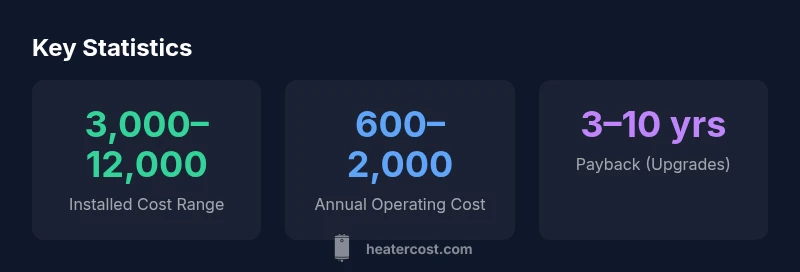
How much is a heater for a house? Realistically, homeowners should budget $3,000–$12,000 for a complete installed heating system, depending on fuel type, efficiency, and required ductwork. In 2026, the most cost-effective options balance upfront price with long-term running costs, especially for energy-efficient models and climate-appropriate sizing. This guide breaks down typical costs and practical budgeting steps.
Understanding what a casual reader means by a "heater" for a house
When homeowners ask, "how much is a heater for a house?" they’re really asking for a price range that reflects several distinct technologies and installation realities. In modern homes, the term covers furnaces (gas or electric), boilers, and heat pumps, as well as electric resistance heaters in stubborn zones. The Heater Cost framework distinguishes these by fuel source, capacity, and necessary ductwork or piping. According to Heater Cost, upfront price is a function of unit cost plus installation complexity, which can include permits, duct sealing, and zoning. In 2026, regional climate and home size heavily influence costs, so buyers should expect a broad range rather than a single number.
Common heater types and their price ranges
The main categories you’ll encounter are gas furnaces, electric furnaces, heat pumps (air-source and sometimes geothermal), and boilers. Each has a typical installed cost range driven by efficiency and required accessories like ductwork or radiant tubing. A gas furnace, for example, often sits in a higher upfront bracket due to venting and combustion components, while a well-placed heat pump may offer lower operating costs in milder climates but higher upfronts in extreme cold. The key takeaway is that the best option balances upfront investment with annual energy costs, taking into account your climate and home layout.
Factors that influence cost: size, climate, efficiency, and installation complexity
Size and load calculations determine equipment needs, but climate and insulation quality also play a major role. A larger, older home generally requires a higher-capacity system or additional zones, increasing both equipment and ductwork costs. Efficiency ratings (AFUE for furnaces, HSPF for heat pumps, and SEER for cooling) influence long-term operating costs and can affect eligibility for rebates. Ductwork, venting, and indoor air quality features add to the price, as do permits and professional installation requirements. Finally, existing fuel infrastructure (gas line, electrical panel) can either simplify or complicate the project and shift price by thousands.
Upfront costs: equipment, installation, and permits
Expect most installers to quote a bundled price covering equipment, labor, and basic ancillary work. Even with a fixed price, you should account for potential add-ons: duct sealing, zone controls, thermostats, and combustion appliance venting upgrades. In some regions, permits can add 1–2% of total costs, while ductwork remediation may add more if the home has nonstandard layouts. The 2026 landscape favors properly sized systems with efficient ducting, which can raise initial costs but pay off through reduced energy use over time.
Operating costs and efficiency: what drives the annual bill
Operating costs hinge on fuel type, efficiency, and usage patterns. Gas and oil systems generally have higher energy costs in markets with expensive fuels, while electric resistance is often costly where electricity rates are high. Heat pumps deliver high efficiency but can have higher upfront costs and reduced effectiveness in extreme cold unless paired with supplemental heat. For most homes, a properly sized, well-sealed system with an efficient heat source results in lower long-term bills and better comfort.
Cost comparison by scenario: new build vs replacement
In a new build, costs may be higher due to comprehensive ductwork, wiring, and zoning, but you gain the advantage of optimized efficiency from day one. Replacing an existing system can be cheaper if the home already has compatible ductwork and infrastructure. Older homes often require duct sealing, insulation improvements, or even partial reconfiguration of the heating zone plan, which can add to the cost but improve overall performance and comfort.
Ways to cut costs without sacrificing comfort
Smart budgeting starts with a professional load calculation to avoid oversizing. Consider higher-efficiency models that qualify for tax credits or rebates, and explore duct sealing and insulation improvements to lower both upfront and ongoing costs. If you live in a milder climate, a high-efficiency heat pump may offer a favorable balance of upfront price and annual savings, whereas in very cold zones a dual-fuel approach or supplemental heat may be more economical. Shopping for a well-reviewed installer and requesting multiple quotes helps prevent overpaying.
Budgeting and incentives to consider in 2026
Incentives such as energy efficiency rebates and tax credits can significantly affect total cost. When planning, include potential financing options, warranty terms, and maintenance contracts. Heaters with better seasonal energy efficiency ratios (SEER/HSPF) reduce annual bills, particularly in regions with extreme weather. The budgeting process should account for a long-term view: installation price, maintenance needs, energy prices, and the potential for incentives or rebates that make 2026 an attractive year to upgrade.
Cost comparison by heater type
| Heater Type | Typical Installed Cost | Avg. Operating Cost (annual) | Typical Lifespan (years) |
|---|---|---|---|
| Gas Furnace | $3,000–$7,500 | $900–$2,400 | 15–25 |
| Electric Furnace | $2,500–$6,500 | $800–$2,300 | 15–25 |
| Heat Pump (Air-Source) | $4,000–$12,000 | $400–$1,500 | 15–20 |
| Boiler | $5,000–$12,000 | $1,000–$2,800 | 15–30 |
Got Questions?
What is the typical cost to install a new heater for a standard home?
Installation costs vary by fuel type and system size, but most homes should expect a broad range that reflects equipment price, labor, and potential ductwork updates. Always obtain multiple quotes and verify what's included in the estimate.
Costs vary widely; get several quotes to compare equipment, labor, and ductwork work before deciding.
How does climate affect heater cost?
Colder climates often require higher-capacity systems or supplemental heat, which can raise upfront costs. In milder areas, efficient heat pumps may offer lower operating costs and quicker payback.
Your climate can push upfront costs higher or lower depending on the needed capacity and efficiency.
Are heat pumps worth it in very cold climates?
In very cold climates, heat pumps can still work effectively, especially with newer models and hybrid configurations, but you should assess the need for auxiliary heat and overall costs.
In extreme cold, a heat pump may need supplemental heat—check efficiency and total costs.
What maintenance affects ongoing costs?
Regular inspections, filter changes, coil cleaning, and duct sealing help maintain efficiency and prevent costly repairs. Neglect can raise energy use and shorten system life.
Keep up with maintenance to keep costs down and performance high.
Can I install a heater myself to save money?
Installing a heating system involves gas, electrical, and venting work that typically requires licensed professionals. DIY installation can be dangerous and may void warranties or rebates.
It's best to hire licensed pros for safety and warranty reasons.
“Choosing the right heater is not just about upfront price. A properly sized, well-installed system saves money year after year by reducing waste and improving comfort.”
The Essentials
- Budget a broad upfront range to cover fuel, sizing, and ductwork
- Energy efficiency cuts long-term operating costs
- Duct sealing and insulation boost comfort and reduce bills
- Consider incentives and financing to lower net price
- Get multiple quotes to avoid overpaying