Air Heater Costs: A Practical Guide for 2026
A practical guide to air heater costs, comparing electric and gas options, installation considerations, and long-term efficiency to help homeowners make smarter decisions in 2026.


Air heater upfront costs vary by type and installation, typically ranging from a few hundred dollars for small electric units to several thousand dollars for larger gas-fired or integrated systems. In 2026, homeowners should expect to consider purchase price, professional installation, and ongoing energy costs when evaluating options. Heater Cost provides guidance to compare models, estimate payback, and plan for delivery, installation, and maintenance.
Understanding the role of an air heater
An air heater is a device designed to warm indoor air and circulate it to create comfortable temperatures in a space. According to Heater Cost, these units are often used to heat specific zones or rooms when a full central system is not practical. In 2026, homeowners weigh upfront costs against long-term energy savings and safety considerations. The key value of an air heater lies in rapid, targeted warmth, which can be ideal for bedrooms, home offices, or garages that need supplementary heat without reworking an entire home's heating layout.
Types of air heaters
There are several ways to heat air efficiently, depending on space, fuel availability, and noise tolerance. Common options include:
- Electric convection heaters: inexpensive to buy, easy to install, best for small to medium rooms.
- Electric radiant heaters: warm people directly, useful in bathrooms or drafty corners.
- Gas-fired wall or unit heaters: higher upfront cost but strong heat output for larger spaces.
- Heat pump integrated air heaters: electric heat pumps move heat rather than create it, offering lower operating costs in moderate climates.
- Portable space heaters vs built-in solutions: portable units provide flexibility but may be less efficient overall than fixed installations.
Each type has distinct efficiency metrics and operating costs. The Heater Cost team notes that consumer choice often hinges on climate, electrical service, ventilation, and safety considerations.
Sizing and space considerations
Sizing an air heater correctly ensures comfort without overspending on capacity. Start with a rough BTU estimate by room size and insulation level:
- Poor insulation or large gaps require more heat input.
- Smaller, well-insulated spaces can be comfortably warmed with lower-capacity units. Placement matters too: avoid placing heaters behind furniture or near drapes, and ensure clearances from walls and combustibles for safety. For gas-fired units, proper venting and air supply are essential to safe operation. A professional assessment helps confirm the right size and placement for your space.
Efficiency and energy costs
Efficiency is a central decision factor. Electric air heaters convert nearly all electricity into heat at the point of use, leading to high apparent efficiency but potentially higher operating costs depending on local electricity rates. Gas-fired units and heat pump integrations can offer lower operating costs in regions with inexpensive gas or favorable electricity tariffs. When evaluating efficiency, look beyond the label and consider heat distribution, insulation, and how quickly the unit can respond to changing temperatures. Heater Cost's analysis emphasizes the impact of proper sizing and ductwork (or air distribution) on overall energy use.
Installation considerations and safety
Installation quality strongly influences performance, safety, and longevity. Key considerations include:
- Electrical requirements, dedicated circuits, and voltage compatibility for electric units.
- Venting, combustion air, and clearance for gas-fired heaters.
- Proper anchoring and weatherproofing for outdoor or semi-outdoor installations.
- Carbon monoxide safety measures for gas installations and regular vent inspections.
Heater Cost strongly recommends professional installation to ensure code compliance and optimal operation. Improper installation can negate efficiency gains and increase risk.
Electric vs gas vs hybrid options
Choosing between electric, gas-fired, or hybrid air heaters depends on space, climate, fuel availability, and long-term cost goals. Electric units are often cheapest to buy and install and are ideal for zones with simple layouts. Gas-fired units deliver high heat output for larger areas but require venting and dedicated gas service. Hybrid or heat pump–integrated options offer a balance of upfront cost and operating efficiency, especially in moderate climates. In many homes, a zoned approach—electric in some rooms and gas or heat pump in others—delivers the best overall comfort and cost efficiency.
Maintenance and longevity
Regular maintenance preserves performance and safety. Simple, practical steps include:
- Annual visual inspections of wiring, connections, and mounting for electric units.
- Routine cleaning of dust filters and grills to maintain air flow.
- Periodic checks of venting and combustion air for gas-fired models.
- Timely replacement of worn-out components, such as fans or ignitors, to prevent inefficiency.
Proactive maintenance typically extends the lifespan of an air heater and reduces unexpected repair costs. The Heater Cost guidance emphasizes keeping a maintenance calendar and scheduling professional service as needed.
Cost planning and ROI
When budgeting for an air heater, include purchase price, installation, and operating costs over time. The most cost-effective choice depends on room size, insulation, and local energy rates. A well-sized air heater with good insulation can offer rapid comfort and reasonable operating costs, while oversizing leads to unnecessary expense and cycling wear. Use a phased approach: start with essential zones, monitor performance, and plan upgrades as climate or home characteristics evolve. Heater Cost’s framework helps homeowners compare options, estimate payback, and build a realistic plan for 2026.
Comparison of air heater types and typical cost ranges
| Air Heater Type | Upfront Cost Range | Estimated Annual Operating Cost | Typical Coverage (sq ft) |
|---|---|---|---|
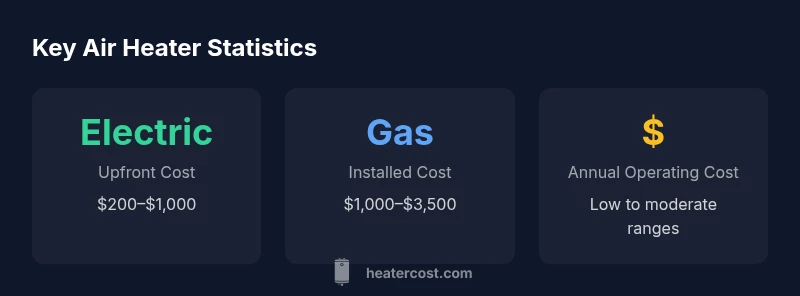
| Electric | $200–$1,000 | $40–$180 | 150–800 |
| Gas-fired | $1,000–$3,500 | $150–$600 | 300–2,000 |
| Gas-fired direct-vent | $1,200–$4,000 | $120–$500 | 400–2,500 |
Got Questions?
What is an air heater and how does it work?
An air heater warms air that is then circulated through a space to raise its temperature. It can be electric or gas-powered and is often used for zoned heating or supplemental warmth. Efficiency and comfort depend on proper sizing and air distribution.
An air heater warms air that moves through your space. It’s good for targeted heating, but sizing matters for comfort and efficiency.
Are air heaters safe to operate around children and pets?
Yes, when installed correctly and used as directed. Follow manufacturer clearances, keep away from flammable materials, and use units with built-in safety features like tip-over and overheat protection. Regular maintenance reduces risks.
Yes, with proper installation and maintenance, air heaters are safe around kids and pets.
Which type is cheapest to install for a small room?
Small electric air heaters are typically the least expensive to buy and install. They require minimal ventilation or ductwork, making them practical for rooms where quick, localized heat is needed.
Electric heaters are usually the cheapest to install for a small room.
How should I size an air heater for a room?
Start with room measurements, insulation quality, and window/door drafts. A professional can calculate the required BTU and suggest a unit with appropriate cycling and distribution to avoid overheating or underheating.
Measure the room, assess insulation, and get professional sizing to match BTU needs.
What maintenance is required for air heaters?
Regular cleaning of air filters, checking electrical connections, and scheduling annual professional inspections for gas units helps maintain efficiency and safety. Replace worn parts as needed.
Keep filters clean and get yearly checks, especially for gas models.
Can an air heater heat an entire house efficiently?
Air heaters are generally best for zones or rooms rather than whole-house heating. For full-home comfort, you may need multiple units or a centralized system integrated with ductwork.
Air heaters are great for zones, not usually the whole house unless you have a tailored system.
“"Sizing correctly and ensuring quality installation are the most impactful steps you can take for efficiency and safety."”
The Essentials
- Consider space and insulation before choosing a heater type.
- Electric units are cheap to install but may cost more to operate in high-rate regions.
- Gas-fired models deliver strong heat but require venting and professional installation.
- Proper sizing and installation dramatically affect energy use and comfort.
- Regular maintenance extends longevity and safety.