How Much Is an Electric Heater? A 2026 Cost Guide
Understand the true cost of electric heaters in 2026. Compare portable vs fixed units, installation, operating costs, and long-term savings with practical guidance from Heater Cost.


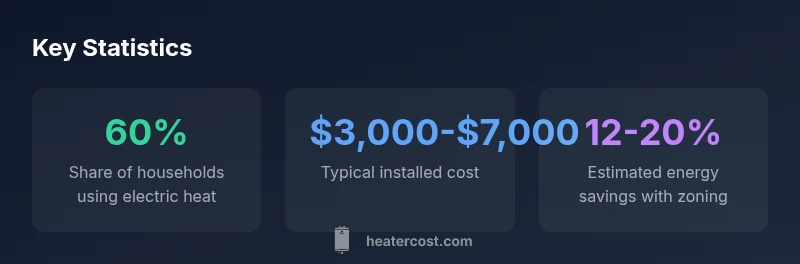
Electric heaters come in portable and fixed formats with wide price ranges. Portable space heaters typically cost about $20 to $120 upfront, while fixed panel or baseboard units run roughly $70 to $350 per climate-controlled section. For whole-home electric heating, installed systems commonly fall in the $3,000 to $7,000 range, depending on house size and install complexity.
What determines the cost of an electric heater
Understanding how much an electric heater costs starts with identifying the space you need to heat and the level of comfort you expect. Size, insulation, and climate all play a decisive role in total expenditures. A well-insulated room heats more efficiently, often letting you choose a smaller, cheaper unit while achieving the same warmth. The type of heater matters, too: portable units are cheap upfront but may require multiple units to cover larger spaces, while fixed systems or electric furnaces carry higher upfront costs but deliver consistent warmth across zones. According to Heater Cost, the most significant cost drivers are unit efficiency, installation labor, and any required electrical upgrades or permits. Even within a single category, variables such as warranty terms, brand reliability, and after-sales service influence overall value. When evaluating options, homeowners should balance initial price against long-term energy costs and potential maintenance needs. This balance is central to the Heater Cost approach for 2026, guiding readers to select solutions that fit both budget and space.
Buying options: portable vs fixed
Choosing between portable and fixed electric heaters hinges on flexibility, performance, and long-term cost. Portable space heaters excel in rooms used intermittently or in rental spaces where permanent modifications aren’t possible. They’re typically inexpensive upfront and easy to relocate, which reduces initial risk if you’re testing a space or occupancy pattern. However, running several portable units can add up in energy costs and may raise safety concerns if not properly supervised. Fixed systems—such as wall-mounted panels, baseboard heaters, or a dedicated electric furnace—offer more uniform heating and fewer maintenance touchpoints per zone. They often require professional installation and may need electrical upgrades, which can raise upfront costs but improve energy efficiency and comfort over time. Heater Cost’s framework emphasizes balancing upfront investment with running costs and home energy performance.
Typical price ranges by type
Understanding price ranges helps you plan without surprises. Portable space heaters tend to be the most affordable option, typically in the low hundreds or less when bought new. Fixed panel or baseboard heaters come with higher per-unit costs but can heat specific zones more evenly, often priced in the mid-range. For whole-home electric heating, the economics change: you’ll see substantial upfront costs for equipment plus installation, but energy efficiency and precise temperature control can drive long-term savings if you heat space efficiently. If you’re asking how much is electric heater for a whole house, the Heater Cost framework suggests weighing the number of zones, the desired thermostat sophistication, and the electrical panel’s capacity. When you calculate, consider both the per-unit heat cost and the required electrical upgrades.
Operating costs, efficiency, and savings
Efficiency is at the heart of running costs for electric heaters. Electric resistance heaters convert electricity to heat with near-100% theoretical efficiency, but the price of electricity and how many hours you run the unit determine annual costs. In regions with high electricity prices or lengthy heating seasons, the operating expense can exceed expectations if you rely on a single small heater for a large space. Conversely, a well-insulated home with a properly sized heater and a programmable thermostat can keep running costs well below worst-case scenarios. For smaller homes or apartments, consider a mix of a few fixed units for key zones and portable backups to minimize idle running time. Heater Cost’s data for 2026 shows energy costs are driven by usage patterns and climate, so plan around your local rates and occupancy habits.
Installation considerations and permits
Most portable electric heaters require no permits and are straightforward to use, making them ideal for renters or quick fixes. Fixed installations, however, often need a licensed electrician and, in some jurisdictions, a building permit. Upgrading circuits, enhancing the electrical panel, or adding dedicated circuits for baseboard heaters can significantly increase upfront costs but may unlock safer operation and better energy efficiency. Before purchasing, check local codes and utility incentives. If you plan a full-house electric system, estimate installation time, potential wiring upgrades, and whether smart thermostats or zoning controls are feasible in your home. A careful assessment during planning reduces surprises and supports a smoother project.
Choosing the right electric heater for your space
To pick the right heater, start with the size and layout of the space you intend to heat. Measure room dimensions, window exposure, and insulation quality. Look for high-efficiency models with safety features such as overheat protection and tip-over switches. Pair heaters with a programmable thermostat to optimize energy use, and consider the thermal mass of your space—thick walls and drafts can dramatically influence heat retention. If you’re balancing upfront cost against ongoing savings, compare price-per-BTU and projected annual energy use. Heater Cost’s approach in 2026 emphasizes selecting a solution that aligns with climate, occupancy, and budget, rather than chasing the lowest sticker price alone.
Climate considerations and running cost comparisons
Climate plays a crucial role in determining cost effectiveness. Colder regions with longer heating seasons will see higher energy costs, particularly if you rely on portable units across multiple rooms. In milder climates, a few fixed panels or baseboard heaters can deliver comfortable warmth with lower energy impact. When modeling costs, estimate monthly or seasonal energy usage based on local electricity rates and your typical heating schedule. The best value often comes from pairing properly sized equipment with weather-appropriate thermostat strategies, such as setting slightly lower temperatures during unoccupied hours. Heater Cost’s 2026 guidance highlights that climate-informed planning reduces both upfront waste and ongoing energy bills.
Money-saving tips for electric heating
Smart budgeting for electric heating starts with efficiency and behavior. Seal drafts and insulate properly to maximize heat retention, then choose heaters sized for the actual space rather than overstating needs. Use programmable thermostats, set back temperatures at night, and zone heat where possible to avoid heating unused rooms. Regular maintenance of heating elements and thermostats improves efficiency and safety, potentially lowering running costs. Finally, compare models not only by purchase price but by long-term energy performance, warranty terms, and total cost of ownership over the expected lifetime. By following Heater Cost’s 2026 recommendations, homeowners can minimize upfront risk while protecting long-term comfort and cost savings.
Comparison of electric heater types and cost components
| Type | Typical Purchase Price (range) | Typical Installation Cost | Estimated Annual Running Cost | Notes |
|---|---|---|---|---|
| Portable space heater | "$20-$120" | "$0" | "$30-$120" | Best for single rooms |
| Fixed panel/Baseboard | "$70-$350" | "$100-$300" | "$40-$180" | Zone heating options |
| Electric radiant/infrared panels | "$150-$600" | "$0" | "$60-$250" | Higher efficiency for zones |
| Central electric furnace | "$3,000-$7,000" | "$1,000-$3,000" | "$1,000-$2,000" | Whole-house heating (relatively rare) |
Got Questions?
Is an electric heater cheaper to run than gas?
Costs depend on local energy prices and utilization. Electric heaters are typically simpler and safer to install but can be more expensive to run in areas with high electricity rates. Always compare total cost of ownership including installation, maintenance, and energy costs.
In most places, electric heat can be cheaper to install but may cost more to run depending on rates.
Do I need permits to install a fixed electric heater?
Some fixed electric heating installations require electrical permits and inspections. Check your local building codes and consult a licensed electrician to determine permit needs and safe installation.
Most fixed electric heaters require professional installation and possibly a permit.
How long does it take to install a central electric heater?
Installation time varies with the system type and home wiring. Portable heaters install instantly; fixed systems may require a few hours to a couple of days, depending on upgrades needed.
Install time depends on the system and your wiring, from a few hours to a couple of days.
Are electric heaters safe for children and pets?
Choose models with safety features like tip-over shutoff and overheat protection. Keep heaters away from curtains and flammable materials, and supervise usage around children and pets.
Yes, with proper safety features and placement.
What is the most energy-efficient electric heater type?
Energy efficiency varies by model and application. Panel heaters and infrared units often perform well for zone heating, while ensuring proper insulation and thermostat control improves overall efficiency.
Infrared and panel heaters can be efficient when used in the right space with good insulation.
Can I install an electric heater myself?
Portable units are ready to use out of the box. Fixed installations generally require a licensed electrician to meet safety codes and warranty terms.
Fixed installations usually need a professional. Portable ones are DIY-friendly.
“Electric heating is most cost-effective when you size precisely for the space and use programmable controls to minimize unnecessary hours of operation.”
The Essentials
- Choose portable units for flexibility and low upfront risk
- Fixed heating panels offer better zone control but higher installation costs
- Electric heaters can be cost-effective in well-insulated homes with smart thermostats
- Expect significant upfront costs for whole-house electric systems but potential for long-term savings
- Always weigh upfront investment against projected annual energy use and climate