How Much Electricity Do Heaters Use? A Practical 2026 Guide
Learn how to estimate heater electricity use, compare portable vs central heating, and budget for energy costs this year with real-world examples and simple calculations.


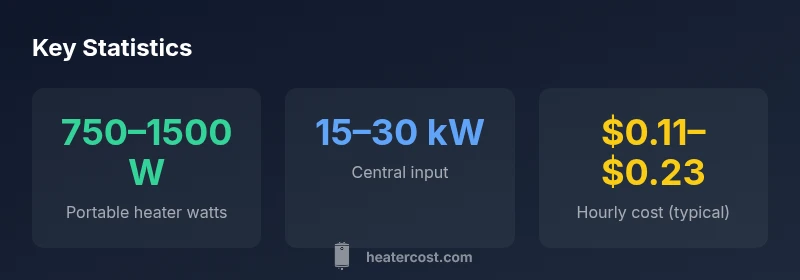
According to Heater Cost, heater electricity use varies widely by type. Portable space heaters typically consume 750–1500 watts when active, while central heating systems pull far more power, often in the 15–30 kW range during peak operation. To estimate running costs, multiply the wattage by hours of use and by your local electricity price per kilowatt-hour, then compare across options.
How to interpret heater electricity use
According to Heater Cost, energy use depends on wattage, efficiency, insulation, and usage patterns. Different heater types consume electricity at different rates, and even similar models can vary by thermostat settings and duty cycles. Understanding these factors helps homeowners estimate costs, compare options, and budget for winter heating without overspending. Wattage is the most visible metric; kilowatts (kW) indicate how much energy the heater draws, but the actual energy consumed over time depends on how many hours it is on and how effectively you translate heat to living spaces. For example, portable space heaters commonly run in the 750–1500W range, while more powerful central systems can exceed 10 kW, especially in larger homes. Your home’s insulation, air leakage, and how aggressively you set the thermostat all shape how long a heater stays on and how much energy it ultimately uses.
Estimating electricity use for different heater types
Estimating energy consumption starts with a simple equation: energy (kWh) = power (kW) × time (h) × efficiency (dimensionless). Convert watts to kilowatts by dividing by 1000. For a portable heater rated at 1200 W, running 4 hours consumes 1.2 kW × 4 h = 4.8 kWh. At a local rate of, say, $0.15 per kWh, that usage costs about $0.72. Central heating, by contrast, is often described by a much higher input—e.g., a 20 kW system running during peak hours—but the actual energy delivered depends on how much heat your home needs and insulation. If your home loses heat quickly, the heater may run longer and consume more energy, even at the same input. When planning, consider both the rated input and the real-world duty cycle dictated by indoor temperature targets and outdoor conditions.
Portable heaters vs central heating: quick comparison
- Portable heaters (750–1500 W): Great for spot heating, reducing draft exposure in a single room, and lowering overall energy when used selectively. They’re easy to install and inexpensive upfront but can become costly if used as a primary heating source for large spaces.
- Central heating (electric or gas with a furnace): Supports full-home comfort but often entails higher upfront equipment costs and utility bills. Efficiency improvements and proper zoning can significantly influence annual energy use.
- Efficiency matters: Even with a higher wattage, a well-insulated home with a properly sized central system can outperform a series of underutilized portable heaters in comfort and cost.
Calculating operating costs with real-world scenarios
Scenario A (portable heater): A 1200 W heater used 6 hours daily for 30 days at $0.15/kWh. Energy = 1.2 kW × 6 h × 30 days = 216 kWh. Cost ≈ 216 × 0.15 = $32.40. Scenario B (central heating): A 25 kW electric furnace used 8 hours daily for 30 days at $0.15/kWh. Energy = 25 kW × 8 h × 30 days = 6000 kWh. Cost ≈ 6000 × 0.15 = $900. If your rate is higher (e.g., $0.20/kWh) or the duty cycle is longer, costs rise correspondingly. These examples illustrate how wattage, hours of use, and electricity price drive bills.
Factors that influence a heater's energy use
Several factors steer energy consumption beyond raw wattage:
- Insulation and air sealing reduce heat loss, lowering run time.
- Thermostat setpoint and setback schedules determine how often the heater cycles on.
- Equipment efficiency and age affect usable heat versus wasted energy.
- Heat distribution and room size influence how effectively energy translates to comfort. A well-insulated, smaller space warms up with less energy than a large, drafty room.
Practical tips to maximize comfort while minimizing energy use
- Use zone heating to target occupied spaces and keep unused rooms cooler.
- Upgrade insulation, seal leaks, and install weatherstripping to reduce heat loss.
- Choose thermostats with programmable schedules and smart features to avoid unnecessary heating.
- Place heaters away from drafts and use fans to improve air circulation for even warmth.
- Regularly maintain heaters (filters, vents) to keep efficiency high.
Budgeting for heater electricity in 2026
Develop a practical budget by combining usage estimates with local electricity prices. A simple approach: monthly cost ≈ hours per month × (wattage/1000) × price per kWh. For homeowners and property managers, plan for seasonal variability and price fluctuations. Heater Cost's analysis shows that small changes—like better insulation, zoning, and smart thermostats—can significantly reduce yearly energy spend. The goal is predictable comfort without surprising bills.
Representative electricity use by heater type
| Heater Type | Typical Wattage | Estimated Hourly Cost (at $0.15/kWh) | Notes |
|---|---|---|---|
| Portable space heater | 750–1500 W | $0.11–$0.23 per hour | Portable, spot heating |
| Radiant panel | 300–1200 W | $0.04–$0.18 per hour | Direct heat, lower fan energy |
| Convection heater | 1000–2500 W | $0.15–$0.38 per hour | Balanced warmth for rooms |
| Central furnace (electric) | 17–30 kW | $2.55–$4.50 per hour | House-wide heating; efficiency varies |
Got Questions?
How is wattage related to electricity use?
Wattage indicates the rate at which a heater consumes energy. To find energy use, multiply the wattage (in kilowatts) by the number of hours the heater runs. This yields kilowatt-hours (kWh), the unit used to calculate electricity costs.
Wattage shows how fast a heater uses energy; multiply by hours to get your energy use in kWh.
Do standby modes consume power?
Some heaters draw power when in standby. To minimize waste, unplug when not in use or use smart plugs with timers; check the manual for standby specifications.
Yes, some units use power even when off. Unplug or use timers.
How do I calculate the annual cost of using a space heater?
Estimate hours of use per day and days per year, multiply by the heater’s wattage in kW, then multiply by your local kWh price. Add a small cushion for seasonal fluctuations.
Multiply watts by hours per year, then by your rate per kWh to get annual cost.
Is it cheaper to run a central heater or portable heater?
Central heating can be more efficient for whole-home comfort, especially with good insulation and zoning. Portable heaters are cheaper upfront but can be costlier if used as the main heat source for large spaces.
Central heating is usually cheaper for whole-home heating if you’re warming many rooms, with good insulation.
What safety considerations affect electricity use?
Follow manufacturer guidelines for clearances and indoor ventilation. Use units with automatic shutoff features and keep flammable items away from heaters to balance safety and energy use.
Safety features matter; follow guidelines and keep kids/pets away from heaters.
“Understanding electricity use is essential to budgeting heating costs; even small changes in usage can lead to meaningful savings.”
The Essentials
- Estimate usage with wattage, hours, and rate.
- Compare portable vs central to match space and needs.
- Improve insulation to reduce energy waste.
- Budget with seasonal price ranges and realistic usage.