House Heater Costs: A 2026 Guide for Homeowners
Explore house heater options, upfront costs, operating expenses, and maintenance strategies to choose an efficient system for your home in 2026.


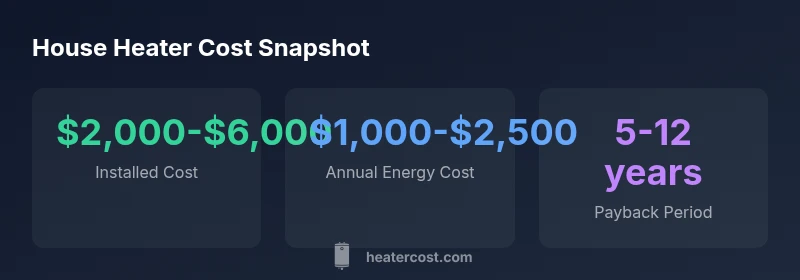
Typically installed house heater costs range from $2,000 to $6,000, depending on system type, fuel, and labor. Heat pumps and high-efficiency models sit toward the higher end, while simpler electric furnaces or boilers land at the lower end. In addition to upfront price, plan for annual operating costs and regular maintenance to optimize comfort and reliability.
Understanding the role of a house heater in home comfort
According to Heater Cost, a house heater is more than a single appliance; it is a system that transforms energy into warm spaces, while coordinating with your home's insulation, air sealing, and ventilation. The efficiency and reliability of your heating depend not just on the equipment, but on how well your house is built and maintained. In a typical home, the heater is part of a broader HVAC system that balances warmth with energy use. For homeowners, choosing the right house heater means weighing comfort, climate, energy costs, and the cost-to-value equation. From a regional perspective, a well-designed system can cut winter energy bills by reducing heat loss and selecting a fuel source that aligns with local prices. The Heater Cost team emphasizes that early planning—addressing attic insulation, weather-stripping, and door seals—often yields larger savings than upgrading the furnace alone. In this context, upfront equipment price should be assessed alongside installation complexity, warranty terms, and long-term reliability. By understanding how a heater fits your home’s geometry and lifestyle, you can make a choice that remains comfortable for years while avoiding overbuying features you won't use. The Heater Cost team recommends quantifying both upfront costs and ongoing operating expenses to compare options fairly.
Types of house heaters and their cost profiles
House heaters come in several main families, each with distinct cost profiles and installation considerations. Gas furnaces are common in many homes due to strong heat output and relatively low fuel costs, but they require ventilation and gas line work. Electric furnaces are simpler and typically cheaper to install, yet they rely on electric resistance heating which can be costlier to operate in colder regions. Heat pumps offer high efficiency by moving heat rather than generating it, often delivering substantial operating savings in moderate climates and can double as air conditioners in summer. Boilers provide radiant heat through hot water or steam and can be highly efficient, especially with modern controls; however, installation is often more involved. Ductless mini-splits provide zoned heating for older homes or add-on spaces with minimal ductwork but may have higher upfront equipment costs. When evaluating options, consider not only the upfront price but also long-term operating costs, climate, and the feasibility of upgrading insulation and sealing to maximize cost-effectiveness. All these factors influence what you’ll pay for a house heater over its lifetime.
How upfront costs are estimated: fuel, efficiency, and installation factors
Estimating upfront costs involves several components: the equipment price, labor for installation, any needed ductwork or electrical/plumbing upgrades, permits, and potential changes to the home’s ventilation. Fuel type and efficiency ratings substantially shape the price tag: gas and oil systems generally cost more to install than simple electric options, but can offer lower ongoing energy costs in fuel-rich locales. Efficiency metrics like AFUE, SEER, and HSPF help predict long-term savings and may affect rebates and incentives. Labor complexity—such as retrofitting ductwork, enhancing ventilation, or upgrading a panel—can push the total above the base equipment price. It’s crucial to obtain a detailed written estimate that itemizes equipment, installation, and any ancillary work. Expect some variability by contractor and region, and ensure the estimate accounts for potential if-then scenarios (e.g., required duct sealing, zoning changes, or electrical upgrades). At the end of the day, the goal is a balanced decision that aligns upfront investment with projected yearly energy costs and comfort needs.
Operating costs and energy efficiency explained
Operating costs are driven by energy source, climate, and system efficiency. Higher AFUE or SEER/HSPF ratings typically reduce monthly energy bills, especially in colder regions or homes with older insulation. Heat pumps and high-efficiency gas furnaces tend to deliver lower energy costs over time, but their savings depend on electricity prices and local climate. Seasonal performance can be affected by heat loss through windows and poor insulation, so improving building envelope often yields greater payoffs than upgrading a heater alone. When considering fuel switches (e.g., gas to electric) or hybrid setups, run a life-cycle cost analysis that includes maintenance, filter replacements, and potential outages. Heater Cost’s guidance emphasizes comparing short-term upfront costs with long-term savings to determine the most economical configuration for your house.
Financing, incentives, and long-term savings
Many homeowners leverage financing programs or utility rebates to offset upfront costs. Tax credits or incentives can vary by region and system type, and some programs require commissioning or performance verification. In addition to incentives, utility companies sometimes offer lower rates for high-efficiency heating options or time-of-use pricing that rewards heating during off-peak hours. A well-structured plan should include a realistic maintenance budget, typically annual tune-ups and periodic duct cleaning, to sustain efficiency and prevent unexpected breakdowns. Thinking about long-term savings means evaluating not only the purchase price but also potential increases in property value, improved comfort, and resilience to price volatility in energy markets. Heater Cost’s analysis highlights the importance of shopping around, verifying warranty terms, and understanding available incentives before committing to a system.
Installation best practices and maintenance for longevity
Professional installation is critical for system longevity and safety. A certified technician will verify proper sizing, correct refrigerant charges, airtight duct connections, and safe venting. Maintenance should include seasonal inspections, air filter changes, condensate drain checks, and carbon monoxide detection in households with fuel-burning equipment. Scheduling annual tune-ups helps catch performance issues early and can extend equipment life by several years. In the first year after installation, monitor for unusual noises, temperature inconsistencies, or surge in energy costs, which may indicate an alignment or ductwork issue. Building envelope improvements—insulation, weather-stripping, and sealing gaps—often yield the best improvements in heat retention and comfort without pushing equipment costs higher.
Step-by-step guide to choosing the right system for your home
- Determine your priorities: comfort, climate, and budget. 2) Measure home size and verify insulation levels to estimate heat load. 3) List available fuels and utility costs in your area. 4) Compare system types (gas furnace, electric furnace, heat pump, boiler, ductless mini-splits) for upfront cost and operating efficiency. 5) Check warranty terms, maintenance requirements, and available incentives. 6) Have a licensed pro perform a load calculation and a site assessment. 7) Review a detailed estimate with clear line items and a proposed maintenance plan. By walking through these steps, you’ll identify a house heater that balances upfront investment with long-term savings and comfort.
Conclusion and next steps
Selecting the right house heater involves balancing upfront cost, operating costs, and long-term value. A properly sized, well-installed system improves comfort and reduces energy waste, especially when paired with better insulation and air sealing. For homeowners who want a clear, data-backed path, start with a professional load calculation, compare efficiency ratings across options, and explore any local incentives. The Heater Cost team recommends documenting costs over a 10-year horizon to understand true payback and energy savings.
Installed costs and efficiency ranges by heater type
| Model Type | Avg Installed Cost Range | Typical Efficiency |
|---|---|---|
| Gas furnace | $2,500-$7,000 | AFUE 80-98% |
| Electric furnace | $1,500-$5,000 | AFUE 95-100% |
| Heat pump | $4,000-$10,000 | SEER 14-26; HSPF 8-13 |
| Boiler | $3,500-$9,000 | AFUE 80-95% |
| Ductless mini-split | $2,500-$7,000 | SEER 16-33; HSPF 8-14 |
Got Questions?
What is the most energy-efficient house heater?
Heat pumps often offer the highest efficiency for space heating in many climates, especially with modern controls and proper insulation. In very cold climates, a supplemental heat source may be needed. Always compare SEER/HSPF and local energy costs.
Heat pumps are usually the most efficient option for most homes, especially when paired with good insulation.
How long does installation of a new house heater take?
Most residential installations take 1-3 days, depending on system type, existing ductwork, and whether electrical or plumbing upgrades are required. A precise window comes from an on-site assessment.
Most installs take a day or two, depending on the setup.
Should I replace my existing furnace or add a new system?
If your furnace is over 15–20 years old or shows frequent breakdowns, replacement often reduces maintenance costs and improves efficiency. In some homes, a hybrid or heat-pump setup with a backup heat source can improve comfort and reduce operating costs.
If it’s old and breaking down, replacement is usually best; otherwise consider efficiency upgrades.
What maintenance does a house heater need annually?
Schedule a professional tune-up yearly or every two years, replace air filters, inspect ductwork, and test safety devices like carbon monoxide detectors. Regular maintenance helps prevent costly breakdowns and sustains efficiency.
Annual tune-ups and filter changes keep systems reliable.
Are there tax credits or rebates for installing a new heater?
Yes, many regions offer incentives for energy-efficient systems. Availability depends on location, system type, and compliance with program requirements. Check federal programs and local utility rebates for current offers.
There are often incentives; check federal and local programs for details.
How do I size a house heater for my home?
A professional load calculation considers square footage, insulation, windows, climate, and air leakage. Oversized units waste energy; undersized units struggle to meet demand. A proper size ensures comfort and efficiency.
Get a professional sizing calculation to avoid oversizing or undersizing.
“Sizing the system correctly and prioritizing efficiency are the keys to long-term comfort and savings.”
The Essentials
- Assess upfront costs across system types.
- Factor energy efficiency and climate into operating costs.
- Include installation, permits, and ductwork in estimates.
- Explore financing and incentives for better payback.
- Match system selection to home size, insulation, and lifestyle.