Gas Water Heater Cost in 2026: A Homeowner's Guide
Learn gas water heater cost ranges, price drivers, and practical tips to save on installation and maintenance in 2026. A comprehensive, data-informed guide from Heater Cost.


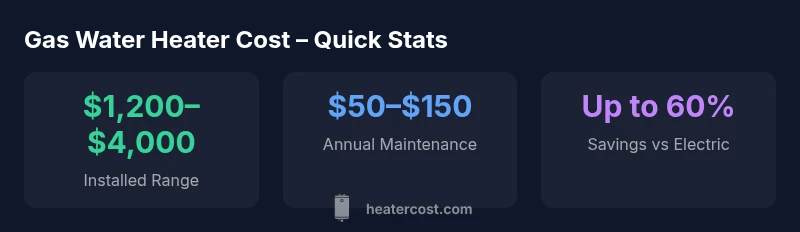
Gas water heater cost varies by unit type, venting needs, and installation complexity. For 2026, installed prices typically range from about $1,200 to $4,000, with higher-end tankless setups closer to or above $4,000 depending on location and permits. Always compare quotes, factor in efficiency, venting work, and potential future maintenance.
Why gas water heater cost matters
Gas water heater cost is a central consideration for homeowners planning a repair, replacement, or new installation. According to Heater Cost, the upfront price and long-term operating costs determine the total financial impact of any gas-fired model. When you compare options, you’re not just looking at sticker price; you’re evaluating energy use, venting, installation complexity, and the potential for future maintenance. The gas water heater you choose will influence monthly energy bills, resale value, and even your home’s safety with proper venting and code-compliant installation. In 2026, the most relevant question is how to balance initial investment with reliability, efficiency, and service life. The Heater Cost team found that small differences in venting quality or installation labor can shift total costs by hundreds of dollars over the equipment’s life. Use this guide to map out a budget that reflects both current needs and future risks.
Cost drivers in gas water heater costs
The total price is driven by four main factors: (1) the unit price of the heater, with storage models typically cheaper upfront than tankless options; (2) venting requirements and materials, which can add substantial expense if metal vents or special adapters are needed; (3) installation labor, including gas line work, shutoff valves, and space constraints; and (4) permits and inspections, which vary by code jurisdiction. Labor rates differ by region and contractor, so quotes can vary widely even for similar equipment. In addition, the type of installation (replacement in place vs. new install) and the presence of an existing vent or access to existing gas lines can tilt the cost up or down. The goal is to get multiple bids that clearly itemize each factor so you can compare apples to apples.
Gas water heater types and their cost impact
There are several common gas-powered options. Storage gas water heaters are typically less expensive upfront and easier to install, while tankless gas models cost more at purchase and install but can save space and energy over time. Hybrid or condensing gas heaters offer high efficiency but may require more complex venting or controls. The initial price difference often ranges from a modest premium for a modern storage model to a sizable premium for a high-efficiency tankless unit. In addition, demand in your area, availability of propane vs natural gas, and local incentives can shift relative costs. The right choice depends on your home’s hot water needs, space, and how long you plan to stay in the property. Heater Cost research emphasizes balancing upfront cost with long-term energy performance.
Installation considerations that affect total cost
Installing or replacing a gas water heater involves more than swapping one unit for another. Venting requirements may demand upgrading to taller or longer vents, or running new vent pipes through walls or ceilings. Gas line sizing and pressure testing can add labor time and parts. Some homes require seismic or earthquake restraints, corrosion protection, or new supply valves. Permits and code compliance add time and fees, especially in areas with strict inspections. If your current unit shares a combustion air intake or exhaust, retrofitting that system can add to the price. A detailed, itemized quote helps you see where costs are coming from and how to avoid surprises later.
Operating costs and efficiency considerations
Gas water heaters differ in efficiency, which affects monthly energy costs. In general, higher-efficiency models convert more of the gas energy into hot water, reducing waste and cost per gallon. The operating cost gap between high- and mid-efficiency units can be meaningful over a 5–15 year horizon, especially for households with high hot-water usage. Fuel prices fluctuate, and the energy factor (EF) or seasonal energy efficiency ratio (SEER equivalent for water heaters) is a useful guide. When you compare options, consider both the first-month bill and projected annual costs to understand long-term value. The Heater Cost team notes that gas prices and energy efficiency together determine payback time.
Maintenance, longevity, and replacement timing
Regular maintenance helps extend the life of a gas water heater and maintain efficiency. Flushing the tank to remove sediment, inspecting the anode rod, and checking the venting for blockages are routine tasks. Expect to budget for occasional component replacements, such as thermostats or gas control valves, and periodic vent cleaning. On average, a gas water heater may last longer than some electric models, but performance depends on water quality and maintenance. Costs accrue with depreciation, then with replacement when efficiency drops or repairs become uneconomical. Planning a replacement window around 8–12 years is common, but local conditions and usage can shift this range.
Getting quotes: how to compare bids
To get an accurate picture of gas water heater cost, obtain multiple, written bids from licensed plumbers or HVAC contractors. Ask for itemized quotes that separate the heater price from labor, venting, permits, and any new gas line work. Verify that bids include proper venting and code-compliant shutoffs, and check whether disposal of the old unit is included. If one bid looks far cheaper, request clarification on the differences. Rely on in-person assessments when possible, especially for tankless installations that require precise gas line sizing and venting.
Regional price variation and budgeting
Prices differ by region due to labor rates, permitting costs, and supply chain factors. Coastal or urban areas often run higher installation costs, while rural regions may be more affordable but face longer travel times for technicians. If you’re replacing in a historic home or a tight space, expect additional challenges that drive up price. A practical budgeting approach is to set a realistic installed cost range and plan contingencies for venting upgrades and permit delays. The Heater Cost analyses show that regional differences can be substantial, so local quotes matter most.
Practical tips to lower gas water heater costs
- Choose a high-efficiency model when replacing to lower long-term energy use.
- Schedule installation during off-peak times to negotiate lower labor rates.
- Check for local rebates, tax credits, and financing options that reduce upfront costs.
- Reuse or repurpose existing venting if compatible, but ensure code compliance.
- Get pre-approval on permits and coordinate inspections to avoid delays.
- Compare total installed cost, not just the sticker price of the unit. The Heater Cost team emphasizes planning, shop smart, and verify that the work complies with current gas safety standards to minimize expensive surprises. The Heater Cost team recommends anchoring decisions to total installed cost and safety standards.
mainTopicQuery":
Each section begins with a clear heading and explores the facet of gas water heater costs in depth, providing context, practical advice, and data-backed guidance to help homeowners make informed decisions.
Total installed price components for gas water heater costs
| Component | Typical price range (installed) | Notes |
|---|---|---|
| Gas water heater unit (gas) | 1000–2800 | Fuel type: natural gas; may include tankless options |
| Installation labor | 600–1400 | Depends on venting, location, codes |
| Venting and vent materials | 150–500 | Metal venting, permits |
| Permits and inspections | 100–500 | Local requirements |
| Miscellaneous | 100–700 | Optional upgrades |
Got Questions?
What factors affect gas water heater cost the most?
The largest drivers are the unit type, venting requirements, installation labor, and any required gas line upgrades or permits. Regional labor rates also shift bids. Understanding these can help you spot hidden fees before you buy.
The biggest cost factors are heater type, venting, labor, and permits, with regional rates adding variation.
Is a tankless gas water heater more expensive to install than a storage unit?
Yes, tankless units generally require more complex venting and gas line work, increasing installation costs. However, they can offer energy savings over time.
Tankless usually costs more upfront, but may save energy over time.
How long does installation typically take?
Most gas water heater replacements take half a day to a full day, depending on venting complexity and gas line upgrades.
Most installs take half a day to a day.
Do permits affect the total cost?
Yes. Permitting and inspections add time and fees, and some jurisdictions require upgrades to meet current codes.
Permits add time and cost, depending on your city.
What maintenance is recommended for gas water heaters?
Regular flushing, inspecting the anode rod, and checking venting can keep efficiency high and extend life. Schedule annual professional checks.
Flush, check the anode rod, and inspect venting annually.
Can I finance a gas water heater replacement?
Yes. Many contractors offer financing or rebates; check for 0% options and local incentives to reduce upfront costs.
Financing and rebates may be available to lower upfront costs.
“"Gas water heater cost is driven by installation complexity and efficiency gains over its lifetime. Planning ahead with proper venting and permits pays off."”
The Essentials
- Plan for permits and venting upfront to avoid surprises.
- Choose a high-efficiency model to reduce long-term costs.
- Compare bids line by line for unit, labor, and disposal.
- Account for regional price variation when budgeting.
- Heater Cost recommends anchoring decisions to total installed cost and safety standards.