Pool Heater vs Heat Pump: A Comprehensive Comparison
A detailed, objective comparison of pool heaters and heat pumps to help homeowners decide which option fits climate, budget, and usage—covering performance, costs, installation, and maintenance.


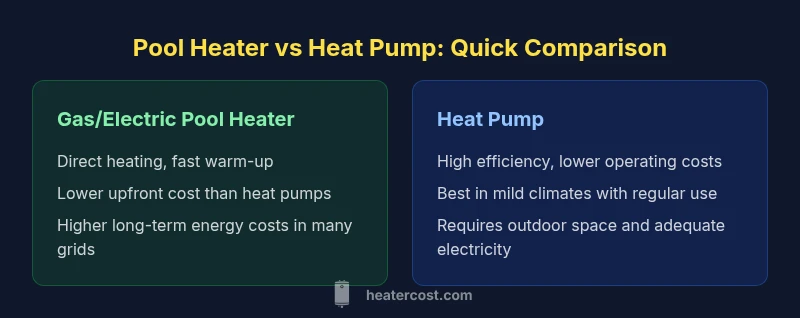
Pool heater vs heat pump: In most homes, a heat pump offers top energy efficiency for temperate weather, while traditional pool heaters (gas or electric) shine for rapid warming or cold-season use. For homeowners prioritizing long-term costs and environmental impact, heat pumps are often the better pick; for frequent, quick warming or freezing conditions, a conventional heater may be more reliable.
Pool heater vs heat pump: which is best for you?
Choosing between a pool heater and a heat pump hinges on climate, pool usage, and budget. The Heater Cost Team emphasizes that the right choice balances upfront cost, long-term operating expenses, and maintenance needs. In moderate climates with steady swimming season demand, a heat pump often delivers the best combination of efficiency and comfort. In very cold climates or for households that demand rapid warmth on demand, a traditional pool heater can be more reliable. This section delves into how each system works, what to expect in real-world scenarios, and how to approach a decision with a structured framework. The goal is to equip homeowners, renters, and property managers with actionable guidance, backed by practical cost-and-performance considerations, not hype. According to Heater Cost, climate exposure, electricity costs, and pool usage patterns are the biggest levers that determine value across pool heating options.
How a heat pump heat a pool—and why it’s popular
A heat pump accomplishes pool heating by extracting heat from the outside air and transferring it to the pool water through a refrigerant cycle. It functions most efficiently in climates with mild to warm temperatures and when the pool is used regularly over the swimming season. The efficiency of heat pumps is measured by a coefficient of performance (COP), which typically improves when outdoor temps are stable and humidity is moderate. The upfront equipment cost is higher than a simple electric or gas heater, but long-term operating costs can be lower, especially if electricity remains competitive and the pool is used frequently. The Heater Cost Team notes that the environmental footprint can be lower than fuel-burning heaters, assuming a relatively clean electricity grid.
How traditional pool heaters work (gas and electric)
Traditional pool heaters include natural gas or propane-fired units and electric resistance heaters. Gas models heat water quickly and can be more effective in cold weather or during peak demand when a rapid temperature rise is needed. Electric resistance heaters provide a simple, reliable option but can consume a lot of electricity if used for extended periods. Both types have lower initial cost than high-efficiency heat pumps in many cases, but operating costs can be higher, especially when fuel prices rise or electricity rates are high. Maintenance often centers on venting (gas) and electrical connections, with components like heat exchangers and elements requiring periodic checks. As noted by Heater Cost, the choice may hinge on availability of natural gas, electricity rates, and how quickly you want to reach the target pool temperature.
Key differences in performance and suitability
- Efficiency and cost profile: Heat pumps tend to be more energy-efficient in temperate climates, delivering lower operating costs over time. Gas/electric heaters can provide rapid heating and are less climate-dependent but typically carry higher energy costs over extended use. Heater Cost analyses suggest that the sum of upfront and ongoing costs drives the decision more than any single factor.
- Climate dependency: Heat pumps rely on ambient air warmth; their effectiveness declines as temperatures drop. Gas/electric heaters function consistently regardless of outdoor weather, making them more versatile for year-round swimmers in colder regions.
- Comfort and timing: If you need fast pool warming after a long day, a gas heater may outperform a heat pump. For continuous swimming and energy-conscious homeowners, a heat pump offers a steadier, more efficient approach. The real-world takeaway is to tailor the system to your climate and usage pattern, then plan for seasonal adjustments.
- Space and installation: Heat pumps require outdoor space for the condenser and typically need electrical upgrades. Gas heaters require venting and clearance, which adds to the installation footprint. Solar options might supplement either system but depend heavily on sunlight access. Heater Cost highlights that installation practicality often drives the final choice as much as ongoing costs.
Climate, usage patterns, and reliability in real life
For households in mild climates with a predictable swimming season, a heat pump provides the best balance of comfort and cost over the long term. In areas with cold winters or sporadic pool use, gas or electric resistance heaters can be valuable backups or primary heat sources when speed is essential. Reliability hinges on proper sizing, professional installation, and regular maintenance. The Heater Cost Team recommends performing a cautious load calculation and considering backup heating for peak demand days. Remember that a well-insulated pool and a good cover can reduce heating loads, regardless of the heating method.
Feature Comparison
| Feature | Gas/Electric Pool Heater | Heat Pump (Air-Source) | Solar Pool Heater |
|---|---|---|---|
| How it heats water | Burns fuel or uses electric resistance to heat water | Transfers heat from outside air via refrigerant cycle | Uses collected solar heat to warm water |
| Efficiency | Moderate to high depending on fuel and system size | High efficiency in moderate climates; performance drops in cold weather | Low to moderate efficiency dependent on sun exposure |
| Best climate | Anywhere with fuel access; cold snaps can be heated quickly | Mild to warm climates with regular sun or moderate winters | Sun-rich locations; limited by collector area and weather |
| Upfront cost | Low to moderate, varies by size and fuel type | Moderate to high for equipment and installation | Low to moderate; depends on solar collector cost and installation |
| Operating cost | Higher when fuel or electricity costs are high; preventative maintenance matters | Lower in steady electricity markets; back-up fuels can raise costs | Very low when sun is abundant; system primarily affects long-term costs |
| Maintenance | Regular servicing of burners/elements and venting; periodic checks | Annual checks recommended for refrigerant and coils; fan and filter upkeep | Occasional cleaning and inspection; no moving parts to wear |
| Space requirements | Outdoor unit with venting and clearance; may require gas line or dedicated electrical feed | Outdoor condenser with proper clearance; space for installation | Roof or ground-mounted collectors; plumbing integration |
| Best for | Fast heating, reliability in fuel-rich areas | Energy efficiency, long-term savings in temperate climates | Budget-conscious clean-energy heating, sunny sites |
The Good
- Lower long-term operating costs in temperate climates
- Potentially greener operation with clean electricity
- Works well with a pool cover to reduce heat loss
- Flexible installation options with modern, compact units
- Better suitability for ongoing seasonal swimming
Negatives
- Higher upfront cost for heat pump systems
- Performance drops in very cold ambient temperatures
- Gas/electric heaters may require venting or electrical upgrades
- Solar heaters depend on sun, weather, and space constraints
Heat pumps are the generally stronger choice for temperate climates with steady pool use; traditional heaters remain valuable backups or rapid-heating solutions in colder or high-demand scenarios.
If your climate is mild and you swim regularly, a heat pump usually offers the best balance of efficiency and long-term costs. In colder climates or for those needing quick warming, keep a traditional gas/electric heater as a robust option or backup. The final pick should align with climate, usage patterns, and upfront budget.
Got Questions?
What is the fundamental difference between a pool heater and a heat pump?
A heat pump transfers heat from the outside air into the pool water using a refrigerant cycle, while a traditional pool heater burns fuel or uses electric resistance to heat water directly. Heat pumps are generally more energy-efficient in mild climates, while fuel-fired or electric heaters provide rapid heating and are less climate-dependent. The choice depends on climate, usage, and energy costs.
A heat pump moves heat from outside into your pool and is usually more energy-efficient where temperatures are mild; traditional heaters burn fuel or use electricity to heat water directly, which can be faster in cold weather.
Are heat pumps suitable for very cold climates?
Heat pumps lose efficiency as outdoor temperatures drop, so their cost advantage can shrink in very cold weather. In such cases, many users keep a supplemental heater or select a hybrid approach to ensure pools heat reliably year-round.
Heat pumps work best when it’s not freezing outside; in very cold climates you may need a backup heater.
Which option has lower upfront costs?
Gas/electric pool heaters typically have lower initial costs than high-efficiency heat pumps, but you should weigh long-term energy costs and maintenance when deciding.
Gas heaters usually cost less to start, but heat pumps can save money over time if electricity costs aren’t too high.
Do I need backup heating for winter or shoulder seasons?
Yes, many pool owners use a backup method during shoulder seasons or cold snaps. A hybrid approach—heat pump for regular use with a gas/electric backup—often provides reliable comfort.
You’ll likely want backup heating for chilly days or long winters.
How can I estimate operating costs without exact prices?
Consider your climate, pool size, usage, and electricity or gas rates. Use a simple total-cost perspective: upfront plus annual energy cost, then compare over several seasons.
Think about climate, how often you swim, and your energy bills to estimate costs.
What maintenance is common to both options?
Regular inspection of heat exchangers, fans, filters, and electrical connections; for gas heaters, venting and combustion components require periodic checks. Proper sizing and professional service are key for longevity.
Both need periodic checks, especially the cooling and heating components, to avoid efficiency loss.
The Essentials
- Evaluate climate before choosing heating method
- Heat pumps excel in mild weather and long-term costs
- Gas/electric heaters offer rapid heating and reliability in cold weather
- Solar can supplement but depends on sun exposure and space
- Plan for proper installation and seasonal maintenance