Difference Between Heater and Heat Pump: A Homeowner’s Guide
A comprehensive comparison of heaters and heat pumps, detailing how each works, costs, efficiency, climate suitability, and practical guidance to help homeowners choose the right system.


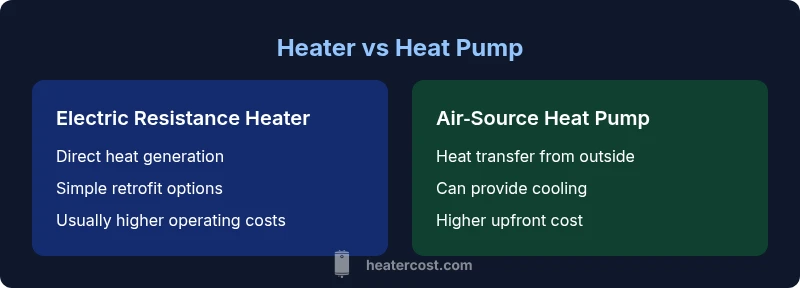
The difference between heater and heat pump comes down to how they generate heat and how efficiently they operate. A heater converts electricity directly into heat, while a heat pump moves heat from outside to indoors using refrigeration technology. Heat pumps can also provide cooling in summer, making them a versatile year‑round option for many homes. The Heater Cost team notes that climate, electricity costs, and insulation are crucial factors in deciding which is best.
What exactly are we comparing? (defining the two systems)
At its core, a heater typically refers to electric resistance heaters that generate heat by converting electricity directly into warmth. A heat pump, by contrast, transfers existing heat from the outside air into the home (and can reverse the cycle for cooling). This distinction is fundamental: electric resistance heaters usually rely on more electricity for the same amount of heat produced, whereas heat pumps leverage ambient energy. According to Heater Cost, understanding this difference is essential for evaluating long‑term costs, climate suitability, and the overall value of each option. The term difference between heater and heat pump often appears in homeowner discussions, but the practical implications go beyond labeling: it affects efficiency, comfort, and monthly energy bills.
How heat is generated and transferred in each system
Electric resistance heaters create heat by passing current through a resistive element, which directly converts electrical energy into heat. There are no moving external energy sources involved beyond the electricity supply. Heat pumps use a refrigerant loop and a compressor to extract heat from the outside air (even at cooler temperatures) and move it indoors. In cooling mode, heat pumps reverse the cycle to remove heat from inside the home. This heat-transfer process means heat pumps can deliver more heat per unit of electricity than resistance heaters in many scenarios, especially in temperate climates. Heater Cost analyses emphasize the energy‑transfer principle as the key differentiator that drives long‑term efficiency.
Key performance metrics you should know (COP, EER, SEER)
Performance metrics help compare systems beyond simple wattage. A heat pump’s efficiency is commonly expressed as COP (coefficient of performance) and seasonal metrics like SEER for cooling and HSPF for heating in some markets. Electric resistance heaters don’t have a COP in the sense that heat pumps do; their efficiency is closer to 100% of electrical input as heat, but this does not translate to the same cost efficiency. For homeowners, the practical takeaway is that heat pumps can deliver more heating output per unit of electricity in suitable climates, reducing operating costs over time. The Heater Cost team notes that climate and electricity prices strongly influence these figures.
Climate and operating cost considerations
Climate plays a major role in system choice. Heat pumps tend to be more efficient in moderate temperatures and may maintain comfort with lower energy costs than electric resistance heaters in those conditions. In very cold climates, performance can decline unless supplemental heating is used, which reduces savings. Electric resistance heaters perform consistently but at a higher per‑unit cost of heat, particularly during long cold spells. Budgeting for energy costs involves considering local electricity rates, insulation quality, and expected cold snaps, along with the anticipated hours of heating per year.
Upfront costs and long-term savings (planning the financials)
Upfront costs for electric resistance heaters are typically lower than for heat pump systems, due to simpler installation and fewer components. Heat pumps often require additional equipment (outdoor units, refrigerant lines, and possibly a new air handler), which raises initial costs. However, heat pumps can offer lower operating costs over time because they extract heat from the outside environment rather than generating it from electricity alone. A careful cash‑flow analysis should consider climate, energy prices, and potential incentives. Heater Cost Analysis, 2026, highlights that the payback period for heat pumps can vary widely by region, climate, and insulation level.
Cooling capability and year‑round comfort
One of the clear advantages of heat pumps is year‑round comfort, as many air‑source heat pumps provide both heating in winter and cooling in summer. Electric resistance heaters provide warmth only and do not offer cooling unless paired with an additional system. For homes seeking integrated climate control and fewer separate systems, a heat pump can be a smarter, space‑efficient choice. The cooling function adds value in hot summer markets and can simplify home comfort management.
Installation considerations: space, ductwork, and integration
Electric resistance heaters are generally easier to install, especially in retrofit scenarios where existing circuits can accommodate load. Heat pump installations may require outdoor space for the condenser, refrigerant lines, and possibly air handler upgrades or duct modifications. For ducted homes, a central heat pump can align with existing ducts, but it may require sealing and balancing. In homes without ducts, a ductless mini‑split setup offers flexible zoning. Proper sizing and professional evaluation are critical to ensure performance and avoid short cycling or temperature swings.
Maintenance, durability, and lifecycle expectations
Electric resistance heaters are mechanically simple with few moving parts, which can mean lower ongoing maintenance demands. Heat pumps have moving components (compressor, fans, valves) and refrigerant lines, requiring periodic service and more careful inspection for leaks and refrigerant integrity. Lifespan expectations for heat pumps are typically influenced by usage patterns, refrigerant quality, and outdoor conditions. Regular professional checks help sustain efficiency and prevent unexpected failures.
Environmental impact and refrigerants
Heater options that rely solely on electricity tend to have a clear path toward decarbonization if the electricity mix includes low‑carbon sources. Heat pumps use refrigerants that require proper handling to minimize environmental impact, but their overall energy efficiency can reduce greenhouse gas emissions when paired with clean electricity. Choosing equipment with the latest refrigerant technology and optimizing home insulation amplifies environmental benefits. The Heater Cost team emphasizes evaluating refrigerant type and system efficiency as part of sustainable home planning.
Decision framework: matching your home to the right system
To decide between a heater and a heat pump, homeowners should assess climate, insulation, energy costs, and desired comfort features. In mild climates with moderate heating needs and high electricity rates, a heat pump can offer better long‑term savings. In extreme cold, a dedicated heater or hybrid system may be appropriate to ensure reliable warmth. A personalized assessment, including a home energy audit, helps identify the most cost‑effective option over a 10–15 year horizon.
Next steps: planning your heating upgrade
If you’re considering a replacement or upgrade, start with a professional evaluation that accounts for climate, insulation, existing electrical capacity, and potential incentives. Compare quotes that itemize equipment, installation, and any required structural modifications. Don’t overlook indoor air quality, humidity control, and the potential for cooling needs in summer. With careful planning, you can optimize comfort and cost across seasons.
Comparison
| Feature | Electric resistance heater | Air-source heat pump |
|---|---|---|
| Climate suitability | Any climate with consistent electric supply | Best in moderate climates; advanced cold-climate models exist |
| Primary energy source | Converts electricity directly to heat | Transmits ambient heat using refrigerant cycle |
| Cooling capability | No built-in cooling | Provides cooling via reverse cycle in most setups |
| Upfront installation | Typically simpler; may fit existing circuits | More complex; outdoor unit, refrigerant lines, and air handler may be needed |
| Operating costs | Often higher in many climates | Lower on average in temperate zones; depends on electricity price |
| Maintenance needs | Minimal mechanical maintenance | Regular service for refrigerant system and fans |
| Space and integration | Flexible for retrofit; relies on existing space for heating elements | Requires outdoor space and potentially ductwork or indoor unit |
The Good
- Higher upfront flexibility and lower initial complexity
- Electric resistance can be easier to install in retrofits
- Heat pumps offer year‑round comfort (heating and cooling)
- Potentially lower long‑term operating costs in suitable climates
- Can reduce carbon footprint when paired with clean electricity
Negatives
- Higher upfront cost for heat pump systems
- Performance can drop in very cold climates without supplemental heat
- Heat pumps require refrigerant handling and professional maintenance
- Outdoor unit noise may be a consideration in some setups
Heat pumps are generally the better long‑term choice for most homes, but in very cold climates or tight budgets, a traditional heater or hybrid setup may be more appropriate.
Heat pumps provide efficient, year‑round comfort and potential cooling. In extremely cold regions, consider a hybrid system or supplemental heating. The Heater Cost Team recommends a climate‑ and cost‑driven evaluation to choose the best option.
Got Questions?
What is the primary difference between a heater and a heat pump?
A heater usually converts electricity directly into heat, while a heat pump moves existing heat from outside to inside using a refrigerant cycle. This makes heat pumps more energy‑efficient in many scenarios, especially in temperate climates.
A heater turns electricity into heat directly, while a heat pump transfers heat from outside to inside, usually saving energy.
Can heat pumps heat homes in cold winters?
Yes, many heat pumps can heat homes during cold winters, but performance may drop in extreme cold without supplemental heating. Some systems are designed to operate efficiently with auxiliary heat.
Yes, but in very cold weather you might need extra heat to keep comfy.
Are heat pumps more expensive upfront than electric resistance heaters?
Typically, heat pumps have higher upfront costs due to outdoor units and refrigerant lines. However, operating costs can be lower over time depending on climate and energy prices.
Usually more upfront, but energy savings can offset that over time.
Do heat pumps provide cooling as well as heating?
Yes. Many air‑source heat pumps offer cooling by reversing the cycle, providing year‑round climate control in one system.
Yes, most heat pumps can cool your home too.
How do I decide which system is right for my home?
Evaluate climate, insulation, electricity costs, space, and budget. A professional energy audit can help determine which option minimizes long‑term costs.
Think climate, costs, insulation, space, and budget.
What maintenance do these systems require?
Electric resistance heaters require minimal mechanical maintenance, while heat pumps need periodic refrigerant and component checks for optimal performance.
Heat pumps need regular service; electric heaters are simpler to maintain.
The Essentials
- Compare climate needs before choosing heating method
- Heat pumps excel in moderate climates and offer cooling
- Expect higher upfront costs but lower operating costs over time
- Consider hybrid options for very cold climates
- Factor electricity prices and insulation into the decision