heater vs heat pump: a comprehensive comparison
A comprehensive, objective comparison of heaters and heat pumps, covering efficiency, climate suitability, costs, and installation considerations to help homeowners, renters, and property managers decide which heating system fits their needs.


How a heater and a heat pump work
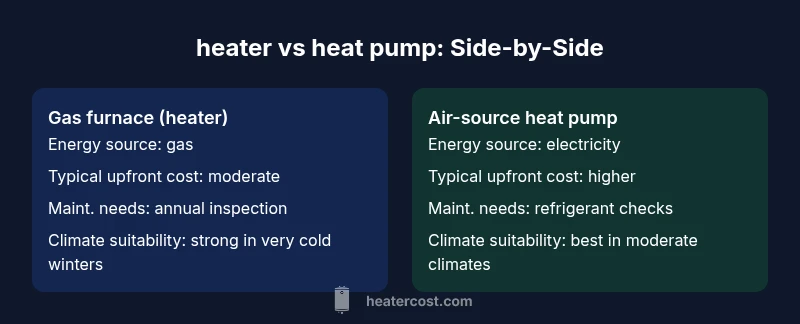
A heater (often a gas furnace or electric resistance system) generates heat directly. Gas furnaces burn fuel to create hot air that is distributed through ducts, while electric resistance heaters warm coils that transfer heat via air. A heat pump, by contrast, moves heat rather than creates it. It uses a refrigerant cycle driven by a compressor to draw ambient heat from outside (even when it’s cold) and release it inside. In warm months, most heat pumps can reverse the cycle to provide air conditioning. Because a heat pump is moving heat instead of generating it, its efficiency is often higher in moderate climates and with well‑insulated spaces. The keywords for this topic—heater vs heat pump—capture the fundamental distinction: generation versus transfer of heat.
From a practical standpoint, the heater’s performance can be highly consistent in very cold conditions when paired with backup heat, but its operating costs depend heavily on fuel prices. A heat pump offers strong efficiency when electricity is reasonably priced and the outdoor temperature is not extreme, with the caveat that efficiency can decline as outdoor temperatures fall unless a supplemental heat source is available. When evaluating these systems, homeowners should consider not just the primary heat source but also the overall system design, including insulation, ductwork, and thermostat controls. It’s essential to view heater vs heat pump as a decision about energy flow, not merely a single appliance choice.
Key takeaway: The decision hinges on local climate, energy costs, and home envelope quality, not on a single factor alone.