Pool Heater Portable: Costs, Tips, and Performance in 2026
Explore portable pool heaters: how they work, cost ranges, and practical guidance to choose, install, and maintain for efficient seasonal swimming in 2026.


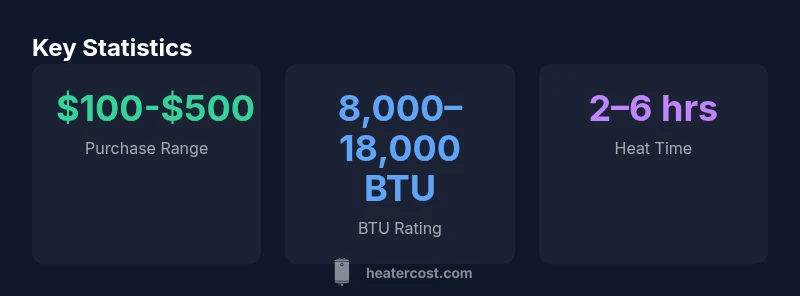
According to Heater Cost, portable pool heaters offer flexible, seasonal warmth for outdoor pools. Typical purchase prices range from $100 to $500, with installation often a simple DIY task or minimal professional help. When choosing, compare BTU output, heating time, energy source, safety features, and running costs across seasons. Electric units are easier to install but may cost more to run in hot climates, while gas models heat quickly but require venting and handling fuel.
How portable pool heaters work
Portable pool heaters are compact units designed to heat water as it circulates through a hose or built in pump. They typically sit near the pool equipment and connect via standard hoses or in line fittings. Electric resistance models pass current through elements that warm water as it flows past, while propane or natural gas portable heaters burn fuel to heat the water and vent exhaust. Heat pumps extract ambient heat from the air and transfer it into water, a method often more efficient in mild climates and during shoulder seasons. When you turn on a portable heater, the water passes through an exchanger and returns warmer to the pool; the rate of temperature rise depends on the heater’s BTU rating, the pool volume, ambient air temperature, wind, and pool surface area. For seasonal pools, you’ll typically run at lower temperatures during evenings and weekends, balancing comfort with energy use.
Understanding how each technology works helps you predict maintenance needs, running costs, and reliability across seasons. If you plan to heat a small to mid sized pool only occasionally, a portable electric unit may suffice. For larger pools or cooler climates, a gas option offers faster heating, while a heat pump can provide steady warmth with lower long term energy costs.
Cost components and budgeting
When budgeting for a portable pool heater, identify four core cost pillars: upfront purchase price, installation or hookup costs, ongoing energy consumption, and routine maintenance. Upfront costs vary by energy source and BTU rating; gas heaters tend to be more expensive to purchase than electric models but can deliver rapid heating in cooler weather. Installation can be DIY with basic hoses and fittings, or require a licensed professional if gas lines or electrical work are involved. Ongoing energy use is driven by how often you heat the water, desired temperature delta, and ambient climate. Maintenance typically includes checking fittings for leaks, cleaning filters, and inspecting venting in gas units. A practical budgeting approach is to estimate seasonal run hours and multiply by expected energy costs, then compare to the non portable wait time or alternative heating options to decide if the investment aligns with your pool usage.
Electric vs gas vs solar portable options
Electric resistance heaters are the simplest to install and operate, making them popular for small or seasonal setups. They offer predictable running costs but can be less economical for larger pools or prolonged heating. Gas portable heaters deliver rapid heating and are effective in cooler climates or when quick warm up is needed in shoulder seasons; however, fuel costs and venting requirements add to the total cost of ownership. Solar powered portable heaters present the lowest operating costs over time but rely on sunlight and weather; they are best suited for sunny climates and smaller pools or for supplementing other heating methods. In most cases, the best approach is to match your climate, pool size, and usage pattern with a model that balances initial cost and operating expenses.
Sizing your portable heater to your pool size
Sizing a portable heater begins with knowing your pool’s volume in gallons and your target temperature rise. A common rule of thumb is to aim for a BTU rating that can raise the pool temperature by a few degrees per hour, which reduces wait times and energy waste. For a small to medium pool (roughly 10,000–20,000 gallons) in a mild climate, a unit in the 8,000–18,000 BTU/h range can be adequate for occasional use, while larger or outdoor pools in cooler weather may require significantly more BTU or a different heating approach. Always consult a sizing calculator or a professional to ensure a proper match to your pool volume and desired temperature rise.
Climate considerations and seasonal use
Your climate strongly influences the choice of portable heater. In mild climates with long pool seasons, a heat pump or electric heater can deliver efficient warmth with relatively low running costs. In cooler environments or for rapid heating, a gas unit offers the fastest temperature increase but at higher fuel costs. During shoulder seasons, when temperatures swing between warm days and cool nights, a portable heater with a higher BTU rating and robust ventilation becomes more valuable. Keep in mind that wind, shade, and pool cover use can dramatically affect efficiency; larger surface area and wind exposure will require more energy to achieve the same delta in water temperature.
Efficiency, energy costs, and running hours
Efficiency is a key differentiator among portable pool heaters. Heat pumps typically deliver higher efficiency than electric resistance or gas heaters when outdoor temperatures are moderate, measured by the coefficient of performance COP. Running hours depend on how often you heat and how long you keep the pool at the target temperature. To optimize costs, consider heat up before use, reduce unnecessary heating, and use a pool cover during off hours to minimize heat loss. For budget minded buyers, look for models with automatic thermostats, lean control interfaces, and protective features that reduce energy waste without compromising comfort.
Safety, installation, and maintenance
Safety should be a primary consideration when using portable pool heaters. Always follow manufacturer instructions for installation and use, ensure adequate clearance from flammable materials, and verify electrical connections or gas lines meet local codes. Regular maintenance includes inspecting hoses, fittings, and seals for leaks, cleaning filters, and ensuring venting is clear for gas units. Keep children and pets away from hot surfaces, and never operate a heater indoors or in enclosed spaces. A quick annual inspection by a licensed professional can prevent costly issues and extend the life of the unit.
Installation tips and storage
When installing a portable pool heater, locate it on a stable, dry surface with adequate airflow and away from the pool edge where splashes could reach electrical components. Use hoses and fittings rated for pool use, and ensure all connections are snug to prevent leaks. For storage, clean and drain hoses, disconnect power or fuel lines, and store in a dry, vented area away from direct sunlight. Winterization may involve disconnecting and protecting fuel lines in non heating seasons. Keeping a simple maintenance log helps you track service intervals and replacement parts.
Real world planning: case studies and examples
A city maintenance supervisor with a mid sized backyard pool chose a portable electric unit to extend swimming into spring. By pairing a model in the 12,000 BTU/h range with a pool cover and a timer, they achieved comfortable water temperatures without a large energy bill. In a cooler coastal climate, a gas portable heater allowed quick warm up on weekends while a solar pre heater reduced the load during the middle of the day. For owners with small pools, a compact electric unit provided reliable warming for evening swims and avoided the complexity of larger, permanent installations. The Heater Cost team recommends starting with a clear assessment of pool size, climate, and usage, then selecting a portable heater that balances upfront cost with expected annual energy costs.
Portable pool heater type comparison
| Model Type | Pros | Cons | Typical Cost Range | Energy Source |
|---|---|---|---|---|
| Electric resistance heater | Fast heating for small pools | Higher operating costs | $100-$350 | Electric |
| Propane gas heater | High heat output | Fuel cost variability | $250-$500 | Gas |
| Portable heat pump | Most energy efficient in mild climates | Requires proper airflow | $450-$1,000 | Electric (heat pump) |
| Solar portable heater | Low operating costs | Weather dependent | $300-$600 | Solar/Electric |
Got Questions?
Portable pool heater basics?
A portable pool heater is a compact device that heats pool water as it circulates. It relies on BTU output to determine how quickly water warms and is best suited for supplemental heating rather than full season long heating.
A portable pool heater is a small unit that warms water as it moves through the system; it’s usually used to supplement heating rather than be the sole heat source.
Outdoor safety?
Yes, portable heaters can be safe outdoors when installed according to manufacturer instructions and local codes. Keep away from flammable materials and ensure proper ventilation for gas units.
Yes, as long as you follow the safety instructions and keep it away from flammables.
BTU needs for a 20k gallon pool?
BTU needs depend on climate, pool size, and desired warmth. Roughly, gas heaters for a 20k gallon pool fall in the 100,000–150,000 BTU/h range, while electric portable options use far lower BTUs.
For a 20k gallon pool, you typically need around 100k to 150k BTU per hour with gas; electric options are much lower.
Pair with a heat pump?
Yes, you can pair a portable heater with a heat pump, but most users run a heater as a standalone or as a supplement. Efficiency improves when climate is mild and usage is partial.
You can pair one, but usually you heat with one method at a time; pairing is possible with proper sizing.
Permits needed?
Permit requirements vary by locality. Portable units may not require a permit, but installation and gas connections often do. Check with your city or county building department.
Permit rules vary; check with your local building department to be sure.
“Choosing a portable pool heater isn’t just about price. It’s about matching BTU output to pool size, climate, and usage to avoid wasted energy.”
The Essentials
- Define pool size and climate before selecting a portable heater.
- Match BTU output to pool volume for efficient heating.
- Weigh energy costs and maintenance when budgeting.
- Prioritize safety features like overheating protection.
- Consider installation space and storage needs for long-term use.