Patio Infrared Heaters: A Practical Buying Guide
Learn how patio infrared heaters work, compare upfront costs and operating expenses, and get practical sizing, safety, and maintenance tips for 2026.


Patio infrared heaters deliver focused warmth with minimal ambient heating, typically costing between $100 and $700 upfront. They use radiant heat to warm people and objects rather than the surrounding air, making them efficient for outdoor spaces. For long-term value, compare wattage, safety features, and warranty before purchasing. Consider placement, weather protection, and energy costs over a typical season to maximize ROI.
How patio heater infrared works on outdoor spaces
Patio heater infrared units heat objects and people directly through radiant heat waves, similar to how the sun warms your skin. Unlike convection heaters that warm the air, infrared models convert electricity or fuel into infrared energy in the 700–2500 nanometer range, which is absorbed by skin, clothing, and surrounding surfaces. In practical terms, you experience comfort without turning your entire patio area into a small furnace. For homeowners, this means faster warmth at target zones with potentially lower energy usage, especially when you’re seated or near the unit. According to Heater Cost, infrared technology is well-suited to outdoor spaces where wind can disperse heated air quickly, making radiant heat a more predictable option for comfort on cool evenings.
Choosing infrared heat versus other outdoor options
When weighing infrared against propane, natural gas, or electric convection heaters, the decision often comes down to how you plan to use the space. Infrared heats people and objects directly, creating intimate warmth without excessive space heating. Gas-powered options can deliver high BTUs, which is beneficial for large gatherings but can create more ambient heat and scent. Electric infrared heaters are quieter, have no combustion byproducts, and can be plugged into standard outlets depending on the model. The Heater Cost team notes that if you value quick setup, low maintenance, and targeted warmth, patio infrared heaters generally offer a favorable balance of comfort and energy efficiency, particularly in covered or semi-covered outdoor areas.
Sizing your space: how many BTUs do you need?
Sizing is critical to comfort and energy efficiency. Small patios or lounges for 2–4 people typically require 3,000–4,500 BTU to maintain a comfortable feel at seating distances of 4–8 feet. Mid-sized spaces for 6–8 people may need 4,500–6,500 BTU to sustain warmth for the same distance. Large gatherings or windy environments may push BTU needs higher, but that increases upfront cost and operating costs. Always measure seating areas and consider wind exposure, ceiling height, and furniture placement. When in doubt, start with a lower BTU model and add supplemental warmth as needed rather than oversizing from the outset.
Types of infrared patio heaters: electric, propane, and gas-fired options
Infrared patio heaters come in several fuel/types, each with pros and cons. Electric infrared units are plug-in friendly and produce minimal emissions, ideal for decks with electricity access. Propane infrared heaters offer high throughput and mobility, suitable for portable setups but require fuel management and regular refill. Gas-fired infrared heaters provide robust heat and can be integrated into outdoor kitchens or built-in fire features, yet they demand professional venting and more maintenance. Across types, look for infrared emitters that use ceramic or quartz elements for durability, reflector design that concentrates heat, and weatherproof enclosures rated for outdoor use. The goal is consistent warmth with manageable running costs.
Placement, wind, and heat coverage: practical tips
Position infrared heaters to maximize face-to-face warmth while minimizing heat loss to open air. Place units at an angle toward seating areas, not directly under a table or overhang where heat would dissipate quickly. If wind is a factor, shield the heater with structural elements or choose models with wind-resistant brackets. Infrared heat travels in straight lines, so even a small adjustment can significantly improve perceived warmth. For best results, keep the heater at an appropriate height—low enough to target legs and torsos, high enough to avoid accidental contact—and ensure clearance from combustible materials.
Energy costs, efficiency, and ROI for infrared patio heaters
Running costs depend on wattage, usage duration, and electricity prices. Electric infrared heaters typically run between 600W and 2400W; at common electricity rates, this translates to modest hourly costs, especially if you use the heater only when people are present. Compared with propane or natural gas heating, electric infrared models often offer simpler budgeting and fewer ongoing fuel purchases. From a return-on-investment perspective, choosing a model with good efficiency, reliable safety features, and appropriate BTU range can yield meaningful comfort without overspending on installation costs. Always consider seasonal usage patterns to determine whether electricity or gas-based infrared warmth is the better long-term choice.
Safety, warranty, and maintenance basics
Safety should guide every purchase: look for tip-over switches, overheat protection, weatherproof ratings, and IP ratings suitable for outdoor use. Regular maintenance includes cleaning reflectors to prevent heat loss, inspecting power cords or hoses for damage, and following the manufacturer’s cleaning and storage guidelines during the off-season. Check warranty terms for coverage on emitters and heating elements, since faulty infrared emitters can dramatically reduce efficiency. Investing in a model with a robust warranty can lower ownership risk and provide peace of mind for years of outdoor use.
Buying considerations: features, warranties, and price range
When evaluating options, prioritize heat output range, energy source compatibility, safety features, and ease of installation. Look for adjustable height and angle, durable weatherproof housings, and quiet operation. A simple on/off switch with a dimmer or multiple heat settings can improve comfort. Compare warranty duration for emitters, reflectors, and structural components. Finally, consider whether the unit is portable or semi-permanent, as this affects both initial cost and long-term flexibility for changing outdoor layouts.
Installation and outdoor setup myths vs reality
There are common myths about outdoor heating, such as the need for a fully enclosed patio to achieve comfortable warmth. In reality, infrared warmth works well in semi-enclosed or open-air spaces when you combine it with windbreaks, heat-absorbent furniture, and appropriate seating arrangements. Some models are designed for simple plug-in use, while others require professional installation for wall-mounting or integrated outdoor kitchens. Always follow local electrical codes and manufacturer recommendations. A thoughtful setup can transform chilly evenings into usable outdoor living areas without complex retrofits.
Patio infrared heater cost and performance benchmarks
| Aspect | Typical range | Notes |
|---|---|---|
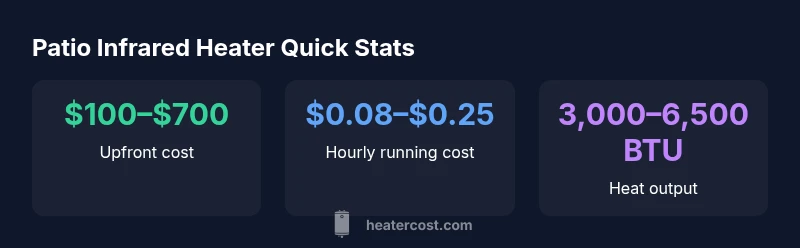
| Upfront cost | $100–$700 | Depends on BTU, features, finish |
| Operating cost (electric) | $0.08–$0.25 per hour | Based on 1000–1500W and standard rates |
| Heat output (BTU) | 3,000–6,500 BTU | Best for small to mid patios |
| Lifespan | 5–10 years | Durability depends on use and maintenance |
Got Questions?
What is patio infrared heat and how does it differ from gas heaters?
Infrared heat warms people and objects directly, with less energy wasted heating the surrounding air. Gas heaters produce more ambient warmth and may require ventilation, larger clearances, and ongoing fuel purchases. Infrared units are often quieter, set up quickly, and can be more energy-efficient for seated outdoor areas.
Infrared heats you directly, not the air around you, which can save energy and feel more immediate. Gas heaters create broader warmth but use fuel and may need vents.
Is infrared heat suitable for covered patios?
Yes, infrared heaters perform well on covered patios when properly installed and weatherproofed. Ensure electrical systems or gas lines are rated for outdoor use and follow manufacturer clearances. A semi-covered or protected space often yields the best comfort-to-cost balance.
Infrared heat works on covered patios if you use outdoor-rated equipment and proper weather protection.
How many BTUs do I need for my patio?
For intimate spaces with 2–4 people, 3,000–4,500 BTU is typical. For cozy gatherings of 4–6, 4,500–6,500 BTU works well. Larger groups or windy environments may require more, but you’ll pay more upfront and in running costs.
Small patios: 3,000–4,500 BTU; medium spaces: 4,500–6,500 BTU; larger areas may need more.
What safety features should I look for?
Look for tip-over protection, overheat shutoff, weatherproof housings, and certified electrical or gas connections. A sturdy base and guards around exposed elements reduce burn risk and accidental contact.
Seek tip-over switches, overheat protection, and weatherproof enclosures for safer outdoor use.
Are infrared patio heaters expensive to run?
Electric infrared models typically have modest hourly running costs, depending on wattage and electricity prices. Gas infrared options can be cheaper per hour in some markets but require fuel stock and maintenance. Compare models based on your local energy rates.
Electric infrared heaters usually cost a reasonable amount to run, especially when used strategically; gas models depend on fuel prices.
How should I install a patio infrared heater?
Many electric infrared heaters are plug-in and portable, but wall-mounted or ceiling-mounted units may require professional installation. Always follow the manufacturer’s mounting clearances, electrical codes, and outdoor-rated installation guidelines.
Install according to the manual; use outdoor-rated mounting and electrical setups, and consider professional help for permanent installs.
“"Infrared heat delivers comfort where you sit, not just where you stand, making it a practical choice for many patios."”
The Essentials
- Choose infrared for targeted warmth with minimal air heating
- Match BTU to patio size and seating layout
- Electric infrared is simplest to install; gas options offer portability
- Prioritize safety features and weatherproof design
- Plan placement to maximize comfort and energy efficiency