Outdoor Heaters for Outside: Costs, Choices, and Tips
A practical guide for homeowners and property managers on choosing, budgeting, and maintaining outdoor heaters for decks, patios, and gardens in 2026.


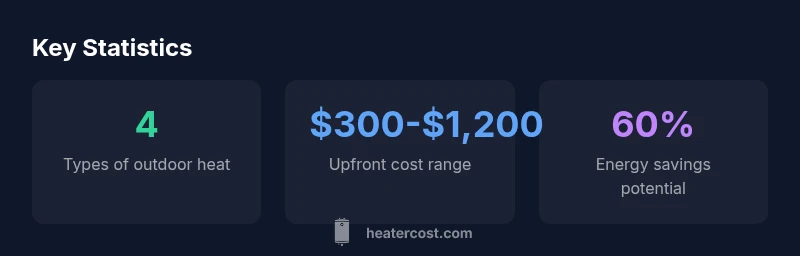
Across most homes, a heater for outside typically costs between $300 and $1,200 upfront, depending on type and installation. Electric infrared units are usually cheaper to install than gas patio heaters, but running costs rise with electricity prices. Correct sizing, proper mounting, and weatherproofing are essential to maximize comfort and efficiency while preventing heat loss.
Why a heater for outside matters
Outdoor living spaces extend your seasonal enjoyment, but cold evenings can quickly dampen the mood. A heater for outside can transform a patio, deck, or balcony into a comfortable gathering spot, enabling longer dining, relaxing, and entertaining. According to Heater Cost analysis, the biggest gains come from sizing the heater to the space, selecting weatherproof equipment, and placing it where airflow carries warmth efficiently. A well-chosen outdoor heater also protects outdoor furniture and expands usable space, increasing home value and occupant satisfaction. In practice, a balanced kit—one primary heater plus an optional secondary unit for windier corners—often delivers the best mix of comfort and energy efficiency. Remember to account for wind exposure, shade, and space layout when sizing and locating units. The goal is consistent warmth without overheating unused areas or wasting energy.
Outdoor heater types and their costs
There are several pathways to outdoor warmth, each with distinct upfront costs, running costs, and installation needs. Electric infrared heaters heat people and objects directly rather than the surrounding air, offering quick warmth with relatively simple installation. Gas patio heaters (propane or natural gas) tend to deliver higher heat output and longer run times, but require proper venting, fuel storage, and routine maintenance. Radiant fire pit-style heaters offer ambience and flexible fuel options, but may have higher fuel costs and wind sensitivity. From a budgeting perspective, consider upfront purchase price, fuel/energy costs, mounting or placement expenses, and potential permits or installation work. Heater Cost analysis notes that combining a primary heater with a secondary, strategically placed unit can optimize coverage and comfort across a larger outdoor area.
Sizing, placement, and safety considerations
Effective outdoor heating hinges on correct sizing and thoughtful placement. Start by measuring the area you want to warm and choose a heater with sufficient output for that space. Place heaters to cover seating zones while avoiding direct exposure to openings, overhangs, or flammable materials. For gas units, ensure adequate clearance, proper venting, and CO detectors where required; for electric units, verify outdoor-rated outlets and weatherproof enclosures. Weatherproofing is non-negotiable: choose IP-rated housings and covers that resist rain, snow, and temperature swings. Periodic inspections should check wiring, fuel connections, and mounting hardware for corrosion or loosening. Regular dusting and vent clearing help maintain performance and prolong life.
Installation, permits, and maintenance essentials
Local codes influence whether you need permits for outdoor heating installations. Portable electric heaters typically do not require permits, but gas-fueled installations or permanent fixtures may. Work with a licensed professional for gas connections or structural mounting when required. Maintenance basics include cleaning heat elements, inspecting fuel lines, and testing safety shutoffs. Seasonal storage—cleaning and covering units when not in use—extends life and reduces corrosion risk. Keep a simple maintenance log and schedule annual checkups to catch issues early. Advertising clear safety signage and ensuring children or pets are out of reach enhances household safety year-round.
Practical budgeting and long-term running costs
Budgeting for outdoor heating requires balancing upfront costs with ongoing energy use. Electric infrared models typically have lower upfront prices and easier installation, while gas heaters may offer lower running costs in regions with cheap fuel. Climate, wind, and usage patterns dramatically alter running costs, so use a conservative annual energy budget and plan for seasonal variability. Look for models with intelligent controls, thermostatic regulation, and auto-shutoff features to maximize efficiency. Over time, choosing durable, weatherproof equipment reduces maintenance costs and downtime.
Comparing popular setups: a quick decision guide
If you want a simple decision framework: (1) assess space size and wind exposure; (2) weigh upfront cost against annual energy cost; (3) consider installation scope and permits; (4) prioritize weatherproofing and safety features; (5) plan for future needs (additional heat zones, lighting, or shelter). Electric infrared is typically cheapest to install and maintain, while gas options offer strong warmth and longer runtime in cooler climates. For patios with frequent use and modest budgets, a hybrid approach—electric primary with a gas secondary—can strike a balance between comfort and cost.
Practical tips for maximizing warmth and efficiency
To maximize warmth and efficiency, seal airflow into the seating area with windscreens or strategic shelter, and use reflective surfaces to bounce heat toward occupants. Combine heat with shade management: use pergolas, curtains, or screens to minimize heat loss from wind gusts. Invest in quality weatherproof covers and run periodic safety checks. Add a thermostat or smart controller to avoid overheating and to schedule heating during peak-use times. Finally, align maintenance with seasonal cycles: clean filters, inspect gas lines, and check electrical connections before heavy-use periods. With careful planning and smart planning, a well-chosen outdoor heater can extend your outdoor season substantially.
Case studies: typical homeowner scenarios
- A small urban balcony in a temperate climate uses a compact electric infrared heater. The unit is mounted on a wall, runs off a weatherproof outdoor outlet, and provides quick warmth during chilly evenings. 2) A suburban deck with occasional gatherings relies on a mid-range propane patio heater. It offers a strong heat source for social seating, with fuel refills planned for longer events. 3) A three-season backyard lounge indoors uses a natural gas heater for consistent warmth on windy days, with CO detectors and clearances verified for safety. 4) A lakefront property with high wind exposure pairs a wall-mounted electric heater with a portable propane unit for flexible warmth along seating. These scenarios illustrate how climate, space, and usage patterns dictate the best combination of equipment.
Final practical takeaway: long-term value and maintenance mindset
The long-term value of outdoor heating lies in choosing durable, weatherproof equipment and maintaining it regularly. Prioritize systems with reliable safety features, efficient controls, and warranties that reflect real-world usage. By planning ahead—assessing space, climate, and consumption—homeowners can ensure comfortable outdoor living spaces without ballooning energy bills. Regular maintenance, proper installation, and smart usage patterns are the keys to maximizing warmth and minimizing costs over the life of the outdoor heating system.
Outdoor heater types comparison
| Type | Fuel | Typical Cost Range | Pros | Cons |
|---|---|---|---|---|
| Electric infrared heater | Electric | $100-$600 | Fast heat, low maintenance | Depends on outlet availability; needs weatherproofing |
| Gas patio heater (propane) | Propane | $250-$800 | High heat output, portable | Fuel storage and CO/Ventilation considerations |
| Gas patio heater (natural gas) | Natural gas | $400-$900 | Lower running costs in some regions | Gas line installation and codes required |
| Radiant fire pit-style heater | Propane or natural gas | $300-$700 | Ambience and flexible fuel | Open flame; wind sensitivity |
Got Questions?
What is the typical upfront cost range for an outdoor heater?
Upfront costs vary by type and features. Electric infrared units usually cost less to buy than gas patio heaters, while premium models with enhanced safety can approach higher prices. Consider both purchase price and installation costs when budgeting.
Upfront costs vary by type and features. Electric heaters are generally cheaper to buy, while premium gas models cost more. Remember to include any installation costs in your budget.
Are outdoor heaters safe for decks and patios?
Yes, when installed correctly with proper clearances, weatherproofing, and, for gas models, CO detectors where required. Follow manufacturer instructions and local codes to minimize fire and gas risks.
Yes, if you follow safety rules, keep proper clearances, and use CO detectors with gas models.
Do I need a permit for outdoor heater installation?
Permits vary by locality. Portable electric units usually don’t require permits, but gas line work or permanent installations often do. Check with your local building department or a licensed professional.
Permits depend on your area. Electric units typically don’t require them, but gas installations often do.
How do I size an outdoor heater?
Size should reflect the area, wind exposure, and desired comfort level. Start with a heat-output target for the space and consult a professional if your layout is complex.
Size should match space and wind; consult a pro for complex setups.
What maintenance is required for outdoor heaters?
Regular cleaning, inspecting connections, and checking safety devices. For gas models, schedule periodic checks of fuel lines and vents; for electric models, ensure outlets and weatherproofing remain intact.
Keep it clean, check connections, and test safety devices regularly.
What is the best option for a budget-focused homeowner?
Electric infrared units usually have the lowest upfront cost and simplest installation, while gas models can offer lower running costs in colder climates if fuel prices are favorable.
Electric heaters are cheaper upfront; gas can be cheaper to run in some climates.
“Sizing correctly and prioritizing weatherproof design are the two biggest levers for efficiency and comfort. With thoughtful placement and regular maintenance, outdoor heating can extend usable seasons without breaking the energy budget.”
The Essentials
- Size the heater to the space and climate
- Weigh upfront costs against annual running costs
- Prioritize weatherproofing and safety features
- Check local permits for installation when needed
- Regular maintenance extends heater life