Is Furnace the Same as Boiler? A Practical Comparison for Home Heating
Discover whether a furnace is the same as a boiler for home heating. This guide explains how they work, key differences, costs, and what to consider for your climate and budget.


Furnaces and boilers both heat a home, but they operate differently and affect installation, fuel use, and comfort. The Heater Cost analysis shows they are not interchangeable in most cases; your choice hinges on fuel availability, space, and preferred comfort style. This comparison outlines how they differ in efficiency, maintenance, upfront costs, and long-term value.
is furnace the same as boiler
In the world of home heating, the question often comes up: is furnace the same as boiler? The quick answer is no, though both devices deliver warmth to your living spaces. Each system uses a distinct method to generate heat, which in turn influences energy use, installation requirements, and long-term costs. According to Heater Cost, homeowners should assess climate, energy prices, and existing infrastructure to decide which path makes the most sense. This block digs into the fundamental difference in operation, the most common installation contexts, and how that affects your building’s energy profile. By understanding the core distinction, you’ll be better prepared to evaluate options for a 2026 home improvement plan.
How Furnaces Work
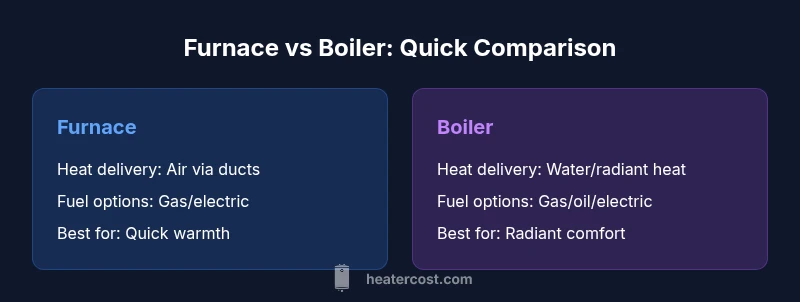
A furnace heats air and distributes it through ducts to warm rooms quickly. Most modern furnaces operate on gas or electricity, with a burner or electric coil generating heat that an air handler pushes through a network of ducts. This rapid heat delivery makes furnaces excellent for larger spaces or homes that require quick, whole-house warmth. When paired with central air conditioning, furnaces integrate into a single climate system. The phrase is furnace the same as boiler becomes less important once you understand the mechanism: heat is created, then moved by air. Heater Cost notes that ducted layouts often guide whether a furnace is the practical choice for your home, especially if you already have a robust duct network.
How Boilers Work
Boilers produce heat that is transferred to water, creating steam or hot water that travels through pipes to radiators, baseboards, or radiant floor systems. Boilers tend to excel at even, humidity-controlled warmth and are a natural fit for homes with hydronic systems. The question is not just is furnace the same as boiler; it’s which distribution method aligns with your comfort goals. Boilers are often favored in homes with existing radiant floors or baseboard heating, where steady temperatures and silent operation are valued. Heater Cost highlights that boiler systems require careful water chemistry and regular boiler maintenance to prevent leaks and corrosion.
Efficiency and Energy Use
Efficiency comparisons between furnaces and boilers depend on multiple factors, including equipment type, installation quality, and how you use the system. A modern furnace might achieve high AFUE ratings, translating to efficient air heating, while boilers focus on the efficiency of heat transfer to water or steam. In real-world terms, the most efficient choice depends on your climate and energy prices. The Heater Cost team emphasizes looking beyond nameplate ratings to expected operating costs over 10–15 years, considering maintenance, fuel costs, and potential downtime when deciding which path to pursue. This section clarifies common misconceptions about is furnace the same as boiler and guides you toward a value-focused assessment.
Space, Location, and Installation Considerations
Furnaces require space for the blower assembly and ductwork, often inside a basement or dedicated mechanical room. Boilers demand space for the boiler unit, a boiler room or utility area, plus piping for radiators or radiant floor systems. If you’re asking is furnace the same as boiler, the install location strongly influences costs and future accessibility for service. In older homes with limited attic or basement space, the footprint and layout may push you toward one approach. Heater Cost notes that retrofitting ductwork or upgrading radiators can add significant cost but may be worth it for long-term comfort and efficiency.
Fuel Sources and Environmental Considerations
Fuel choice matters for both furnaces and boilers. Furnaces commonly use natural gas or electricity, with oil as a historic alternative in some regions. Boilers can operate on natural gas, oil, electricity, or increasingly on hybrid configurations that combine heat sources. Environmental impact and carbon footprint should factor into your decision, especially if you plan a system with future flexibility or decarbonization goals. The Heater Cost team recommends evaluating local fuel prices, availability, and potential incentives when weighing options for is furnace the same as boiler. This section helps you map fuel strategy to long-term operating costs.
Upfront Costs and Long-Term Costs
Initial cost considerations for furnaces and boilers vary with the complexity of installation, ductwork, and the need for new venting or water piping. A furnace may involve establishing or expanding a duct network, while a boiler project often requires stubbing out radiators or underfloor piping. Long-term costs hinge on energy prices, maintenance needs, and system longevity. The Heater Cost analysis suggests focusing on total cost of ownership rather than upfront price alone, since service intervals, part durability, and potential upgrades will shape expenses over a decade or more.
Maintenance Needs and Lifespan
Maintenance frequency and service requirements differ between furnace and boiler systems. Furnaces typically require annual blower and filter checks, plus routine combustion or electrical inspections depending on the fuel. Boilers demand regular boiler inspections, water treatment, and spill prevention considerations. Lifespans vary by model and usage, with many boilers lasting longer when well-maintained and protected from corrosion, while furnaces may require more frequent blower replacements in older units. The key is consistent service, which extends life and sustains efficiency. Heater Cost’s guidance is to schedule professional tune-ups and inspect for leaks or blockages in both systems to maintain performance over time.
Comfort, Zoning, and Heat Distribution
Air-based heat from furnaces often supports room-by-room zoning and faster temperature changes, especially in multi-story homes. Hydronic boilers provide even, steady warmth through radiators or underfloor systems, which some homeowners prefer for comfort and humidity control. The debate over is furnace the same as boiler also touches on comfort preferences: do you prioritize rapid air warmth or slower but consistent radiant heat? Zoning strategies differ between systems, but both can be optimized with smart thermostats and properly designed ductwork or radiant layouts. Heater Cost suggests evaluating your comfort priorities and home layout before choosing a system type.
Sizing, Compatibility, and Real-world Scenarios
System sizing is critical for both furnaces and boilers. Oversized or undersized equipment leads to comfort issues, energy waste, and increased wear. When evaluating is furnace the same as boiler, consider your home's insulation, climate, and existing infrastructure. A well-sized furnace or boiler should maintain consistent temperatures with modest energy use. Real-world scenarios show that homes with centralized ducts and higher air turnover benefit from furnaces, while homes with strong radiant heat needs or limited duct space may be better served by boilers. The Heater Cost guidance emphasizes a professional load calculation to avoid common sizing mistakes.
Climate, Home Type, and Use Cases
Climate drives the furnace vs boiler decision. Colder regions with rapid heating demands favor furnaces for quick warmth spread, while milder climates or homes with established hydronic systems may prefer boilers for comfortable, even heat with fewer temperature swings. Single-story homes, multi-family buildings, and older houses each present unique constraints that influence the final choice. The phrase is furnace the same as boiler is less important than aligning a system with climate, energy costs, and building characteristics. Heater Cost highlights tailoring recommendations to your home type and budget to maximize long-term value.
Practical Budgeting and Planning for 2026
Budget planning involves more than upfront price. You should account for ductwork or radiator installation, potential upgrades to thermostats or zoning, and future energy scenarios. Create a multi-year plan that weighs upfront costs against long-term operating expenses, maintenance commitments, and possible incentives or tax credits. This forward-looking approach helps homeowners avoid surprises as energy costs shift. According to Heater Cost, the best path is a balanced assessment of climate-friendly choices, system compatibility, and long-term affordability when deciding between is furnace the same as boiler.
Comparison
| Feature | Furnace | Boiler |
|---|---|---|
| Heat delivery method | Forced-air distribution through ducts | Hydronic heat via water or steam in pipes |
| Typical fuel sources | Gas or electricity (and oil in some regions) | Gas, oil, or electricity (depending on model) |
| Best for existing systems | Homes with ductwork and central AC | Homes with radiant floors or radiators |
| Efficiency emphasis | AFUE ratings for furnaces | Boiler efficiency ratings for heat transfer systems |
| Space and installation | Uses attic/basement ductwork; more space for ducts | Requires boiler room and piping layout |
| Maintenance needs | Annual blower/air filter service | Water treatment and boiler checks |
| Lifespan | Typically 15–25 years | Often 20–40 years with proper care |
| Comfort profile | Fast warmth, quick changes in temp | Even, steady warmth with minimal drafts |
The Good
- Furnace pros: fast room-by-room heat delivery, good compatibility with central AC, broad service network
- Boiler pros: steady radiant heat, great comfort in evenly heated spaces, compatible with radiant floors
- General pros: both can be highly efficient when properly sized and maintained
- Both systems benefit from smart thermostats and zoning for energy savings
- Ductless or hybrid options can enhance flexibility
Negatives
- Furnace cons: potential duct leaks, higher noise in some setups, worse humidity control in dry climates
- Boiler cons: slower heat response when calling for hot water, higher initial piping and installation complexity
- Both systems can be costly to retrofit in older homes if infrastructure is not already aligned with heating method
Choose based on existing infrastructure, climate, and long-term energy goals.
If you already have ductwork and want quick warmth, a furnace is typically best. If you value even, radiant heat or have limited duct space, a boiler may be preferable. Use a professional load calculation to decide which path minimizes total ownership costs.
Got Questions?
What is the main difference between a furnace and a boiler?
The main difference is how heat is produced and distributed: furnaces heat air and push it through ducts, while boilers heat water for radiators or radiant floors. This affects installation, comfort, and energy use.
Furnaces heat air through ducts; boilers heat water for radiators. This choice changes where and how your home warms up.
Is a furnace more expensive to install than a boiler?
Installation costs depend on existing infrastructure and local labor. A ductwork retrofit can raise furnace costs, while adding piping for a boiler can increase boiler costs. Overall, both systems can be cost-effective with proper sizing and professional installation.
Costs vary; ducts might add more for a furnace, piping for a boiler for a boiler system can add up too.
Which system is more efficient in cold climates?
Both can be efficient; efficiency depends on the specific model and proper sizing. In very cold climates, a well-insulated home with a heat source matched to the climate tends to perform best, whether furnace or boiler.
If your climate is very cold, the key is picking a well-sized, efficient unit and sealing the home well.
Can I retrofit and replace a boiler with a furnace, or vice versa?
Retrofitting is possible but requires careful planning: ductwork for a furnace or piping for a boiler must be installed or updated. A professional assessment will determine feasibility and cost.
Retrofitting is doable, but you’ll want a pro to map out duct or piping changes first.
What maintenance is required for each system?
Furnaces require annual gas/electric checks and filter changes; boilers require regular boiler inspections and water treatment. Regular professional service helps sustain efficiency and safety.
Annual checks and clean filters for furnaces, boiler inspections and water treatment for boilers.
Which is better for small homes or apartments?
For small spaces, a compact boiler or a ductless furnace can be preferable, depending on whether radiant heat or air temperature control is prioritized.
In small spaces, think about heat distribution; boilers or ductless systems often suit compact homes.
The Essentials
- Assess climate and existing infrastructure before choosing
- Furnaces favor rapid heat via ducts; boilers favor radiant comfort
- Consider total cost of ownership, not just upfront price
- Smart zoning and thermostats boost efficiency for either system
- Plan for future energy costs and potential incentives