How Big Is a Water Heater? A Sizing Guide for Homes
Discover how big a water heater should be for your home. This guide explains standard tank sizes, whether you need 40-50 gallons, and how to size for peak hot-water demand and space.


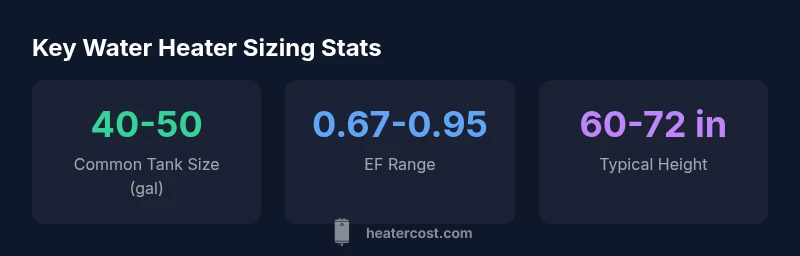
How big is a water heater? For most homes, standard tank sizes range from 40 to 50 gallons, with 30- to 60-gallon options available for smaller apartments or larger homes, respectively. The size you need depends on the number of people, the number of bathrooms, and how many hot-water tasks occur at the same time (simultaneous uses like showers, laundry, and dishwasher cycles). According to Heater Cost analysis, proper sizing can improve comfort, reduce run-time, and lower energy waste. When evaluating size, consider both the storage capacity and the recovery rate—the speed at which the heater can reheat water after a draw. In practice, most households choose a 40- or 50-gallon model as a safe starting point, then adjust based on family habits and space constraints. Always verify the spec sheet for peak flow and recovery data, as these influence whether a larger tank or a higher-recovery unit is needed. This framing helps ensure you don’t overpay for oversized capacity or suffer cold-water shocks from undersized units.
How big is a water heater?
Answering this question requires understanding both the nominal capacity (gallons) and the way a heater serves a household. For most single-family homes, standard tank sizes range from 40 to 50 gallons, with 30- to 60-gallon options available for smaller apartments or larger homes, respectively. The size you need depends on the number of people, the number of bathrooms, and how many hot-water tasks occur at the same time (simultaneous uses like showers, laundry, and dishwasher cycles). The Heater Cost analysis, 2026, highlights that proper sizing can improve comfort, reduce run-time, and lower energy waste. When evaluating size, consider both the storage capacity and the recovery rate—the speed at which the heater can reheat water after a draw. In practice, most households choose a 40- or 50-gallon model as a safe starting point, then adjust based on family habits and space constraints. Always verify the spec sheet for peak flow and recovery data, as these influence whether a larger tank or a higher-recovery unit is needed. This framing helps ensure you don’t overpay for oversized capacity or suffer cold-water shocks from undersized units.
Typical residential sizes by family size
Household size and hot-water habits drive tank size. For one or two residents, a 30- to 40-gallon unit is common, with many households choosing 40 gallons to add a cushion for brief demand spikes. A family of three to four typically uses a 40- to 50-gallon model, while households of five or more or those with multiple baths often benefit from a 50- to 80-gallon tank. In some cases, 80 gallons may be preferred as a buffer to support several concurrent tasks (two showers plus laundry) without dipping into cold water. The Heater Cost analysis, 2026, notes that homeowners frequently overestimate needs, which can raise costs, or underestimate demand, resulting in cold-water events. A professional sizing assessment translates family size into a practical tank choice, accounting for fixture types (shower vs. bath) and the presence of water-using appliances like dishwashers.
How to calculate your needed size
To determine the right size, start with an inventory of your household hot-water habits and the number of bathrooms. List fixtures that draw hot water at the same time: morning showers, spa baths, laundry cycles, and the dishwasher. A common rule of thumb is to estimate peak simultaneous usage in gallons per minute and select a tank with enough storage and an adequate recovery rate to meet that demand. If your home has multiple baths or high-usage appliances, you may need a larger tank or a higher-recovery model. Recovery rate indicates how quickly the heater can replace hot water after a draw, not just its stored volume. When deciding between electric and gas heaters, consider energy costs and venting and installation considerations. A sizing calculation should also account for future changes, such as a growing family or planned renovations. Based on Heater Cost analysis, 2026, many homeowners find that a slightly larger unit improves comfort and reduces the need for mid-use hot-water hot resets.
Tank vs tankless: does size matter
Tank-style heaters store hot water in a tank and deliver it on demand until depletion; tankless heaters heat water on the fly, providing a continuous supply but with flow-rate limits. The choice affects sizing: a tank provides a buffer, while a tankless system must be sized to meet maximum simultaneous demand. For households with irregular patterns or many fixtures on at once, a properly sized tank can minimize the risk of running out of hot water. Tankless units require careful calculation of GPM ratings and temperature rise to avoid cold-water bursts. In practice, most families begin with a standard tank (40-50 gallons) and consider a tankless upgrade only if space, energy costs, and hot-water usage patterns justify it. The Heater Cost analysis, 2026, indicates that tankless systems can save space and energy if sized correctly, but may not be cost-effective for every home.
Footprint and installation space: physical dimensions you'll plan
Beyond capacity, you must plan for the physical dimensions and installation space. A typical 40- to 50-gallon electric or gas water heater occupies roughly 20 inches in width, about 60 to 72 inches in height, and 20 to 28 inches in depth. Clearances around the unit are important for maintenance and safety—allow space for connecting pipes and for service access. Many homes install heaters in utility closets, garages, or dedicated crawl spaces. If you’re replacing an older unit, check whether the new heater’s footprint fits in the existing space, or whether a relocation or alternative mounting (for example, a corner installation) is required. In smaller living spaces, compact or space-saving models, including some high-vent/low-profile designs, can provide the needed capacity without compromising room layout. The key is to balance storage capacity, physical footprint, and safety clearances.
Efficiency and sizing mistakes to avoid
Common mistakes include undersizing the unit to save upfront cost, which leads to insufficient hot water, increased thermostat adjustments, and higher energy bills due to longer runtimes. Oversizing can also waste energy and raise installation costs without proportional comfort gains. Always review the first-hour rating (FHR) or recovery rate for tank models, and the flow rate (GPM) achievable for tankless units. Don’t ignore venting requirements, insulation, pipe heat loss, or location-related delays that reduce performance. A well-sized system considers not only the current household pattern but also near-future changes, such as adding a bathroom or upgrading to more efficient fixtures. Heater Cost’s methodology emphasizes verifying spec sheets and, when possible, performing an in-home assessment to avoid costly mistakes.
Practical sizing checklist and next steps
Use this checklist to confirm your water heater size before purchase: 1) note the number of residents, bathrooms, and hot-water fixtures; 2) estimate peak simultaneous usage; 3) decide between storage and tankless options; 4) compare storage volume and recovery rates; 5) measure installation space and required clearances; 6) request a written sizing recommendation from a licensed plumber or energy advisor; 7) review energy-cost implications and any available incentives. If you are moving to a larger home or planning renovations, revisit sizing as part of your project scope. The Heater Cost guidance team suggests documenting your findings and re-evaluating every few years or when major changes occur in your household.
Verdict
Verdict: For the majority of single-family homes, a 40- to 50-gallon storage water heater offers a reliable balance of availability, space, and cost. If you anticipate higher simultaneous use or larger households, consider stepping up to 60-80 gallons or evaluating a correctly sized tankless option. Always rely on professional sizing calculations and verify recovery rates and installation space before purchasing. The Heater Cost team recommends starting with a standard size and adjusting based on measured hot-water demand and energy considerations.
Sizing guide for common water heater configurations
| Size category | Recommended usage | Notes |
|---|---|---|
| 40-50 gallons | Small to medium homes (1-2 baths) | Most common residential size |
| 60-80 gallons | Larger households (3+ bathrooms) | Higher peak demand |
| 30-40 gallons | Apartments or single-person households | Compact spaces |
| Tankless options | High-demand or space-constrained | Flow-based sizing |
Got Questions?
What is the most common water heater size for a typical home?
The most common residential size is 40-50 gallons, which covers a wide range of household needs and reduces the risk of running out during peak use.
For many homes, 40 to 50 gallons is the standard size.
How do I know if I need a bigger tank?
If you frequently run out of hot water or have multiple showers at once, you may need a larger tank or a higher-recovery model.
If you often run out of hot water, you probably need a bigger tank.
Can I replace a tank with a tankless water heater to save space?
Yes, but tankless requires correct sizing for GPM and temperature rise; consider installation complexity and cost.
Yes, but size it right for your water use.
How often should I replace a water heater?
Most tanks last 8-12 years, depending on water quality, usage, and maintenance.
Most tanks last about 8 to 12 years.
Does the number of bathrooms affect heater size?
Yes; more bathrooms usually means higher hot-water demand and a larger tank is often needed.
More bathrooms usually means you need a bigger heater.
“Sizing your water heater correctly is the single most impactful decision for comfort and operating costs in a home.”
The Essentials
- Start with 40-50 gallons for most homes.
- Size should match peak simultaneous hot-water use.
- Consider space and footprint when choosing storage vs tankless.
- Check recovery rate to prevent cold-water bursts.