What Size Water Heater for 4 Adults: A Practical Guide
Learn how to size a water heater for a family of four, with practical ranges, usage factors, and tips to choose an energy-efficient, reliable unit.


According to Heater Cost, sizing a water heater for a family of four typically falls in the 40–60 gallon range, with 50 gallons as a solid starting point. If long showers, frequent laundry, or simultaneous hot-water use occur, sizing up to 60–80 gallons may be prudent. Always confirm with your home's actual usage data and space constraints.
Why size matters for daily comfort and energy costs
A properly sized water heater ensures you have enough hot water when you need it without wasting energy on oversized capacity. Under-sizing leads to cold showers and increased appliance cycling, while over-sizing wastes energy and raises upfront and operating costs. For a family of four, getting this right means balancing family shower habits, laundry frequency, and simultaneous hot-water use. In this guide, we’ll walk you through practical steps to determine the right size and how to account for future needs. The Heater Cost team references broad industry guidance to illustrate starting points and common trade-offs.
Understanding your usage: how to estimate demand
Hot water demand arises from showers, baths, laundry, dishwashing, and occasional misc tasks. The best way to size is to look at actual usage rather than rely on generic numbers. Start by logging your family's shower duration for a week, counting bath frequency, laundry loads, and dishwasher cycles. Convert those figures into a daily estimate (in gallons) for planning. This data gives a clearer target than any rule of thumb. Based on Heater Cost research, gathering two weeks of data helps account for weekend variability and seasonal changes in usage.
Typical size ranges for four adults
Most four-adult households consider 40-60 gallons as a starting range for storage water heaters. Fifty gallons is a common compromise that supports typical showers and modest appliance use. If there are long showers (15 minutes or more), frequent laundry, or simultaneous hot-water uses, you may need 60-80 gallons. Remember that recovery rate and energy source (gas vs electric) affect real-world performance; a high-recovery electric or a gas unit can better handle peak demand. Plan for potential future changes such as additional occupants or new appliances.
Tank vs tankless: does a tankless heater make sense for four adults?
Tankless units can save space and potentially reduce standby energy losses, but they require careful sizing for simultaneous demand. For a family of four, a single mid-to-high capacity tankless system may still struggle to supply multiple hot water outlets at once unless you pair it with additional fixtures or dedicated zones. In many homes, a properly sized storage tank (50–80 gallons) combined with targeted point-of-use heaters offers a simpler, cost-effective path while still delivering reliable comfort.
Step-by-step sizing method: translate usage into gallons
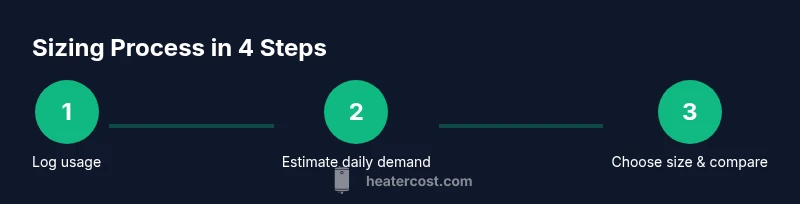
Step 1: Determine daily hot water usage by multiplying each activity by its frequency (e.g., showers, laundry, dishwasher). Step 2: Add a reserve for peak demand—consider how many tasks typically run at the same time. Step 3: Choose a tank size that covers the daily requirement plus a safety margin, then verify against the unit’s recovery rate to ensure hot water availability after the first draw. This method keeps sizing grounded in actual usage rather than guesses.
Space, installation, and efficiency considerations
Beyond gallons, space for the tank, venting (gas), and electrical capacity (electric models) matters. Check available closet or utility room space, door clearances, and ventilation routes if converting from gas to electric or vice versa. Efficiency matters too: higher energy-factor (EF) models save money over time, but they can come with higher upfront costs. Insulating the hot water pipes reduces heat loss and can improve perceived hot-water availability without increasing tank size.
Example scenarios and a quick reference sizing guide
- Family of four with moderate usage: 50 gallons is a solid starting point; many homes succeed with 50–60 gallons.
- Heavy usage (long showers, multiple concurrent uses, frequent laundry): 60–80 gallons provides more margin.
- Space-constrained homes: consider a high-recovery electric or gas unit within the 40–60 gallon band, or pair a smaller tank with point-of-use heaters for busy rooms.
Note: Always verify with a pro, especially if you have high hot-water demand or unique plumbing configurations.
Next steps: talking to a pro and budgeting
With usage data in hand and a preferred heater type in mind, you’re ready to discuss options with a licensed plumber or HVAC contractor. Prepare the data you collected, list your space constraints, and request recovery-rate and energy-factor specifications for any models you’re considering. Ask for a cost comparison that includes installation, venting, and potential upgrades to electrical service or gas lines. The Heater Cost team recommends starting conversations with multiple quotes to understand trade-offs and total cost of ownership.
Tools & Materials
- Household hot water usage data (2-4 weeks)(Record shower durations, laundry loads, and dishwasher cycles; note weekends vs weekdays.)
- Current water heater spec sheet(Tank capacity, energy source, recovery rate, and current EF/UEF rating.)
- Calculator or spreadsheet(For converting activities to gallons and comparing scenarios.)
- Notepad and pen(Capture assumptions and calculations for later review.)
- Measuring tape (optional for space planning)(Useful if replacing a tank and checking available space.)
- Access to efficiency data (EF/UEF)(Helpful when comparing models; request from the contractor.)
Steps
Estimated time: 1-2 hours
- 1
Gather usage data
Collect two to four weeks of hot water usage data, including shower durations, laundry loads, and dishwasher cycles. This anchors sizing in reality and minimizes guesswork.
Tip: Record any unusual events (guests, vacation, renovations) that could skew typical patterns. - 2
Estimate daily hot water usage
Translate your logs into a rough gallons-per-day figure by summing activities and applying typical conversion factors for each task.
Tip: Use conservative estimates to avoid undersizing; you can always adjust later with a pro. - 3
Assess peak demand
Identify times when multiple hot-water draws occur (e.g., morning showers plus dishwasher). Consider whether these events overlap or are staggered.
Tip: If peak demand is high, plan for a larger tank or supplemental heating options. - 4
Select a target size range
Choose a starting tank size based on daily usage and peak demand. Use the 40–60 gallon starting point as a baseline and adjust for your data.
Tip: Remember that storage size isn’t the only factor; recovery rate matters for replenishing hot water. - 5
Check recovery rate and energy costs
Compare recovery rates (how quickly the heater re-heats after a draw) and energy efficiency ratings to ensure ongoing comfort and economical operation.
Tip: A higher recovery rate can offset a slightly smaller tank in busy homes. - 6
Consider future needs
Anticipate changes such as more occupants, additional appliances, or a home renovation that could increase hot-water demand.
Tip: Over-sizing slightly now can prevent future hot-water shortages and costly retrofits. - 7
Space and installation review
Evaluate space availability, venting requirements (gas), electrical capacity (electric), and potential upgrades.
Tip: Consult a licensed professional to confirm feasible installation and code compliance before purchasing. - 8
Request quotes and compare total cost of ownership
Ask for multiple quotes that include installation, venting, permits, and any needed electrical or gas upgrades. Compare long-term energy costs, not just upfront price.
Tip: Prioritize models with strong warranties and accessible service networks.
Got Questions?
What is the typical tank size for a family of four?
For many four-person households, a 50-gallon tank works well, but actual needs can range from 40 to 80 gallons depending on usage patterns and the efficiency of the system.
A 50-gallon tank often fits a family of four, but your needs can vary from forty to eighty gallons depending on how you use hot water.
How do I know if I need a larger tank?
If you frequently run out of hot water during peak times, or if you have long showers and multiple hot-water uses at once, a larger tank or higher-recovery unit may be warranted.
If you consistently run out of hot water during peak times, you likely need a larger tank or a faster-recovering unit.
Are tankless water heaters better for a family of four?
Tankless heaters save space and can be efficient, but they may require multiple units or careful sizing to meet simultaneous demand. For many homes, a well-sized storage tank remains simpler and cheaper overall.
Tankless heaters save space and can be efficient, but you might need more than one to meet simultaneous demand.
What is the difference between gas and electric sizing?
Gas heaters often recover hot water faster than electric ones, which can influence required tank size. Electric units may need larger tanks or higher-uptime recovery to handle the same load.
Gas models recover faster; electric models may need a larger tank to keep up with demand.
How should I estimate usage accurately?
Log realistic usage data over a couple of weeks, including weekends, and use those figures to guide your sizing. Avoid basing decisions on a single week's pattern.
Track your actual usage for a couple of weeks and use that data to size your heater.
What should I ask a contractor during sizing?
Ask for recovery-rate data, energy-factor ratings, installation scope, and any required upgrades to plumbing, venting, or electrical service. Get multiple quotes to compare total cost of ownership.
Ask about recovery rate, energy efficiency, and any needed upgrades; compare several quotes.
Watch Video
The Essentials
- Size based on actual usage, not guesswork.
- 50 gallons is a common starting point for many four-person homes.
- Factor in recovery rate, energy efficiency, and future needs.
- Tankless can be viable but may require more planning for simultaneous use.