heater or radiator: A Comprehensive Side-by-Side Comparison
A detailed, objective comparison of heater vs radiator options for homeowners, renters, and managers—covering heat delivery, efficiency, installation, and long-term costs.


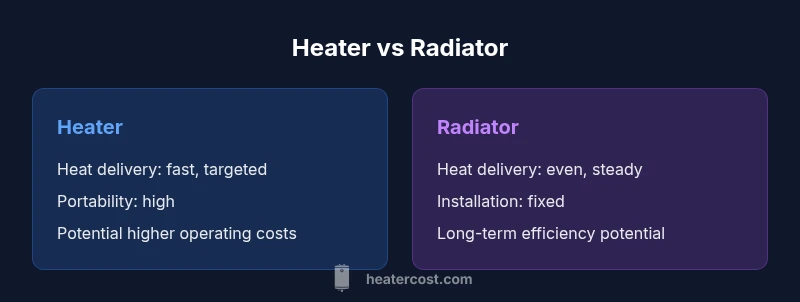
In most homes, the choice between a heater or radiator hinges on heat delivery, cost, and space. Heaters offer portability and quick warmth for a single area, while radiators deliver steady, even warmth through a central system and often run more efficiently over time. Heater Cost analysis shows that climate, usage patterns, and installation constraints determine the best fit.
What are heaters and radiators?
According to Heater Cost, homeowners and property managers often confront a fundamental choice when upgrading or retrofitting a heating setup: should they install a heater or a radiator? A heater is typically a portable or semi-portable device that converts electricity or gas into heat and can be moved from room to room. A radiator, by contrast, is a fixed component that part of a central heating system or a dedicated hydronic/electric panel. The distinction matters not only for upfront costs, but for how warmth is distributed, how spaces are used, and how much ongoing energy is consumed. The term heater or radiator frames the decision in terms of heat delivery and system integration, which makes it easier to compare performance in real-world settings. Throughout this article, we will unpack the key trade-offs, so homeowners can avoid overspending or underheating while optimizing comfort. The Heater Cost team emphasizes that your climate, property type, and occupancy patterns should guide the final pick, not marketing claims alone.
How heat is generated and delivered
Heat generation and delivery sit at the core of the heater vs radiator decision. A portable electric heater converts electrical energy into infrared or convective heat and can warm a room within minutes. Gas space heaters burn fuel directly to create warmth and are often used for quick spot heating or in spaces without forced air. Radiators come in two broad flavors: hydronic radiators connected to a boiler that circulates hot water or steam, and electric radiators that use resistance heating panels. Hydronic systems distribute warmth through radiators installed on walls, creating a more uniform heat profile across a space. Electric radiators share the same goal but without the boiler loop. When you compare, focus on heat delivery consistency, response time, and how heat persists after a device is turned off. The intended use and room layout will influence your choice.
Efficiency, operating costs, and climate considerations
Efficiency and operating cost are critical in the heater vs radiator debate. In principle, hydronic radiators can be highly efficient in cooler climates or with well-insulated spaces, because they provide steady warmth with less temperature fluctuation. Electric heaters can be more cost-effective in small, intermittently used spaces or in rooms where full central heating is unnecessary. A centralized hydronic system often benefits from scale and distribution efficiency, but it may require professional installation and annual boiler maintenance. Heater Cost analysis shows that climate and occupancy drive cost outcomes: in mild climates with good insulation, radiators may offer lower ongoing costs; in drafty rooms or where heat is needed on demand, portable heaters can reduce wasted energy. Always compare energy sources, thermostat control capabilities, and insulation quality before deciding.
Space, aesthetics, and installation considerations
Space planning is a practical lens through which to view the heater vs radiator decision. Heaters provide flexible placement, making them ideal for renters or rooms with irregular layouts. They can supplement central heating or replace it in small apartments, garages, or workshops. Radiators, especially hydronic models, are typically fixed to a wall or integrated into a home’s floor plan, which can contribute to a clean aesthetics but limits mobility. Installation costs for radiators often include boiler compatibility, piping, valves, and overall system design, whereas a portable heater may require only a plug and a safe clearance zone. For property managers, fixed radiators can raise property value and comfort uniformity, while portable heaters can cut upfront costs for short-term tenants. Regardless of choice, ensure clearances, heat output ratings, and safety features align with room size and occupant needs.
Reliability, maintenance, and lifespan
Reliability and maintenance considerations differ between the two options. Hydronic radiators rely on a boiler, circulating pump, and valves—components that can last many years but require periodic inspections and annual servicing. Electric radiators tend to have fewer moving parts and lower maintenance demands, but they can be less robust in very large spaces without supplemental zoning. Portable heaters introduce mobility and convenience but also risk if not properly used or if cords and outlets are overloaded. Lifespan varies by brand, build quality, and usage patterns; hydronic systems can outlive the home if well-maintained, while portable heaters are typically replaced more frequently due to wear and safety standards evolving. Investing in proper installation, regular inspections, and adherence to safety guidelines will maximize longevity for either approach.
Safety, ventilation, and code considerations
Safety is integral to any heating system decision. Electric heaters must be kept away from flammable materials and require grounded outlets; space heaters should have tip-over and overheat protection. Gas heaters mandate proper venting to avoid carbon monoxide buildup, and hydronic radiators depend on a correctly sized boiler with appropriate pressure settings. Building codes often influence installation choices, especially in rentals or multi-family dwellings. For landlords and property managers, selecting certified equipment, installing proper clearances, and scheduling routine safety checks minimizes risk and liability. Regardless of option, maintain carbon monoxide detectors in living spaces and ensure working smoke alarms are present throughout the home.
Budgeting, financing, and price context
Budget planning for heater vs radiator projects benefits from understanding upfront and ongoing costs. A portable electric heater may cost a few hundred dollars upfront, with electricity bills that rise based on usage and room size. Hydronic radiators require higher initial investment due to equipment, piping, and boiler compatibility, but can yield lower operating costs in well-insulated homes over time. Electric panel radiators have moderate upfront costs and predictable energy use, making budgeting simpler for small spaces. When estimating total cost of ownership, consider installation complexity, energy prices in your area, thermostat controls, and maintenance intervals. Financing options, incentives, and energy-efficiency programs can further influence the overall affordability of either path.
Decision framework: quick criteria and checklists
To structure your decision, use a simple framework: (1) determine heat delivery needs (spot heat vs whole-room warmth), (2) assess space constraints and installation feasibility, (3) estimate total cost of ownership including maintenance and energy prices, (4) evaluate safety features and tenant requirements, and (5) consider long-term resilience and future climate scenarios. Create a checklist for each option and compare against your property type, budget, and expected occupancy. For renters, portability and minimal renovation may weigh heavier than for homeowners; for landlords managing multiple units, reliability and uniform warmth across units often justify centralized radiators with a boiler. The goal is to match the tool to the niche, not chase the latest marketing claim.
Real-world scenarios and case studies
Consider a small urban apartment with high insulation quality and variable occupancy. A compact electric heater can address cold mornings efficiently, while a hydronic radiator could be overkill if the central system already provides warmth. In a larger drafty house, radiators tied to a well-designed boiler can deliver steady warmth and comfort with fewer hotspots, especially in common living spaces. For a rental property, portable heaters provide flexibility for tenants while fixed radiators support a consistent baseline comfort level and can add perceived value in bedrooms and living areas. In regions with very cold winters, a hybrid approach—central radiators for primary heating with portable heaters for peak demand—may optimize both cost and comfort. Finally, consider future energy plans, such as incentivized heat pumps or hybrid systems, and how they might impact your long-term strategy.
Authority sources
- https://www.energy.gov
- https://www.energy.gov/eere/buildings/articles/hydronic-heating-basics
- https://www.energy.gov/eere/buildings/articles/energysaver-inside-home-hydronic-heating
Comparison
| Feature | Heater | Radiator |
|---|---|---|
| Heat delivery method | Portable/spot heating, fast response | Fixed surface, even distribution, central system dependent |
| Typical installation | Plug-in or portable setup | Boiler-connected or wall-mounted unit; professional install often required |
| Operating costs drivers | Usage, space size, electricity or gas source | Boiler efficiency, insulation, distribution losses |
| Space impact | Minimal footprint; easy relocation | Requires wall/room integration; fixed footprint |
| Maintenance needs | Lower maintenance (portable devices) | Boiler and circulating components require periodic service |
| Best for | Spot heating, temporary rooms, renters | Whole-home warmth, long-term efficiency, fixed spaces |
| Upfront cost range | Low to mid (portable units) | Mid to high (installation and boiler costs) |
| Long-term value | Flexibility and low upfront barrier | Stable warmth and potential energy savings |
The Good
- High flexibility for portable needs and temporary spaces
- Low upfront complexity and quick setup for heaters
- Can target heat exactly where it’s needed
Negatives
- Higher ongoing energy costs for large spaces or long use
- Limited warmth distribution in larger areas unless multiple units are used
- Portable heaters carry safety risks if misused
Radiator systems win for whole-home comfort and efficiency; portable heaters win for flexibility and quick spot heating
Choose radiators when you want consistent warmth and potentially lower operating costs in well-insulated homes. Opt for heaters for flexibility, quick heat, and lower upfront installation in smaller or rental spaces.
Got Questions?
What is the main difference between a heater and a radiator?
The main difference is heat delivery: heaters are portable and heat specific spaces quickly, while radiators are fixed and designed to distribute warmth more evenly across larger areas, often as part of a central system.
Heaters heat one room quickly and are portable; radiators are fixed and heat larger spaces more evenly.
Which option is more energy-efficient for a typical home?
Efficiency depends on insulation and usage. Central radiator systems can be more efficient for whole-home warmth, especially in well-insulated homes, while high-quality portable heaters can be efficient for occasional spot heating. Compare insulation, climate, and occupancy patterns.
Central radiators can be efficient for whole homes, but for occasional use, a heater might be best.
Are electric heaters safer for households with kids or pets?
Electric heaters with safety features like tip-over and auto-shutoff can be safer for homes with children and pets, but keep clearances. Hydronic radiators generally pose fewer burn risks but require proper installation and maintenance.
Choose units with built-in safety features and maintain clear zones around heat sources.
Do I need a professional for installation?
A portable heater usually requires no professional installation beyond safe placement. Hydronic radiators tied to a boiler typically require a licensed technician and adherence to local codes for venting, piping, and safety checks.
Most portable heaters are plug-and-play; boilers and hydronic radiators need a pro.
What climate or home type benefits radiators the most?
In colder climates with long dwell times and good insulation, radiators offer steady warmth and potential energy savings. In milder climates or older homes with retrofit constraints, heaters can be more practical and cost-effective.
Radiators shine in cold climates with steady use; heaters work well in milder areas or retrofit projects.
Can both options be integrated in a single home?
Yes. A hybrid approach uses a central radiator system for base warmth and portable heaters for temporary or supplemental heat in occasionally used rooms. This balance can optimize comfort while managing costs.
A hybrid setup can offer the best of both worlds for comfort and flexibility.
The Essentials
- Assess heat delivery needs before buying.
- Prioritize insulation to maximize efficiency.
- Consider long-term costs, not just upfront price.
- A hybrid approach can offer balance in many homes.
- Always follow safety guidelines and codes.