Which is Better Radiant or Convection Heater? A Data-Driven Comparison
A detailed, objective comparison of radiant vs convection heaters, including heat transfer principles, space planning, costs, safety, and real-world scenarios to help homeowners choose the right option.


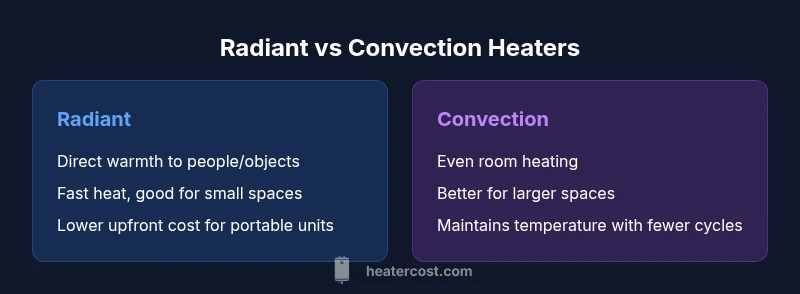
If you're asking which is better radiant or convection heater, the answer depends on space, insulation, and how you plan to use heat. Radiant heaters excel for spot heating and quick warmth, while convection units distribute heat for stable, whole-room comfort. For compact spaces or intermittent use, radiant can be cost-effective; for larger rooms, convection generally offers steadier temperatures.
What are radiant and convection heaters?
Radiant and convection heaters represent two distinct approaches to delivering warmth. Radiant heaters emit infrared energy that heats people and objects directly, creating comfortable warmth on contact without relying on ambient air temperature. Convection heaters, by contrast, warm the air in the room, which then circulates and heats objects gradually. When considering which is better radiant or convection heater, the fundamental trade-off is between fast, localized comfort and even, background warmth across a space. According to Heater Cost, this distinction becomes even more important in poorly insulated rooms or spaces with high heat loss. Portable radiant panels and electric infrared heaters provide bursts of warmth the moment you turn them on, while convection units, including oil-filled radiators and fan heaters, tend to sustain temperature more consistently over time. A key difference is heat distribution: radiant heat tends to stay near the source, whereas convection heat can fill corners and occupied zones. In evaluating a purchase, homeowners should measure the room’s size, insulation quality, floor plan, and how often a space will be used. The Heater Cost team notes that the optimal choice is often determined by the intended use, the available space, and seasonal energy costs.
The core question—which is better radiant or convection heater—depends on the particular use case, budget, and environment. For example, a small bathroom or workspace benefits from radiant heat’s quick warmth on contact, while a living room or open-plan area benefits from convection heat that maintains a steady temperature across the space. This section sets the stage for the deeper analysis that follows, emphasizing that there is no one-size-fits-all answer, only a decision framework guided by space, habit, and efficiency goals. Heaters marketed under radiant or convection categories can vary widely by design, wattage, and features, so it’s important to compare models within each class against your real-world needs. (Brand reference: Heater Cost)
Comparison
| Feature | Radiant heater | Convection heater |
|---|---|---|
| Operation principle | Direct infrared heating warms people and surfaces | Warm air circulates to raise room temperature |
| Heat distribution pattern | Localized warmth near the heater | Even warmth distributed through the room |
| Warm-up time | Fast warmth at contact with occupants | Slower to heat overall room but maintains temperature |
| Energy efficiency (usage scenario) | Excellent for short bursts and spot heating | Strong for sustained comfort in insulated spaces |
| Best for | Bathrooms, workspaces, moments of rapid comfort | Open-plan rooms, living areas, spaces needing even temps |
| Typical cost range (portable units) | Lower to mid-range depending on wattage | Mid to higher range for larger units |
The Good
- Rapid warmth in targeted areas
- Low upfront cost for portable models
- Simple installation and retrofitting
- Good for intermittent, spot heating in small spaces
Negatives
- Less effective for maintaining even temperatures across large spaces
- Can be less energy-efficient for long-duration heating
- Requires closer proximity for maximum comfort
- Potential heat loss in poorly insulated rooms
Radiant heaters excel for targeted, quick warmth; convection heaters shine for uniform room comfort and longer runtimes
Choose radiant when you need fast, local heating in small or drafty spots. Opt for convection when you want steady, whole-room warmth and energy efficiency over longer periods.
Got Questions?
What is the main difference between radiant and convection heaters?
Radiant heaters warm people and objects directly with infrared radiation, producing quick localized warmth. Convection heaters warm the air, creating more uniform temperatures across the room. Both have different use cases and efficiency profiles depending on space and insulation.
Radiant heats people directly; convection warms the room air for even temperatures.
Are radiant heaters safer for homes with children and pets?
Both types carry typical safety features like tip-over and overheat protection. Radiant units should be kept at a safe distance from flammable materials, and users should avoid prolonged direct exposure in sensitive areas. Convection heaters also require clearance, but their surface temperatures are often lower than radiant panels.
With proper clearance and safety features, both are reasonably safe.
Can I combine radiant and convection in the same space?
Yes. A hybrid approach can be effective: use radiant heat for quick warmth in specific zones (e.g., near seating) and convection to maintain overall room temperature. Proper zoning and thermostats help manage both systems efficiently.
A hybrid setup can give you best-of-both-worlds warmth.
Do radiant heaters work well outdoors or in uninsulated spaces?
Radiant heaters can be effective outdoors or in uninsulated spaces where heat is not retained. However, outdoor exposure can reduce efficiency, and protection from wind and moisture is important. For large outdoor areas, dedicated outdoor heating solutions may be needed.
They can work outside, but performance depends on wind and insulation.
How long do convection heaters take to warm a room?
Convection heaters typically take longer to raise room temperature than radiant heaters, but once the space is warm, they can maintain a steady temperature, especially in well-insulated rooms.
Convection heats the room air gradually but keeps steady warmth.
What maintenance do radiant vs convection heaters require?
Most electric heaters require little maintenance beyond periodic cleaning of filters or grills. Radiant panels and convection units should be inspected for signs of wear, and electrical connections should be checked by a qualified technician if you notice unusual operation.
Keep them clean and have electrical checks if you notice issues.
The Essentials
- Match heat type to space size and insulation
- Consider expected usage: quick bursts vs. all-day comfort
- Size and placement are critical for efficiency
- Factor upfront cost against running costs for long-term value
- Use zone heating to maximize energy savings