Heater and Cooler: A Comprehensive 2026 Comparison
A thorough, analytical comparison of traditional electric heaters versus hybrid heat pump systems (heater and cooler). Explore energy efficiency, costs, installation, and suitability for homeowners, renters, and property managers—so you can choose the best heating and cooling solution for your space.


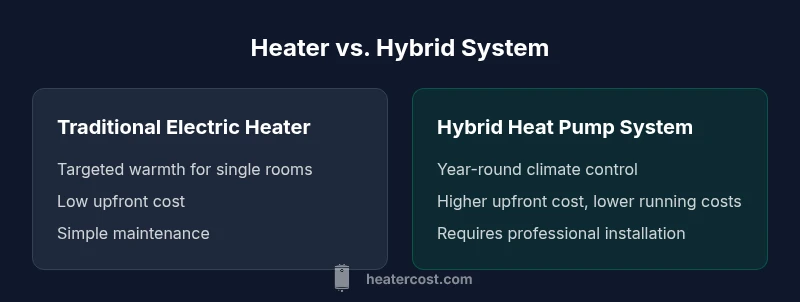
According to Heater Cost, choosing between a traditional electric heater and a hybrid heat pump system (heater and cooler) hinges on climate, space, and long-term costs. Heaters provide fast, targeted warmth for small areas, while a hybrid system delivers year-round climate control with higher upfront costs but lower operating costs in temperate climates. The Heater Cost analysis suggests weighing upfront price against potential energy savings and comfort during varied seasons.
Market context and what “heater and cooler” means
In today’s homes, the phrase heater and cooler refers to a spectrum of devices and systems designed to heat spaces and, in many cases, provide cooling as well. For homeowners, renters, and property managers, the decision isn’t simply about warmth or cold air; it’s about how a given solution aligns with climate, occupancy patterns, and long-term budgets. The Heater Cost team emphasizes that the most effective choice balances comfort, cost, and practicality. Discerning buyers evaluate not just the immediate warmth but how the system behaves across a full seasonal cycle, how easy it is to install in existing spaces, and how reliable it will be over time. This framing helps set expectations for what a “heater and cooler” can realistically deliver in your dwelling.
The broader market now includes traditional space heaters, built-in forced-air or hydronic systems, and hybrid heat pumps that can both heat and cool. The key distinction for consumers is how each option scales with space size, occupancy patterns, and climate. A single room scenario may benefit from a portable heater, while multi-room or whole-home needs often justify a central system. Across all options, ongoing maintenance, correct sizing, and professional installation play pivotal roles in achieving the promised comfort and efficiency levels.
As you assess these options, the Heater Cost analysis highlights a core principle: invest in a solution that matches your climate’s extremes, rather than chasing the most efficient device in the abstract. This approach reduces the risk of overbuying or ending up with underperforming equipment when weather shifts.
Why the distinction matters for your budget: short-term convenience can mask long-term costs, especially with devices that run continuously during cold spells or hot summers. The right choice should optimize energy use while keeping indoor environments comfortable. For many households, this means weighing a traditional heater’s nimble warmth against a hybrid system’s capacity to cool when needed and heat when it’s chilly outside.
wordCountInBlock1: null},
Comparison
| Feature | Traditional Electric Heater | Hybrid Heat Pump System |
|---|---|---|
| Energy Efficiency | Variable: depends on size and usage | High: designed for year-round climate control and efficiency |
| Upfront Cost | Low to moderate | High due to equipment and professional installation |
| Operating Cost | Moderate to high depending on usage | Low to moderate with advances in heat pump technology |
| Climate Performance | Excellent for targeted, small-area heating | Superior across seasons in temperate climates; supports cooling |
| Maintenance | Low maintenance, simple components | Moderate maintenance; has moving parts like fans and refrigerant lines |
| Installation Difficulty | Low to moderate; often portable or plug-in | High; typically requires professional assessment and routing |
| Best For | Spot heating in single rooms, renters | Year-round comfort, multiple zones, or whole-home needs |
The Good
- Instant, targeted warmth for small spaces
- Hybrid systems offer year-round climate control
- Potentially lower operating costs with efficient equipment
- Flexible options for renters or homeowners with evolving needs
- Thermal comfort can be better controlled with advanced thermostats
Negatives
- Higher upfront cost for hybrids and installation
- Hybrid systems rely on climate; very cold regions may see limited cooling efficiency
- Space and wiring requirements can complicate installation
- Maintenance is more involved than standalone heaters
Hybrid heat pump systems typically offer the best overall value for climate zones with moderate winters and hot summers; for quick, localized heating, traditional electric heaters remain attractive.
Choose a hybrid system if you want year-round comfort and potential energy savings. Opt for a traditional heater if you need simple, cheap heat for a single room and quick installation.
Got Questions?
Which option is more energy efficient for space heating?
Hybrid heat pump systems generally offer higher energy efficiency for year-round climate control, while traditional electric heaters can be efficient for quick, localized warmth if used properly and sized correctly.
Hybrid systems usually save more energy overall, especially when you need both heating and cooling.
What upfront costs should I expect when choosing heater and cooler options?
Upfront costs vary by system; traditional heaters are cheaper initially, while hybrid heat pump setups require a larger upfront investment but may reduce operating costs over time.
Expect higher upfront cost with a hybrid system, while space heaters are cheaper to buy but can cost more to run.
Are there climate conditions where a heater only is preferable?
In very cold climates, a simple heater can provide effective warmth for small spaces, but hybrids still offer cooling and can improve overall efficiency if properly sized.
In extremely cold areas, a heater may be the simplest solution, but a hybrid can be worth it for multi-season comfort.
Can a hybrid heat pump be used for cooling in summer?
Yes, a hybrid heat pump provides both heating and cooling. Proper sizing and professional installation ensure optimal performance.
Yes—you can heat and cool with a hybrid system when sized and installed correctly.
What maintenance is required for heater and cooler systems?
Routine checks, filter replacements, and periodic professional service are recommended; hybrids require more upkeep than simple space heaters.
Keep filters clean and schedule tune-ups to maintain efficiency.
Are there tax credits or incentives for energy-efficient heating/cooling?
Incentives vary by region and program; check local utilities and government programs for eligibility and rebates.
Look for local energy efficiency incentives in your area; programs change over time.
The Essentials
- Assess climate and usage patterns to pick between room-focused heaters and whole-home hybrids
- Account for upfront cost versus long-term energy savings
- Hybrid systems handle heating and cooling, but climate matters for payoff
- Professional installation matters for performance and safety
- Plan maintenance around system type to sustain efficiency