Electric vs Gas Heater for Garage: A Practical Comparison
Compare electric vs gas garage heaters, covering installation, operating costs, safety, sizing, and maintenance to help homeowners decide the right option for their space.


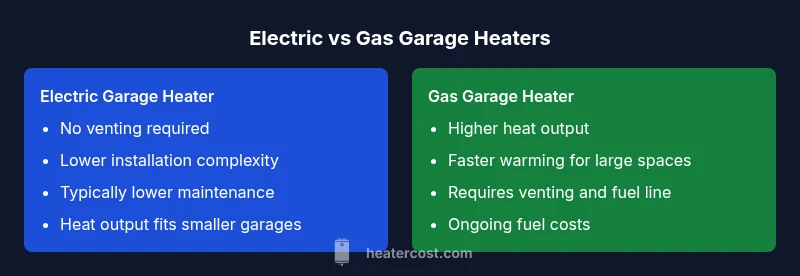
For many garages, electric heaters offer easier install and safer operation in enclosed spaces, while gas heaters deliver higher heat output and faster warming, which can matter in larger or poorly insulated garages. This quick comparison of electric vs gas heater for garage highlights installation requirements, operating costs, safety, and maintenance to guide your choice.
The Core Difference: Electric vs Gas for Garages
Choosing between an electric and a gas heater for a garage comes down to how you value simplicity, heat availability, and ongoing costs. Electric garage heaters are favored for quick, clean heat in small-to-medium spaces where venting is impractical or prohibited. Gas heaters, on the other hand, shine in larger garages or very cold climates where rapid, high heat output matters. In this section, we’ll establish the fundamental tradeoffs and set the stage for a deeper, data-driven comparison. Throughout this article, the topic of electric versus gas garage heating will be kept front and center, with careful attention to safety, cost, and long-term value as outlined by Heater Cost analysis.
Comparison
| Feature | electric garage heater | gas garage heater |
|---|---|---|
| Heat output and warmth delivery | Moderate to strong with steady, even warmth | Very strong heat output suitable for larger spaces and rapid warming |
| Ventilation and emissions | No venting required; indoor air quality depends on electrical safety | Requires proper venting and CO management; combustion byproducts need handling |
| Installation complexity | Usually simpler, wall-mounts and plug-in options common | More complex: venting, gas line supply, and dedicated electrical circuit |
| Operating costs | Typically lower ongoing fuel costs; electricity rates apply | Fuel costs vary with gas prices and efficiency; venting and maintenance add ongoing costs |
| Maintenance needs | Lower routine maintenance; periodic electrical checks | More routine servicing: vent inspection, burner cleaning, gas-safe checks |
| Safety considerations | Electrical hazards, proper insulation, carbon monoxide risk minimized with no combustion |
The Good
- Lower upfront system complexity for most electric setups
- No combustion byproducts, reducing indoor air quality concerns
- Lower maintenance requirements relative to gas systems
- Quiet operation and predictable performance in smaller garages
Negatives
- Higher ongoing operating costs in regions with high electricity prices
- Lower heat output for very large or poorly insulated garages
- Potential electrical supply limits in older buildings
- Electric heaters may require more frequent replacement for extreme duty cycles
Electric heaters are generally best for small to medium garages with good insulation and where venting is limited; gas heaters excel in large spaces or very cold climates where maximum heat output is needed.
If you prioritize simplicity and lower ventilation needs, electric is often the smarter short- to mid-term pick. If your garage is large or uninsulated and you need rapid, robust heat, a gas heater may deliver more value over time. Always consider local utility costs and installation constraints.
Got Questions?
What are the main differences between electric and gas garage heaters?
Electric heaters are simpler to install and do not produce combustion byproducts, making them safer for enclosed spaces. Gas heaters deliver higher heat output and faster warming but require venting, fuel supply, and regular maintenance. Choice depends on garage size, climate, and how you use the space.
Electric heaters are simpler and safer for enclosed garages, while gas heaters heat faster and bigger spaces but need venting and fuel.
Is venting required for gas garage heaters?
Yes. Gas garage heaters produce combustion byproducts that must be vented to the outdoors and venting systems must be appropriately sized and installed by a licensed professional.
Gas heaters need proper venting to outdoors and professional installation is recommended.
Are electric garage heaters cheaper to operate in most scenarios?
Electric operating costs depend on local electricity rates, usage, and heater efficiency. In many regions, electricity is higher per unit energy than natural gas, so annual running costs can be lower for electric heat in smaller spaces but higher for large spaces.
Costs depend on your rates and space, but electric heat is often cheaper to install; running costs vary by region.
What safety steps should I take with either option?
Install CO detectors for gas heaters, ensure proper venting, and perform regular servicing. For electric units, use GFCI outlets, avoid overloading circuits, and keep flammable materials away from heaters.
Make sure your gas setup is vented and checked; with electric, avoid overloaded circuits and keep combustibles away.
Do I need permits for installing a garage heater?
Permits may be required for gas installations or electrical work, depending on local codes. Check with your city or county building department and hire licensed professionals to ensure compliance.
Check local codes; permits may be needed for gas installs or electrical work.
What maintenance is typical for gas vs electric heaters?
Gas heaters require burner inspection, vent cleaning, and CO monitoring. Electric heaters mainly need electrical connection checks and periodic cleaning; however, follow manufacturer guidelines for schedules.
Gas heaters need more ongoing maintenance; electric units are generally simpler to service.
The Essentials
- Assess garage size and insulation before choosing heat source
- Electric heaters favor ease of installation and indoor safety
- Gas heaters provide higher heat output but require venting and fuel management
- Factor installation permits and electrical/gas supply in your decision
- Review long-term operating costs tied to local energy prices