Electric Hot Water Heater vs Gas: A Comprehensive Comparison for 2026
Compare electric vs gas water heaters to choose the best fit for your home. This 2026 Heater Cost guide covers upfront costs, efficiency, installation, safety, and long-term value.


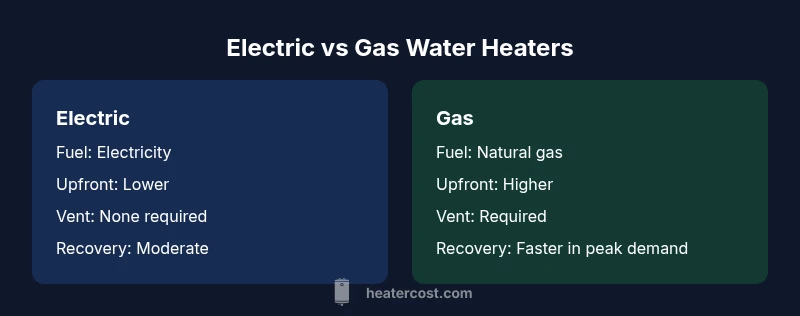
Electric hot water heater vs gas: which is better depends on your fuel access, upfront budget, and long-term energy costs. Electric models typically cost less to install and run efficiently, while gas units offer faster recovery and lower operating costs where natural gas is affordable. This comparison helps homeowners weigh costs, efficiency, and safety for 2026.
Overview: how electric and gas water heaters work
In any home, the choice between electric hot water heater vs gas hinges on how each system heats water, where energy is sourced, and how that energy is delivered to taps. According to Heater Cost, electric water heaters rely on resistive heating elements immersed in the tank, while gas-powered models burn natural gas to heat water in a combustion chamber. The result is a different heat delivery profile, environmental footprint, and maintenance cycle. At a high level, electric systems convert nearly all the supplied electricity into heat with minimal losses, whereas gas systems must vent combustion byproducts, adding complexity but sometimes lowering operating costs depending on fuel prices. This section sets the stage for the deeper comparison to come by outlining the typical configurations, consumer expectations, and seasonal considerations. When people compare electric hot water heater vs gas, the core question is which energy source aligns with your home’s infrastructure and energy prices. The Heater Cost team emphasizes practical decision-making: assess fuel availability, installation complexity, and long-term energy trends to estimate future costs and reliability.
Fuel sources and heat delivery methods
Electric systems rely on elements inside a tank to heat water directly, producing a simple and quiet operation with fewer moving parts. Gas models burn fuel to heat water in a burner chamber, often delivering higher recovery rates, which matters when multiple taps demand hot water at once. For households with intermittent usage, electric heaters can be perfectly adequate, especially when paired with well-insulated tanks. In contrast, homes with higher hot water needs—such as large families or frequent guests—often benefit from gas versions that can replenish hot water faster. This distinction—electric versus gas—affects not only performance but also space planning, venting requirements, and safety protocols. The Heater Cost analysis highlights that the choice should consider availability of natural gas lines, electrical service capacity, and local energy prices.
Practical implications for retrofits and new installs
Retrofitting an existing home with electric water heaters usually means simpler electrical work, a shorter permitting path, and minimal demolition. Gas installations typically require proper venting, gas piping upgrades, and possibly a dedicated combustion air intake, which can extend project timelines and increase costs. If you own an older home with limited space, electric tanks can often be installed in more locations, whereas gas units may need room for venting and condensate management. The decision to switch fuels should involve a quick calculation of installed capacity, available space, and the reliability of local utilities. Heater Cost emphasizes that service panels, circuit capacity, and local codes shape the feasibility of either option.
Energy efficiency and operating costs
Electric water heaters achieve high efficiency since nearly all supplied electricity becomes heat, typically with fewer losses than combustion-based systems. Gas models, especially modern condensing units, can offer excellent efficiency (especially when gas prices are favorable) but may incur venting and service costs that offset some savings. The variability in local electricity and natural gas pricing is a major driver of operating costs. In regions with cheap gas and reliable supply, gas heaters can show lower monthly energy bills for high hot-water usage. Conversely, in areas with clean electricity grids and rising electricity prices, electric options often become more cost-effective over the tank’s life. Heater Cost’s overall guidance is to model the total cost of ownership over 10–15 years, including installation, fuel, and maintenance.
Lifespan, warranties, and maintenance
Tank water heaters—whether electric or gas—generally share similar lifespans, typically around 10–15 years when well maintained. The maintenance burden differs: electric systems demand periodic element checks and tank flushing, while gas models require vent inspections, burner cleanings, and possible anode rod or thermocouple replacements. Regular drainage and flushing can extend any tank’s life by reducing sediment build-up, which affects heating efficiency and recovery time. The Heater Cost team notes that fully insured service plans, proper installation, and quality anode rods contribute to longevity for both fuel types. Understanding the maintenance cycle helps homeowners plan ahead for replacements and budgeting.
Safety, codes, and environmental considerations
Safety is a critical factor in choosing electric hot water heater vs gas, given different risk profiles. Electric systems present lower combustion risk but require electrical safety measures, GFCI protection in damp locations, and correct wiring. Gas systems introduce combustion byproducts like carbon monoxide, necessitating functional venting, CO detectors, and proper ventilation. Environmental considerations include electricity’s source mix and the CO2 footprint of natural gas combustion. In some locales, incentives favor efficient electric or gas models, depending on energy policies and grid decarbonization. The Heater Cost approach is to weigh risk, code compliance, and local emissions impacts when selecting a water heater.
Resilience and reliability in extreme conditions
Extreme temperatures and power outages can influence hot water availability. Electric systems generally tolerate outages as long as the home has power; gas systems can continue operating if the gas supply and the venting system are intact, though an outage may affect ignition or pilot systems on older models. On the whole, modern units with electronic controls and remote diagnostics improve reliability for both fuel types. Homeowners should consider backup options, such as solar-ready electric heaters or dual-fuel setups, which can enhance resilience in regions prone to outages or fuel price volatility. The bottom line is to match system resilience with your climate, occupancy patterns, and backup power plans.
How to plan a purchase: sizing, location, and budget
Sizing a water heater correctly minimizes hot-water shortages and energy waste. Electric systems benefit from increased insulation, a properly sized tank (or a tankless unit, if appropriate), and a location that minimizes heat loss. Gas heaters require careful sizing for burner capacity, venting size, and clearance around the unit. Location considerations include proximity to major hot water demands (kitchen, baths, laundry) and safe access for maintenance. Budget-wise, compare the total cost of ownership, including potential gas line upgrades or electrical panel upgrades, installation fees, and ongoing energy costs. The Heater Cost framework encourages homeowners to obtain multiple quotes, confirm permit requirements, and verify warranty terms before committing to electric or gas.
Comparison
| Feature | Electric water heater | Gas water heater |
|---|---|---|
| Fuel source | Electricity | Natural gas |
| Upfront unit cost | Lower upfront cost | Moderate upfront cost |
| Installation requirements | Minimal venting, dedicated electrical circuit | Vent or ventless, gas line, permits may be needed |
| Energy efficiency (EF/HER) | High efficiency (EF ~0.9-1.0) | Condensing gas can reach high efficiency (~0.6-0.95) |
| Recovery rate / hot-water output | Slower recovery for large households unless sized well | Faster recovery with ample gas supply and modern units |
| Lifespan | Typically 10-15 years | Typically 10-15 years |
| Maintenance needs | Low maintenance, periodic flushing | Moderate maintenance, vent checks and burner service |
| Best for | Small to mid-size households, electric-ready homes | High hot-water demand, available gas line |
The Good
- Lower upfront cost for electric models
- Easier installation with fewer venting requirements
- High efficiency with clean electricity can reduce operating costs
- Gas models offer faster hot-water recovery in peak demand
Negatives
- Gas installation adds venting, permits, and safety checks
- Gas systems may require more frequent maintenance
- Electricity prices can be volatile and impact operating costs
- Gas appliances can have higher ongoing maintenance and safety concerns
Electric water heaters are often the better all-around choice for homes with electric service, while gas water heaters excel in high-demand scenarios where gas is affordable.
Choose electric when upfront cost, quiet operation, and simplicity matter most. Choose gas when hot-water recovery speed and potential fuel savings are priorities and local gas prices are favorable.
Got Questions?
What is the main difference between electric and gas water heaters?
Electric water heaters heat water with electric resistance elements, while gas heaters use combustion to heat water. The choice affects installation, efficiency, and operating costs. Consider fuel availability and local energy prices when deciding.
Electric heaters use electricity to heat water, gas heaters burn gas. Your decision should weigh availability, installation complexity, and long-term costs.
Which is cheaper to operate in most homes?
Operating costs depend on local electricity and gas prices. Gas can be cheaper where natural gas is affordable, but in regions with low-cost electricity or high gas prices, electric models may win. Model total cost of ownership for your location.
It depends on local energy prices. In some places gas is cheaper, in others electricity is cheaper overall.
Do electric water heaters recover faster than gas?
Gas water heaters typically recover water faster because they generate heat more quickly, especially in high-demand scenarios. Electric units may recover slower unless sized properly and backed by high-capacity electrical service.
Gas often recovers faster; electric depends on the unit and electrical setup.
What about condensing gas water heaters?
Condensing gas models are highly efficient and use a secondary heat exchanger to extract more heat from exhaust. They cost more upfront but can reduce operating costs over time, especially in high-demand homes.
Condensing gas heaters save energy but cost more upfront.
Is it safe to install a gas water heater in a small apartment?
Gas units require proper venting and clearance. In small spaces, a vented configuration with adequate airflow and CO protection is essential. Always consult a licensed plumber or HVAC pro and follow local codes.
Gas can be installed in small spaces with proper venting and code-compliant setup.
The Essentials
- Assess fuel availability and price trends to decide.
- Match heater size and recovery rate to your family’s hot-water usage.
- Factor installation complexity into total cost.
- Model total cost of ownership over 10–15 years.
- Check local incentives and codes before buying.