Difference Between Heaters: An Analytical Comparison
Explore the difference between heaters, comparing electric resistance, gas furnaces, heat pumps, and hydronic boilers. Learn how climate, efficiency, and installation costs influence your choice with practical guidance from Heater Cost.


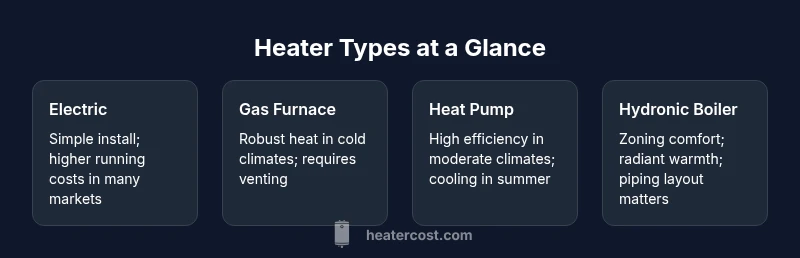
Understanding the difference between heaters starts with recognizing how each technology creates warmth, how efficiently it uses energy, and where it performs best. Electric resistance heaters are simple to install and respond quickly, but running costs can be higher. Gas furnaces deliver strong heat in cold climates but require fuel and venting. Heat pumps offer high efficiency in moderate climates and can also cool in summer. Hydronic boilers provide comfortable, even warmth with zoning options, though installation can be more involved. The full comparison weighs upfront costs, running costs, climate suitability, and space needs to choose the right fit for your home.
What exactly is the difference between heaters? A primer on how heating devices operate across technologies
The term difference between heaters captures how each system converts energy into warmth, the energy efficiency it achieves, and the practical implications for installation, maintenance, and ongoing costs. At a high level, electric resistance heaters convert electricity into heat directly; gas-fired systems burn fuel to produce hot air or water; heat pumps transfer heat from the outside environment into the home; and hydronic systems circulate heated water to radiators or radiant floors. Understanding these mechanisms helps homeowners estimate operating costs, plan for space, and decide which approach aligns with climate, budget, and home design. In this guide, we reference general guidance that Heater Cost analyzes for 2026 to illustrate typical trade-offs without promising uniform results across all homes.
Quick orientation to how each technology works
- Electric resistance: electric coils or panels convert electrical energy to heat with near-immediate response. Good for rooms or additions without ductwork, but electricity is often the more expensive energy source in many regions.
- Gas furnaces: burning natural gas or propane to heat air, distributed through ducts. Strong performance in cold weather and larger spaces, but venting, fuel costs, and maintenance are considerations.
- Heat pumps: move heat rather than generate it, delivering warmth by transferring ambient heat and, in reversible systems, cooling during warmer months. Highly efficient in milder climates and with modern refrigerants, but performance can decline in extreme cold unless paired with supplemental heat.
- Hydronic boilers: heat water for radiators or radiant floors. Very comfortable and controllable, with effective zoning, yet installation complexity and piping layout matter for efficiency and cost.
Why this matters for homeowners
Choosing a heater type affects upfront investment, long-term energy use, comfort reliability, and the ability to heat specific spaces independently. The difference between heaters also intersects with home design choices, such as whether you already have ducts, space for a boiler room, or the feasibility of hydronic piping. Throughout this guide, we’ll compare technologies on consistent criteria to help you align a solution with climate, occupancy patterns, and energy priorities.
Feature Comparison
| Feature | Electric resistance heaters | Gas furnaces | Air-source heat pumps | Hydronic boilers |
|---|---|---|---|---|
| Upfront cost | Low to moderate, depending on size and installation | Typically higher due to ductwork and venting requirements | Moderate to high, especially with climate-appropriate outdoor units | Moderate to high, depending on boiler type and system layout |
| Operating cost | Often higher electricity costs in many markets | Fuel costs vary with local prices and usage | Very high efficiency in many regions, especially with newer units | Variable, influenced by fuel type and zoning efficiency |
| Efficiency metrics | Direct electric heat, efficiency is hardware-limited | AFUE ratings guide system efficiency, venting required | COP and SEER-based performance make them highly efficient in mild climates | Boiler efficiency depends on design; modern modulating boilers improve performance |
| Best climate | Mild to cool spaces or where electric access is abundant | Cold climates or large homes with existing ducts | Mild to cool climates with electricity pricing favorable | Energetically favorable where zoning and radiant comfort matter |
| Installation complexity | Low if space and wiring are available | Moderate to high due to ductwork, venting, and gas lines | Moderate if properly sized outdoor unit is installed; requires electrical adequacy | Complex piping and space for boiler room or mechanical area |
| Maintenance needs | Minimal ongoing maintenance beyond cleaning and inspections | Regular servicing, vent checks, and filter or burner maintenance | Annual or biannual service; refrigerant checks where applicable | Regular boiler maintenance and system balance checks |
| Space requirements | Can be compact and wall-mounted or portable | Requires furnace room or closet, plus ductwork | Outdoor unit with indoor air handling or ducted systems in some layouts | Requires space for boiler and piping, plus cold-water supply |
| Lifespan and reliability | Varies by model and usage; generally durable | Dependent on maintenance of burners and venting | High durability with proper service; advanced refrigerants extend life | Long lifespan with regular maintenance and proper installation |
The Good
- Spans a wide range of technologies, making it easier to tailor to climates and budgets
- Helps homeowners benchmark upfront and operating costs across options
- Reveals trade-offs between comfort, zoning flexibility, and energy efficiency
- Supports informed budgeting for replacement or retrofit projects
Negatives
- No single ‘best’ heater for all homes; climate and usage drive outcomes
- Some options require significant installation work and permits
- Operating costs depend heavily on local energy prices and incentives
- Maintenance complexity varies by technology, affecting long-term upkeep
Heat pumps are often the most balanced choice in moderate climates, with electric or gas as practical backups in extreme conditions.
The most versatile option tends to be heat pumps due to their dual heating/cooling capability and improving cold-weather performance. Electric and gas have clear roles in niche situations, while hydronic systems excel in comfort and zoning, though at a higher install cost.
Got Questions?
What is the difference between heaters and heat pumps?
The difference between heaters includes how they generate heat and their energy efficiency. Heaters such as electric resistance and gas furnaces create heat directly, while heat pumps transfer heat from outside air or ground. Efficiency and climate suitability determine long-term costs and comfort.
Heaters generate heat differently: some create it directly, others move heat in. Heat pumps are typically more efficient in mild climates, but less so in extreme cold without supplemental heat.
Which heater is cheapest to operate over time?
Operating costs depend on local energy prices and climate. In many regions, heat pumps provide the lowest running costs in moderate climates, while electric resistance can be expensive to run. Gas furnaces may be economical where natural gas is cheap and climate is cold.
In many cases, heat pumps cost less to run, but it depends on energy prices and climate.
Can I install a heater myself, or do I need a pro?
Most heater types require professional installation, especially gas, hydronic, and some heat pump systems to ensure safe venting, proper refrigerant handling, and code compliance. Electric resistance heaters can be simpler, but electrical work should still be inspected.
Most heaters need a professional install due to safety and code requirements.
Do heating systems require permits?
Yes, many jurisdictions require permits for installing or replacing heating equipment, particularly gas, propane, hydronic, and heat pump systems. Permits help ensure safety, venting, and electrical work meet local codes.
Permits are commonly required for new installations or major changes.
What maintenance do heaters typically need?
Maintenance generally includes annual inspections, filter changes, refrigerant checks for heat pumps, burner cleanings, and vent/duct cleaning as applicable. Regular service can extend lifespan and maintain efficiency.
Regular annual service and basic upkeep keep systems efficient.
Are electric heaters safe for households with kids or pets?
Electric resistance heaters are generally safe when placed away from combustibles and children or pets. Space heaters require careful placement and supervision. For any heater, proper clearances and safety devices are essential.
Keep heaters away from children and pets and follow clearance guidelines.
The Essentials
- Identify climate suitability before choosing a heater type
- Compare upfront costs, operating costs, and maintenance needs
- Consider zoning and space constraints when evaluating options
- A modern heat pump often offers the best overall efficiency in many homes
- Consult professionals for precise load calculations and quotes