Different Heating Systems for Houses: A Thorough Comparison
Compare central furnaces, boilers, heat pumps, and electric systems to find the best fit for climate, budget, and home. Learn installation costs, efficiency metrics, and maintenance needs to choose the right heating solution.


Choosing a home heating system means weighing upfront costs, climate needs, and long-term energy use. This quick comparison highlights central furnaces, boilers, heat pumps, and electric systems, focusing on installation, efficiency, and maintenance. According to Heater Cost, the best choice often depends on climate, insulation, and desired comfort, with heat pumps offering strong year-round efficiency in moderate climates.
Overview: different heating systems for houses and what drives the choice
The phrase different heating systems for houses captures the spectrum of options homeowners face. At the broad level, systems fall into four families: centralized combustion-based systems (furnaces and boilers), heat pumps, electric resistance/radiant electric, and hybrid configurations that blend heat sources for reliability and efficiency. Each family operates on a distinct principle: burning fuel to generate heat, moving ambient warmth with refrigerants, or converting electricity directly into heat. For many homes, the best fit is not a single system but a hybrid approach that leverages the strengths of each option during different seasons. The Heater Cost team emphasizes that your climate, insulation, and daily temperature needs should guide the initial ranking of candidates. As you evaluate options, frame your decision around comfort, reliability, and total cost of ownership over two decades. In practice, this means mapping out potential peak loads, backup heating strategies, and seasonal energy use patterns.
Key factors shaping a heating-system choice
Choosing among the different heating systems for houses hinges on several core factors. Climate is the biggest driver: colder regions may benefit from high-efficiency furnaces or boilers, while milder areas often perform well with heat pumps. Home design and insulation quality determine how effectively a system can maintain comfortable temperatures with reasonable energy use. Existing ductwork, radiant panels, and plumbing influence installation costs and feasibility—retrofits can dramatically change total cost and disruption. Local energy prices and incentives further tilt the math in favor of certain options. Beyond economics, reliability and maintenance requirements matter: some systems demand more frequent service or specialized technicians. By aligning system selection with climate data, home performance metrics, and service availability, you can minimize risk and maximize long-term satisfaction. The Heater Cost analysis shows that energy efficiency and climate compatibility are often the most decisive factors in choosing the right approach.
Upfront costs and installation considerations
Installation costs set the baseline for any heating-system decision. Central furnaces and boilers typically require ductwork, venting, and fuel-supply arrangements, which can add to both material and labor costs. Heat pumps may demand changes to electrical service or outdoor units, and geothermal installations involve ground loops that influence site preparation and permitting. Electric resistance and radiant electric systems often have lower installation complexity, especially in retrofit scenarios, but they can incur higher operating costs if electricity prices rise. Duct sealing, insulation improvements, and thermostat upgrades are common supplementary investments that improve overall performance regardless of which primary system you choose. When planning, consider permitting timelines, contractor availability, and potential disruption to daily life during installation, as these non-material factors can affect perceived value as much as the equipment price.
How to read efficiency and performance metrics
A key part of understanding different heating systems for houses is translating efficiency ratings into real-world savings. Central furnaces use AFUE (Annual Fuel Utilization Efficiency) to express how effectively fuel is converted to heat. Boilers have similar efficiency metrics expressed as AFUE or, for condensing models, enhanced efficiency indicators. Heat pumps rely on SEER (Seasonal Energy Efficiency Ratio) and HSPF (Heating Seasonal Performance Factor) to gauge cooling and heating efficiency, with COP (Coefficient of Performance) used in some calculations. Electric resistance systems have high instantaneous efficiency—often close to 100% at the device level—but their cost per kilowatt-hour can erode savings in regions with expensive electricity. In practice, you’ll compare efficiency classes, estimated annual energy use, and how well each option pairs with your home’s insulation and air-sealing performance. The goal is to convert efficiency into predictable, year-round comfort at a sustainable operating cost.
System profiles: Central furnace and boiler options
Central furnaces and boilers remain common in many homes due to familiarity and strong performance in extreme winter conditions. Furnaces (gas or propane) provide rapid heat delivery through a built-in blower and ducts, delivering reliable warmth even on coldest days. High-efficiency condensing furnaces can significantly reduce fuel consumption when paired with modern insulation and smart thermostats. Boilers, by contrast, heat water to circulate through radiators or radiant-floor systems, delivering steady, comfortable warmth with very even temperature distribution. Hydronic systems reduce air movement and dust, which benefits indoor air quality. A robust installation plan addresses duct design or radiator placement, combustion safety, venting, and system zoning. The Heater Cost perspective emphasizes that the choice between furnace and boiler often depends on existing infrastructure, space availability, and preferred heat feel. Practical considerations include the availability of fuel in your area and the potential for future fuel switching or upgrades.
System profiles: Heat pumps (air-source and geothermal)
Heat pumps transfer heat rather than generate it, which can yield excellent efficiency in moderate climates and growing appeal in new home builds. Air-source heat pumps extract heat from outdoor air and deliver it indoors; modern cold-climate models perform well even at lower temperatures, especially when paired with an auxiliary heater. Geothermal heat pumps exploit stable underground temperatures, delivering high efficiency with relatively low operating costs, but they require significant upfront site work and a longer payback period. For homes with good insulation and airtight envelopes, heat pumps can cover the vast majority of heating needs while also handling cooling. The trade-offs involve climate suitability, outdoor space for equipment, and the skill set of local contractors. The Heater Cost analysis points to climate-adapted hybrids as a practical route in transitional markets.
System profiles: Electric resistance and radiant heating
Electric resistance systems, including baseboard heaters and radiant floors, offer simplicity and dependable performance in smaller spaces or as supplemental heat. They excel in retrofit scenarios where ductwork or plumbing changes are impractical. However, operating costs can be higher if electricity is expensive or if the system is the primary heat source in a large home. Radiant electric heating provides a comfortable, evenly distributed heat that minimizes drafts and temperature swings, but installation in large, open spaces can be costly and time-consuming. For homes with limited space or re-purposing, electric resistance and radiant heating provide a practical, low-maintenance option that pairs well with strong insulation and smart controls. As with other options, load calculations, zoning potential, and thermostat strategy determine long-term comfort and energy use.
A decision framework: how to choose for your home
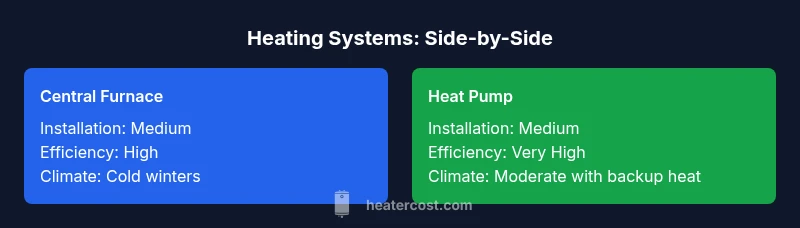
Transitioning from theory to action requires a structured decision framework. Start with a climate-fit assessment: harsh winters favor furnaces or boilers with insulating upgrades, while milder climates can benefit from heat pumps with backup heat. Consider home performance metrics—air leakage rates, insulation levels, and thermal mass—to estimate loads. Review your existing infrastructure: ductwork, piping, electrical service, and space for equipment location. Evaluate total cost of ownership, including installation, maintenance, energy costs, and expected lifespan. Create a side-by-side checklist to compare options against criteria such as comfort, reliability, control options, and environmental impact. Finally, consult local incentives and financing programs that can tilt the economics in favor of more efficient systems. The goal is a balanced choice that delivers stable comfort today while absorbing future energy-price shifts.
Maintenance, lifespan, and end-of-life planning
Regardless of which system you choose, maintenance schedules, component lifespans, and replacement planning are central to long-term value. Furnaces and boilers typically require annual or semi-annual servicing, with filter changes, combustion checks, and vent/pipe inspections ensuring safe operation. Heat pumps and air handlers benefit from regular coil cleaning and fan maintenance, and geothermal loops demand periodic inspection of loop integrity. Electric resistance components are generally durable but may require thermostat or wiring checks after power events. Planning for end-of-life scenarios—such as module obsolescence, refrigerant revisions, or ductwork wear—helps homeowners budget for a planned replacement cycle rather than reactionary costs. By aligning maintenance with a home performance plan, you can preserve efficiency, comfort, and resale value over time.
Incentives, financing, and service options
Incentives play a meaningful role in accelerating the adoption of efficient heating systems. Many regions offer energy-efficiency rebates, low-interest financing, and property-assessment-based programs that can reduce upfront costs and shorten payback periods. When evaluating options, check eligibility for local, state, and federal programs, and consider contractor warranties and maintenance packages that bundle inspections with service plans. Financing may be available through utility programs or energy-saving mortgage products, helping spread the cost of upgrades over time. Servicing a system with a reputable contractor is essential for performance and safety, so prioritize providers with training in the latest high-efficiency equipment and a transparent inspection schedule. The Heater Cost team notes that careful planning and utilization of incentives can significantly improve the lifetime value of the chosen heating strategy.
Step-by-step approach to your home assessment
To operationalize the comparison, follow a practical assessment workflow: 1) Gather climate data and seasonal energy use patterns; 2) Conduct an energy audit to identify air leaks and insulation gaps; 3) List existing infrastructure and constraints (ducts, pipes, electrical service); 4) Run a load calculation to estimate heating demand; 5) Shortlist systems that meet climate and budget criteria; 6) Obtain multiple quotes focusing on efficiency, controls, and installation timing; 7) Evaluate incentives and financing; 8) Choose a preferred system and plan implementation with staged milestones. By documenting assumptions and expected outcomes, you increase the odds of achieving durable comfort at a reasonable lifetime cost.
Feature Comparison
| Feature | Central Furnace | Boiler | Heat Pump (Air-Source) | Geothermal Heat Pump | Electric Resistance/Radiant Electric |
|---|---|---|---|---|---|
| Installation Complexity | Medium (ductwork, gas line, vents) | Medium (boilers require piping and sometimes radiators) | Medium (outdoor unit; some ducting or piping) | Medium (requires loop field or vertical loops) | Low (no ductwork; panel or radiant installation) |
| Energy Efficiency (Overall) | High with condensing models | High with condensing boilers | High efficiency in moderate climates | Very high efficiency potential with geothermal | Moderate to high depending on electricity cost |
| Operating Costs (Typical) | Moderate to high depending on fuel price | Moderate to high depending on fuel price | Low to moderate in mild to cool seasons | Low to moderate with stable geothermal costs | Variable; often lowest in low-load scenarios |
| Climate Suitability | Very effective in cold climates with proper venting | Excellent in cold climates with reliable fuel supply | Strong in warm to mild climates; supplemental heat may be needed in extreme cold | Excellent in moderate climates; best with proper layout | Best in very mild climates or as supplemental heat |
| Maintenance Frequency | Annual inspections + filter changes | Annual inspections + boiler servicing | Annual or semi-annual checkups | Annual checks for loop integrity and refrigerant levels | Low maintenance; periodic checks and thermostat updates |
| Lifespan Expectancy | 15-25 years (with maintenance) | 15-25 years (depends on water quality) | 15-20 years (equipment) | 20+ years (loop field can outlive equipment) | 20-30 years with proper care |
| Upfront Cost Indicator | High | High | Medium | Medium to high (depends on loop) | Low to medium (equipment cost) |
The Good
- Helps identify climate-appropriate options
- Reveals long-term cost trade-offs
- Supports energy-efficiency goals
- Aids replacement planning and incentives
- Improves comfort and air quality when properly zoned
Negatives
- Initial research can be time-consuming
- Retrofits may require significant space and disruption
- Some options depend on fuel availability and utility rates
- Maintenance contracts and warranties vary by region
Heat pumps plus selective backup for cold snaps often provide the best balance in moderate climates; furnaces/boilers remain strong in severe winters, while electric options suit small or retrofit-heavy homes.
In most moderate to cold climates, pairing insulation upgrades with a high-efficiency heat pump or a well-sized furnace/boiler yields reliable comfort and lower operating costs. Electric resistance is a fallback for limited spaces or retrofits. The right choice weighs climate, home performance, and total cost of ownership.
Got Questions?
What is the most cost-effective heating system for cold climates?
In very cold climates, a high-efficiency furnace or boiler with good insulation often provides dependable warmth and predictable costs. A secondary heat source or a dual-fuel setup can improve resilience during peak cold spells. Overall, cost-effectiveness depends on fuel prices and the efficiency of the chosen system.
In cold climates, a high-efficiency furnace or boiler is typically most cost-effective, especially with good insulation. Consider a backup heat source for the coldest days.
Can heat pumps work in freezing temperatures?
Yes, many modern air-source heat pumps operate efficiently down to well below freezing, though performance improves with auxiliary heat in extreme cold. Geothermal heat pumps maintain high efficiency regardless of outdoor temperatures but require substantial site work.
Yes, modern heat pumps can work in freezing temperatures, often with auxiliary heat in the coldest days.
Do I need permits to install a new heating system?
Most jurisdictions require permits for major heating-system installations. This ensures safety, proper venting, and compliance with energy codes. Your contractor can guide you through permit requirements and inspections.
Usually, permits are required for new heating-installations to ensure safety and compliance.
What maintenance is common across heating systems?
Maintenance typically includes annual inspections, filter changes, and system-specific checks (boilers, heat exchangers, refrigerant levels, electrical connections). Regular maintenance extends lifespan and preserves efficiency.
Most systems need yearly checks and some routine parts replaced to keep them efficient.
How long does a heating system last?
Lifespan varies by type: furnaces and boilers often last 15-25 years with good maintenance; heat pumps and geothermal systems can exceed 20 years; electric resistance equipment may last 15-25 years depending on use and quality.
Most systems last 15-25 years with proper care, but geothermal setups can last longer with proper loop maintenance.
Should I consider incentives or tax credits?
Yes. Many regions offer energy-efficiency rebates, tax credits, or financing options that can reduce upfront costs. Check local utility programs and national incentives when planning upgrades.
There are incentives that can reduce upfront costs, so check local programs before buying.
The Essentials
- Assess climate and insulation first
- Consider hybrid or dual-fuel setups for reliability
- Prioritize high-efficiency equipment and smart controls
- Factor installation disruption and incentives into cost
- Plan for maintenance and end-of-life replacements