Difference Between Heater and Radiator: A Practical Comparison
Explore the fundamental differences between heaters and radiators, including how they generate heat, deliver warmth, cost considerations, installation needs, and safety. A practical, analytical guide from Heater Cost to help homeowners decide which option fits their climate, space, and budget.


According to Heater Cost, the difference between heater and radiator mainly comes down to deployment and system integration: heaters are typically portable or standalone units that heat a space quickly, while radiators are part of a central heating circuit that delivers steady warmth. This quick distinction sets the stage for a deeper, practical comparison.
What is the difference between heater and radiator?
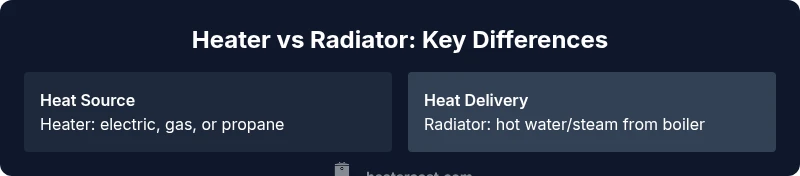
In residential heating, the term heater generally refers to devices that generate heat for space heating, and these come in portable electric forms, wall-mounted panels, or gas-powered units. A radiator, in contrast, is a heat-emitting surface that relies on hot liquid or steam circulated by a boiler. The essential distinction lies in how heat is produced and delivered: a heater is often a stand-alone, room-focused solution, whereas a radiator is part of a centralized heating system. The Heater Cost team emphasizes that this distinction affects energy efficiency, control granularity, and total cost of ownership. According to Heater Cost, the practical impact hinges on how you plan to heat spaces—either with targeted spot heating or whole-home warmth.
- Portable vs fixed: Heaters are commonly moved or installed as single-zone devices, while radiators are embedded in a home's heating network.
- Heat quality: Heaters can create rapid warmth and localized comfort; radiators aim for steady, even warmth across a room.
- Control and zoning: Heaters offer quick zoning changes, radiators depend on boiler-based zoning and thermostat settings.
Key takeaway: The core difference between heater and radiator is systemic vs portable heat delivery, which drives choices about cost, control, and comfort.
How heat is generated in each system
Heaters generate heat directly from their energy source. Electric space heaters use resistive elements that convert electricity into heat, often with fans to move heated air. Gas or propane heaters burn fuel to produce heat, which may be vented and require combustion safety measures. Portable electric models are simple to deploy, but effective only for short-term, localized warmth. Radiators, by contrast, rely on a central heating circuit: a boiler heats water (or creates steam) and pushes it through pipes to radiators distributed around the home. The radiator’s outer surface then releases heat into the room (via convection and radiation). The efficiency and performance of radiators depend on the boiler’s efficiency, pipe insulation, and system pressure. The Heater Cost team notes that most homes with a centralized boiler—whether hydronic or steam-based—benefit from a consistent baseline heat, while portable heaters shine for supplemental warmth.
- Heat source diversity: Electric, gas, and propane options exist for heaters; boilers power radiators.
- System integration: Heaters operate independently; radiators depend on a functioning boiler and circulating pump.
- Heat pathways: Heaters mainly heat air; radiators provide radiant and convective warmth.
Key takeaway: Heaters deliver fast, localized warmth, whereas radiators provide integrated, steady warmth through a central system.
Heat delivery and comfort profiles
Heat delivery is at the heart of choosing between a heater and a radiator. Heaters typically warm the immediate air in contact with their heating elements, which can create a quick sense of warmth but may lead to uneven temperatures if the space has poor air circulation. They are excellent for spot heating, warming a desk, a reading nook, or a small bathroom while keeping the rest of the house cooler. Radiators, especially hydronic ones connected to a boiler, offer more uniform warmth across a larger space. The radiator surface stores and gradually releases heat, providing a comfortable, even climate that reduces temperature swings. In open-plan living areas, a combination approach—one or more radiators paired with targeted heaters for zones—often yields the most consistent comfort. According to Heater Cost analysis, the perceived warmth from radiators feels steadier, which can contribute to a more comfortable living environment in colder climates.
- Warmth distribution: Heaters can produce rapid warmth in a restricted area; radiators distribute heat more evenly across a room.
- Temperature stability: Central radiators minimize cold spots by maintaining a steady room temperature.
- Response time: Heaters respond quickly; radiators have a slower ramp-up due to fluid temperature and boiler interactions.
Key takeaway: If you want quick warmth in a specific area, a heater is ideal; for long-term comfort across a space, radiators offer steadier climate control.
Cost and energy considerations
Cost considerations for heaters and radiators vary widely by energy source, climate, and usage patterns. Portable electric heaters are inexpensive to buy and easy to deploy but can be costly to run over extended periods, especially in large or drafty spaces. Central hydronic radiators require a boiler, plumbing, and regular maintenance; their upfront installation is higher, but many homeowners experience lower running costs when heating is needed consistently across multiple rooms or floors. Based on Heater Cost Analysis, 2026, long-term costs depend heavily on energy prices, insulation quality, and how you plan to heat your home. In cold climates, a well-designed radiator system paired with a properly tuned boiler can offer favorable efficiencies and lower energy waste, while electric space heaters remain a practical choice for occasional, targeted warmth. When evaluating costs, think about total cost of ownership, not just upfront price.
- Upfront investment: Heaters are cheaper to acquire; radiators require investment in a central heating system.
- Operating costs: Electric heaters may incur higher electricity bills if used extensively; hydronic radiators can be cheaper to run with efficient boilers and proper insulation.
- Maintenance: Heaters often require simple safety checks; radiators require boiler maintenance and periodic system bleeding in some setups.
Key takeaway: Budgeting should consider both installation and ongoing energy costs; central radiator systems often win on running costs in cold climates, while portable heaters offer flexible, low-cost starting points.
Installation, space and zoning considerations
Installation and space planning play a major role in deciding between heaters and radiators. Portable electric heaters require minimal space and no major construction, making them ideal for renters or for quick, temporary warmth. Wall-mounted electric panels use wall space but don’t alter plumbing. In contrast, radiators demand space planning around plumbing routes, radiator placement for optimal heat distribution, and a compatible boiler or central heating system. If your home already has a boiler and radiator network, expanding or adding radiators can be relatively straightforward, especially with proper zoning and thermostat control. For new builds, consider how future energy prices and climate change may influence long-term costs and comfort—planning for ducting or piping efficiency can pay off over time. The Heater Cost team emphasizes evaluating room sizes, ceiling height, and insulation to determine whether a radiator-enhanced system or a supplemental heater approach makes the most sense.
- Renters: Portable heaters offer flexibility without altering existing infrastructure.
- Homeowners with boilers: Radiators can leverage existing systems for efficient, uniform warmth.
- Space constraints: Radiators require wall or floor space but avoid clutter from multiple free-standing units.
Key takeaway: Installation complexity and available space are major decision factors; lever the existing heating infrastructure to minimize disruption and maximize efficiency.
Safety, maintenance and longevity considerations
Both heating approaches carry safety considerations, but the risks differ. Electric space heaters carry burn and fire hazards if left unattended or placed near flammable materials; relying on them for long durations can increase energy use and costs. Gas-fired heaters introduce ventilation and combustion safety concerns, including carbon monoxide risks that require proper detectors and exhaust design. Radiators, especially hydronic ones, are generally quiet and low-maintenance; however, the boiler and circulating pump require periodic service, bleeding of steam radiators if needed, and system inspections to prevent leaks or corrosion. Lifespan expectations vary by usage and maintenance: radiators and boilers tend to last many years with routine care, while portable heaters may be replaced more often due to wear or safety updates. Based on best practices, keep clearances around heat sources, install CO detectors when using fuel-burning devices, and schedule annual inspections of boilers or central heating systems. The Heater Cost team suggests documenting maintenance tasks and scheduling professional checks to ensure reliability and safety across seasons.
- Fire and burn hazards: Clearances and supervision for heaters are essential.
- CO and ventilation: Gas-powered devices require proper ventilation and detectors.
- Maintenance cadence: Boilers, pumps, and radiators benefit from annual service; portable heaters require filter or element checks.
Key takeaway: Prioritize safety, regular maintenance, and appropriate device placement to maximize reliability and minimize risk.
How to choose the right option for your home: a quick decision framework
Choosing between a heater and a radiator starts with a simple framework you can apply in any home. Step 1: Map your space and climate. If you live in a small apartment or need occasional warmth in a single room, a portable heater can be an economical, flexible option. If you require consistent warmth across multiple rooms or an entire house, a radiator system tied to a boiler may be more efficient and comfortable. Step 2: Assess existing infrastructure. A boiler-ready home benefits from radiators and zoning, while homes without a central system will lean toward plug-in heaters or wall-mounted electric panels. Step 3: Compare energy sources and costs. Electricity is convenient but can be expensive; gas and oil offer different cost structures, and central systems often benefit from economies of scale in larger homes. Step 4: Consider safety and maintenance. Heaters require careful placement and supervision; radiators demand boiler maintenance but fewer direct heat sources in living spaces. Step 5: Test through a phased approach. Start with a high-use zone using a portable heater or a single radiator, then monitor comfort, cost, and energy use before expanding. The Heater Cost team notes that the best decision balances climate, occupancy, and total cost of ownership, not just upfront price.
Comparison
| Feature | Heater | Radiator |
|---|---|---|
| Heat delivery method | Direct heat from resistance or flame, producing warm air or radiant heat | Hot liquid or steam circulated by a boiler to radiators, emitting heat via surface contact and convection |
| Installation complexity | Minimal or portable; plug-in options available | Requires plumbing, a boiler or central heating system, and zoning considerations |
| Initial cost | Low to moderate upfront (single unit) | High upfront (central system with boiler and piping) |
| Running costs variability | Highly variable by energy source and usage | Typically stable in well-insulated homes but tied to boiler efficiency and fuel prices |
| Zone control | High; multiple portable units or wall panels per room | Moderate to high with proper boiler zoning and thermostats |
| Heat distribution | Localized heat with quick warm-up; potential hot spots | Even, room-wide warmth with slower initial heat-up |
| Maintenance | Simple safety checks; replaceable units | Boiler and system maintenance; periodic bleeding and professional servicing |
| Noise | Can include fan noise (some models) | Generally quiet; pumps and boilers may produce subtle hum |
| Safety considerations | Electrical safety risks; proper placement; CO risk with gas heaters | Heat surfaces can be hot; boiler-related risks require detectors and ventilation |
| Best climate/space | Spot heating, rental spaces, and short-term needs | Whole-home heating in cold climates with existing central systems |
The Good
- Allows targeted heating for specific rooms or zones
- Flexible deployment with portable heaters when needed
- Radiators support steady, uniform warmth in a whole-home setup
- Central radiators can be efficient with a well-maintained boiler
- Lower sound levels in hydronic radiators than some electric heaters
Negatives
- Portable heaters can be energy-inefficient for long-term heating
- Radiator systems require plumbing, boiler, and higher upfront costs
- Electric space heaters pose safety risks with unsupervised use
- Radiators depend on a working central system, so outages impact warmth
Opt for radiators with a central boiler for whole-home warmth and energy efficiency when you have a suitable infrastructure; use portable heaters for flexible, quick spot heating or temporary needs.
Radiator-based central heating provides steady comfort and can be more energy-efficient in cold climates, especially with proper zoning. Heaters excel for rapid, targeted warmth and flexibility, ideal for rentals or supplementing a main system. The best choice depends on climate, existing equipment, and cost considerations.
Got Questions?
What is the fundamental difference between a heater and a radiator?
The fundamental difference is in heat generation and delivery: heaters produce heat directly, often for a single space, while radiators are part of a central system that delivers heat through circulating hot liquid or steam to multiple radiators in the home.
Heaters generate heat on-site for a specific area, while radiators rely on a central boiler to heat your entire space.
Are radiators more energy-efficient than standalone heaters?
In many homes with good insulation and a well-maintained boiler, radiators can be more energy-efficient for whole-house heating because they deliver steady warmth with centralized control. Portable heaters may be cheaper upfront but can spike energy use when run for long periods.
Radiators can be more efficient for full-home heating, though it depends on setup and insulation.
Can I replace a radiator with a portable heater?
You can replace a radiator’s function with portable heaters for smaller spaces or temporary needs, but not as a direct one-to-one replacement for a whole-house system. Central heating provides uniform warmth that portable heaters can't reliably match.
Portable heaters can supplement or replace heat in a single room temporarily but not a full-house system.
What should I consider for safety when using heaters around children?
Keep heaters away from furniture, liquids, and children’s play areas; never leave them unattended. Prefer models with automatic shutoff, tip-over protection, and proper clearance from flammable materials.
Keep heaters out of reach of kids and always supervise use.
What maintenance is typical for radiators and boilers?
Radiator systems require boiler servicing, periodic bleeding of radiators (for steam systems), and checking for leaks. Portable heaters need regular inspections of cords, filters, and safety features.
Boiler and radiator systems need professional maintenance; portable heaters need basic safety checks.
The Essentials
- Assess climate and occupancy to select heating strategy
- Leverage existing boiler or central system to maximize radiator efficiency
- Use portable heaters for temporary, flexible warmth
- Aim for zoning to optimize energy use and comfort
- Prioritize safety, maintenance, and total cost of ownership