Space Heater vs Radiator: A Practical Comparison
A detailed, objective comparison of space heaters and radiators, covering cost, efficiency, safety, and usage scenarios to help homeowners decide which heating option fits their space and budget.


Space heaters are typically cheaper to buy and install for small areas, but radiators provide steady, year‑round warmth and can be more cost‑effective in larger spaces when part of a central system. If you need zone heating or temporary heat, a space heater often wins; for whole‑home comfort and consistency, radiators usually perform better.
How Space Heaters and Radiators Work
The space heater vs radiator decision begins with understanding how each option generates warmth. A space heater converts electricity into heat in a localized zone, often using ceramic plates or oil‑filled fins for gradual heat release. A radiator, by contrast, uses hot water or steam circulated through a closed system or radiant panels embedded in walls, delivering steady warmth across a room. According to Heater Cost, the core difference is control scope: space heaters excel at rapid, targeted heat, while radiators provide continuous, uniform warmth when part of a home’s heating backbone. For homeowners evaluating space heater vs radiator, the choice hinges on room size, occupancy patterns, and energy costs. In modern homes, the ability to zone heat can dramatically affect monthly bills and comfort, especially in rooms that are unused for long periods. Understanding these fundamentals helps you make smarter purchases and plan maintenance around your budget.
Cost, Efficiency, and Operating Basics
Cost and efficiency shape the space heater vs radiator decision in real life. Space heaters generally have a lower upfront cost and can be added without changing a home’s plumbing or wiring. Radiators, whether hydronic (hot water) or steam, often require professional installation and integration with a central heating system, which raises the initial barrier but can deliver even heat and fewer interruptions once running. Efficiency depends on usage patterns: for intermittent warmth in a small space, a space heater may be efficient; for sustained comfort in a larger area, a well‑configured radiator tied to a programmable thermostat can minimize waste. Based on Heater Cost analysis, monthly energy costs depend more on how you use the heat than on the heater type itself; intelligent controls, proper sizing, and correct placement are crucial in both cases. Choosing space heater vs radiator involves weighing control granularity against long‑term energy savings and maintenance needs.
Space Heater Use-Cases and Limitations
Space heaters shine when you need fast heat in a small or irregularly used area. They’re ideal for apartments, sunrooms, or rooms that aren’t used all day. Portable models enable quick adjustments and can help you avoid heating an entire house. However, they have limitations: heat can be uneven if the device isn’t well positioned, and a single heater may struggle to keep large spaces comfortable. Safety is also a key factor; modern units include tip‑over and overheat protection, but misuse—such as running on an uneven surface or near flammable items—remains a risk. For renters and homeowners evaluating space heater vs radiator options, the right approach is to zone heat where people spend time and avoid relying on a single device to heat an entire home.
Radiator Use-Cases and Long-Term Considerations
Radiators, especially hydronic systems, are built for steady, whole‑home warmth. They’re advantageous in homes with reliable central heating or in climates with long cold seasons. Once installed and paired with a programmable thermostat, radiators can offer consistent temperatures with minimal attention. They also tend to produce a more uniform heat distribution, reducing cold spots. The trade‑offs are higher upfront costs and installation complexity. Over time, however, radiators can be cost‑effective due to lower perimeter heat loss and reduced energy waste if the home is designed to minimize setbacks. When weighing space heater vs radiator, consider how often rooms are used, whether you want centralized control, and the feasibility of installing or upgrading a central heating loop.
Safety, Maintenance, and Longevity
Both options require thoughtful maintenance and safety practices. Space heaters need regular cord inspection, dust removal from vents, and annual checks of electrical components to prevent faults. Hydronic radiators demand attention to leaks, pressure in the boiler, and periodic flushing to maintain efficiency. Radiators offer longer lifespans with proper upkeep, especially when part of a well‑maintained boiler system. Space heaters, while inexpensive upfront, may need more frequent part replacements. The key is to follow manufacturer guidelines, choose units with certified safety features, and avoid overloading circuits. For homeowners comparing space heater vs radiator, investing in quality devices and scheduled checks reduces risk and extends usable life.
Quick Assessment: Which Is Right for Your Space?
Before selecting space heater vs radiator, map your space: room size, occupancy patterns, and insulation quality matter. A small, frequently used room can benefit from a space heater for spot heating, while larger living areas or open‑concept spaces often perform better with radiators connected to a central system. Consider climate: in short winter seasons or milder areas, space heaters may be more economical; in colder climates, a robust radiator setup can be more comfortable and energy‑efficient over time. Pair this with a cost‑of‑ownership view: upfront purchase versus long‑term operating costs, frequency of use, and maintenance commitments should guide your decision.
Real-World Scenarios: Apartments, Homes, and Rentals
In apartment buildings with limited options for central heating, space heaters can fill gaps without major renovations. For single‑family homes with existing boilers, upgrading or expanding a radiator network often yields better long‑term comfort and stability. Rentals benefit from the flexibility of space heaters when heat demand fluctuates, but landlords should ensure devices meet safety standards and do not violate rental agreements. The Heater Cost team recommends evaluating room purpose, energy costs, and comfort expectations, then testing a hybrid approach if feasible—for example, using a radiator as the main heat source while supplementing with space heaters for occasional comfort or rapid warming in drafty corners.
Comparison
| Feature | Space Heater | Radiator |
|---|---|---|
| Upfront cost | Lower upfront cost | Higher upfront cost (including installation) |
| Installation complexity | Plug-in or portable setup | Requires central system or professional installation |
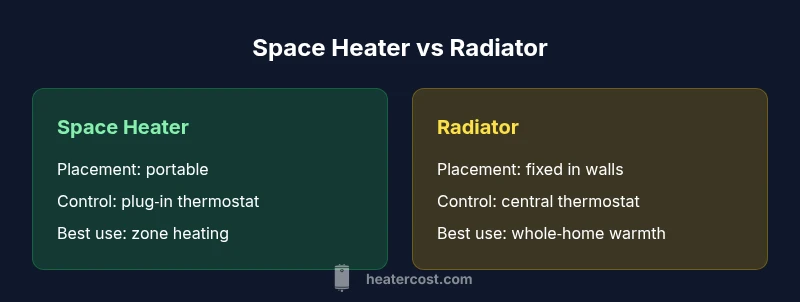
| Heat distribution | Quick, localized warmth | Even, room‑wide warmth |
| Energy efficiency | Depends on use; efficient for small zones | Efficient for long‑term, centralized heating |
| Placement flexibility | Highly portable; movable between rooms | Fixed in walls or floors; less flexible |
| Maintenance | Low maintenance; replaceable parts | Ongoing boiler/system maintenance |
| Safety considerations | Electrical hazards if misused | Boiler/pipe risks if neglected |
The Good
- Flexible heat in small or irregular spaces
- Low upfront costs and no major renovations
- Easy to add heat without altering home electrical or plumbing
Negatives
- Higher long-term energy costs if used extensively
- Potential safety risks with improper use or aging units
- Inconsistent warmth if poorly placed or undersized for the space
Space heater vs radiator: space heaters excel in flexibility and spot heating, while radiators win for steady, whole‑home warmth.
Choose a space heater for targeted warmth in small areas or temporary heating. Opt for a radiator when you need reliable, even heat across larger spaces and long-term energy efficiency through a central system. The Heater Cost team emphasizes sizing and control strategies to maximize value in either path.
Got Questions?
What is the main difference between a space heater and a radiator?
The main difference is control scope: space heaters heat a localized area quickly, while radiators provide steady warmth across larger spaces as part of a central system.
Space heaters heat small spots fast; radiators provide consistent heat across the home.
Are space heaters safe for long-term use?
With proper usage, certification, and regular maintenance, space heaters can be safe for intermittent use. Avoid running on carpet, keep them away from flammable items, and never leave them unattended.
Use certified units, follow safety guidelines, and monitor for overheating.
Can a space heater substitute for a radiator in a cold climate?
In many cases a space heater can supplement, but not fully replace a radiator in very cold climates, especially for large rooms or uninsulated spaces. A central heating system remains more reliable long-term.
Space heaters can help in cold climates but aren’t ideal as a sole solution for large spaces.
Which is cheaper to heat a room: space heater or radiator?
Upfront costs favor space heaters, but long-term energy costs depend on usage and room size. Central heating radiators can be more cost‑effective for continuous heating when paired with programmable controls.
Cost depends on use: small rooms benefit from space heaters; larger, steady heating favors radiators.
Do radiators require professional installation?
Hydronic or steam radiators typically require professional installation or modification to the heating system. Portable heaters require no permanent changes but must be used safely.
Central radiators usually need a technician; portable heaters don’t require installation.
What maintenance do space heaters require?
Regularly inspect cords, clean vents, and replace worn elements as recommended by the manufacturer. Unplug and cool devices before cleaning; never run damaged units.
Keep cords intact and vents clean; replace worn parts as advised by the maker.
The Essentials
- Evaluate room size and usage before buying
- Space heaters suit spot heating and renters; radiators suit whole-home warmth
- Prioritize size, thermostat control, and safety features
- Consider total cost of ownership, not just purchase price