Radiator Heater Costs, Types, and a Practical Buying Guide
Explore radiator heater options, costs, efficiency, installation, and maintenance to help homeowners choose the right radiant heating solution for their home in 2026.


Definition: A radiator heater is a radiant heating system that relies on hot water, steam, or electric elements to heat metal radiators. The heat radiates into rooms, warming occupants from all directions. Because it heats objects and people rather than air alone, radiator heaters often feel more comfortable at lower air temperatures and reduce drafts compared with some other heating methods.
What is a radiator heater and how does it work?
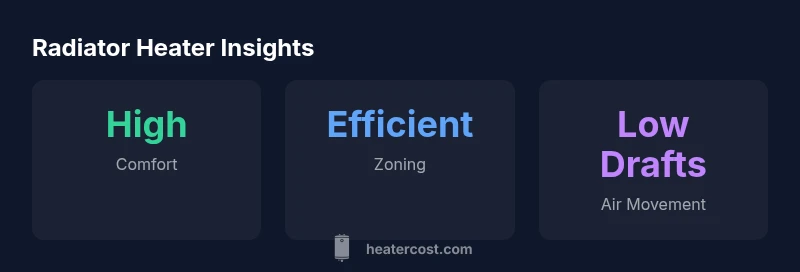
A radiator heater is a type of radiant heating system that transfers heat to a space primarily by emitting infrared radiation from hot surfaces. In hydronic or steam configurations, a boiler heats water or generates steam that travels through pipes to radiators, which then release heat into the room. Electric radiators use built‑in heating elements to achieve the same result without a boiler. The result is steady warmth with minimal air movement, which can feel more comfortable for occupants and can reduce heat losses from drafts. For homeowners, the choice between hydronic, steam, and electric radiator options hinges on existing infrastructure, space, and desired control granularity. According to Heater Cost, proper sizing and zoning are essential for maximizing efficiency and comfort. In modern homes, radiators can be paired with smart thermostats and zone controls to tailor heat delivery to occupied spaces, improving comfort while avoiding unnecessary energy use.
Hydronic vs Steam vs Electric radiators: pros and cons
Hydronic (hot water) radiators are common in mid-sized to large homes. They typically offer reliable heat, compatibility with boilers, and relatively uniform warmth. Steam radiators, often found in older homes, can deliver quick heat bursts but may require more maintenance and adjustments. Electric radiators provide straightforward installation and precise control, ideal for apartments or retrofits where piping is impractical. The tradeoffs include upfront costs, ongoing energy use, and maintenance needs. In general, electric models are cheaper to install but may cost more to operate in energy‑dense climates, while hydronic systems offer strong long‑term efficiency when paired with a modern boiler. Review the layout of rooms, insulation levels, and existing heating equipment before choosing a path. Heater Cost analyses emphasize the value of zoning and balanced distribution to prevent over‑heating or cold spots.
Efficiency, energy costs, and operating considerations
Efficiency for radiator heaters depends on the fuel source and system design. Hydronic systems benefit from modern, high‑efficiency boilers, while steam systems rely on boiler upkeep and proper radiator sizing. Electric radiators can achieve high efficiency at the point of use, but electricity costs influence total operating expenses significantly. To compare options, consider factors such as boiler age, insulation quality, radiator wattage, and the presence of programmable or smart thermostats. A well‑insulated home with properly sized radiators and zoning can realize substantial comfort gains while keeping energy costs manageable. Heater Cost analyses suggest focusing on total cost of ownership over initial price alone.
Installation considerations and safety
Installing radiator heaters requires planning around boiler capacity (for hydronic/steam) or electrical load (for electric units). Radiator placement should favor even heat distribution and avoid blocking heat with furniture. In older homes, repiping or boiler upgrades may be necessary, which adds to installation complexity and cost. Safety checks should cover pressure relief for steam systems, regular boiler servicing, and ensuring thermostats and valves function correctly. When planning, obtain a detailed assessment from a licensed professional to avoid undersizing or oversizing radiators, which can degrade comfort and efficiency.
Maintenance, longevity, and common issues
Maintenance considerations include periodic bleeding of hydronic systems to remove trapped air, inspecting valves for leaks, and servicing the boiler or heat source as recommended by the manufacturer. Electric radiators require less upkeep but should be checked for electrical safety and dust buildup around elements. Longevity varies with build quality, usage patterns, and system design, but many radiators remain functional for decades with proper care. Typical issues include cold spots, slow heating, and uneven heat distribution; addressing these early can prevent larger energy losses and comfort problems.
Radiator heater types and basic specs
| Radiator Type | Typical Heat Delivery | Fuel Source | Estimated Install Range |
|---|---|---|---|
| Hydronic (hot water) | Radiant heat from metal fins | Boiler system (gas/oil/electric) | Medium range |
| Steam radiators | Steam heats cast-iron radiators | Steam boiler | Higher upfront cost |
| Electric radiators | Electric resistance elements | Electric supply | Lower upfront cost |
Got Questions?
Are radiator heaters more energy-efficient than forced-air systems?
Radiator heaters can be more efficient for heating specific zones because they warm people and objects directly, reducing losses from air leakage. The overall efficiency depends on system sizing, insulation, and thermostat controls.
Radiator heaters often save energy in zone heating and comfort control, especially with smart thermostats.
What maintenance do radiator heaters require?
Hydronic systems may need occasional bleeding to remove air, valve inspections, and boiler servicing. Electric radiators require regular checks for safety and dust buildup near heating elements.
Hydronic systems need occasional bleeding and boiler checks; electric radiators need safety checks and cleaning.
Is a radiator heater suitable for small apartments?
Yes. Electric radiators are often a practical retrofit in small spaces or apartments, while hydronic systems require space for boilers and piping.
Electric radiators are usually a good fit for small apartments.
Can I retrofit radiator heating in an older home?
Retrofits depend on existing boiler or electrical capacity and the ability to route piping. A professional assessment is essential to avoid undersizing or expensive piping work.
Older homes can be retrofitted, but you’ll want a professional sizing check first.
What should I know about thermostat compatibility?
Most radiator systems can work with programmable or smart thermostats, but confirm compatibility with your boiler or heater controls to ensure reliable operation.
Check compatibility with your boiler or heater controls before buying a smart thermostat.
“Radiator heaters offer comfortable, evenly distributed warmth when the system is properly sized and integrated with a modern thermostat.”
The Essentials
- Compare radiator types by heat delivery and fuel source
- Size and zoning are essential for comfort and efficiency
- Expect variable upfront costs based on system type
- Smart controls optimize energy use with radiators
- Maintenance extends lifespan and preserves efficiency