Water Heater Replacement Cost 50 Gallon: 2026 Guide
Discover the cost to replace a 50-gallon water heater, including labor, permits, fuel-type differences, and energy upgrades. Practical budgeting tips for homeowners in 2026.


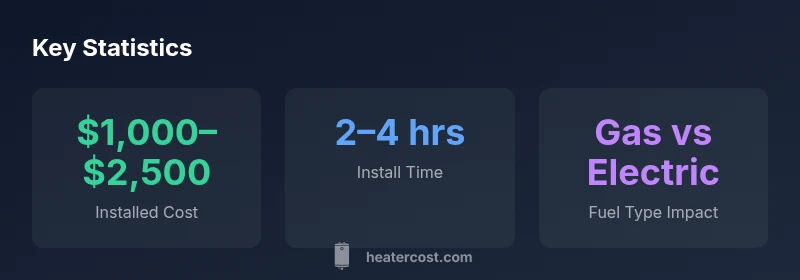
Water heater replacement cost 50 gallon typically ranges from $1,000 to $2,500 installed, with electric models usually cheaper and gas/high-efficiency units more expensive. Permit and disposal fees can add another $100–$300. Final cost depends on fuel type, efficiency, labor rates, and local codes. Plan for a cushion beyond the base price to cover incidental upgrades or venting changes.
Water heater replacement cost 50 gallon: What it means for your home
For many households, a 50-gallon tank is the practical middle ground between recovery speed and space constraints. When evaluating the water heater replacement cost 50 gallon, it’s essential to look beyond the sticker price of the unit. The installed total includes the tank, labor, electrical or gas work, venting adjustments, permits, and the old unit’s removal. According to Heater Cost, price dispersion is broad because fuel type, efficiency improvements, local labor markets, and installer practices vary widely. A straightforward electric replacement in a single-family home will generally come in lower on the ticket than a gas setup or a high-efficiency model, but differences in venting requirements, pipe sizing, and warranty considerations can tilt the final bill. Plan for a cushion beyond the base price to cover incidental upgrades, disposal fees, and the potential need for a small electrical panel update or vent relocation. In short, the water heater replacement cost 50 gallon is a function of configuration as much as raw tank price, and homeowners should request itemized quotes that separate unit price, labor, and permit costs.
Primary cost drivers for water heater replacement cost 50 gallon
Several factors determine the final out-the-door price. The most obvious is the fuel source: electric models usually cost less to purchase and install than gas models, though gas can offer quicker hot-water recovery in some homes. Efficiency matters—the higher the energy factor (EF) or energy performance rating, the higher the upfront price, but potential long-term energy savings can offset that premium. Installation complexity is next: if the heater location requires moving gas lines, wiring, or venting, you’ll see higher labor rates. Local codes, permit requirements, and disposal fees also add to the bill. Finally, the brand, warranty terms, and whether the old tank needs shelling out with upgraded drainage or seismic strapping can add hundreds more. A practical approach is to obtain multiple quotes and ask for a breakdown that separates equipment, labor, permits, disposal, and any ancillary work. In 2026, regional pricing patterns continue to influence final numbers, underscoring the value of local quotes.
Electric vs Gas vs High-Efficiency: Cost implications for 50-gallon tanks
Electric 50-gallon units are typically cheaper to buy and install because they involve straightforward electrical connections and no venting. Gas units can cost more upfront due to venting, gas line work, and gas appliance compliance, but they may recover hot water faster in larger households. High-efficiency or hybrid gas models push installation costs higher but can deliver meaningful energy savings over time. When comparing, assess not just the purchase price but the operating cost over 5–10 years. The exact numbers depend on local energy rates and usage patterns, which is why a quote that includes projected energy costs is valuable. This is where Heater Cost analysis emphasizes a holistic view rather than a single-price decision.
Hidden and ancillary costs you should budget for
Most homeowners underestimate the hidden costs associated with a water heater replacement. Expect removal and disposal fees for the old tank, potential drain-tile work, and any necessary replacement of piping or connections. If your room lacks proper ventilation or needs vent relocation, add the cost of upgrading venting materials and fittings. Permits, inspections, and potential electrical or gas system upgrades can add hundreds to thousands depending on local codes. Finally, consider a modest budget for maintenance items in the first year, such as an expansion tank or a thermostat upgrade, which can improve reliability and efficiency.
How to get accurate quotes and compare options
So you can make an informed decision, request written, itemized bids from several licensed plumbers or HVAC contractors. Provide exact details: tank size (50 gallon), fuel type, desired efficiency, whether you want standard or high-efficiency units, and whether relocation or venting changes are needed. Ask installers to break out equipment cost, labor, permits, disposal, and any ancillary work. Check licenses, read reviews, and verify the installer’s familiarity with your local codes. Finally, use a simple scoring rubric to compare quotes on price, warranty, energy performance, and service terms.
Real-world scenarios in 2026
Consider a typical 3–4 bedroom home with electric service and a basement utility closet. A straightforward electric 50-gallon replacement with standard venting can land in the lower end of the price range, with a total around $1,200 to $2,000 depending on location. If the home uses natural gas and requires venting relocation, the total might rise toward $2,000 to $2,500. For high-efficiency models or hybrid gas systems, expect $2,000 to $3,000 or more, especially in regions with higher labor costs. As a general guideline, always treat the quoted price as a starting point and ensure your quote includes all components: unit, labor, permits, venting, disposal, and warranty.
Cost comparison for 50-gallon water heater options
| Fuel Type | Typical Installed Cost Range | Efficiency/AFUE or EF | Typical Lifespan |
|---|---|---|---|
| Electric | "$1,000–$2,000" | "0.92 EF" | "10–15 years" |
| Gas | "$1,200–$2,500" | "0.58–0.70 AFUE" | "10–15 years" |
| Hybrid/High-Efficiency Gas | "$1,800–$3,000" | "0.75–0.92 EF" | "12–15 years" |
Got Questions?
What affects the cost of a 50 gallon water heater replacement?
Most variation comes from fuel type, efficiency, installation complexity, and local labor rates. Permits and disposal fees can add to the total, and geographic wage differences can raise costs further. Plan for a margin above the base price.
Cost factors include fuel type, efficiency, and local labor. Plans should account for permits and disposal.
Are permits required for replacement?
Permit requirements vary by city and state. In many cases, you must obtain a permit for gas or electric work, venting changes, and disposal. Check with your local building department.
Permits vary by location; check with your city or county building department.
How long does installation take?
Most installations take 2–4 hours for a straightforward replacement, but more complex setups can take longer if venting, gas lines, or electrical upgrades are needed.
Typically 2 to 4 hours for a standard replacement.
Can I reuse venting or existing pipes?
Reusing venting and pipes is only possible if they meet the new unit’s specifications and codes. In many cases, upgrades are required for safety and efficiency.
Venting and piping must meet code; upgrades are common.
Which is cheaper upfront: electric or gas?
Electric models typically have lower upfront costs and easier installation than gas, but gas units can offer faster recovery and lower operating costs in some climates.
Electric is usually cheaper to install; gas can save money over time.
Are there tax credits or rebates for energy-efficient water heaters?
Some programs offer rebates or tax credits for energy-efficient models. Availability depends on location and utility programs. Check current incentives before purchasing.
Some places offer rebates for efficient models; check local programs.
“The right 50-gallon water heater balances upfront cost with long-term energy savings, especially when you consider fuel type and installation constraints.”
The Essentials
- Compare quotes from multiple licensed pros
- Budget for permits and disposal in addition to the unit
- Balance fuel type with efficiency for long-term savings
- Expect higher upfront costs for gas or high-efficiency units
- Check local codes and warranty terms before purchasing