Water Heater Installed Cost: A Comprehensive 2026 Guide for Homeowners
Explore water heater installed cost in 2026, comparing tank and tankless options, labor, permits, and regional factors. Practical budgeting tips and a clear cost roadmap for homeowners.


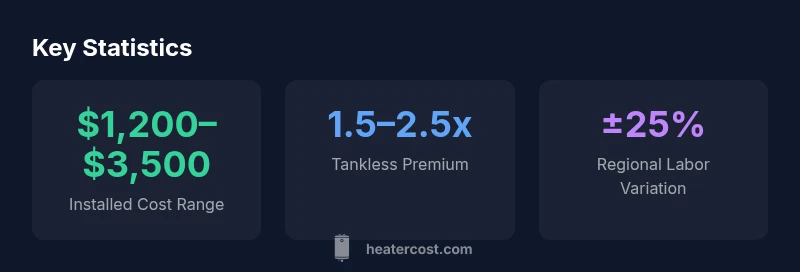
Typical installed costs for a residential water heater range from roughly $1,200 to $3,500, depending on unit type (tank vs. tankless), capacity, energy source, and local labor rates. In 2026, most households see installed costs around $2,000 to $3,000 for a standard 40-50 gallon unit, with higher-end configurations costing more. This guide breaks down drivers and budgeting strategies.
Why the water heater installed cost matters for budgeting
According to Heater Cost, understanding water heater installed cost is essential for budgeting and avoiding surprise expenses during home upgrades. The total price you pay includes more than the unit itself; labor, permits, venting, electrical work, and potential upgrades to your home's fuel delivery system all contribute. In 2026, homeowners typically see a broad range, driven by unit type, capacity, installation complexity, and regional labor markets. A clear cost framework helps you compare models, plan financing, and set realistic expectations before starting work. By distinguishing upfront costs from long-term operating expenses, you can choose a solution that fits both your budget and your home's energy profile. The following sections outline the main cost drivers, typical ranges, and practical budgeting steps.
Tank vs tankless: cost implications and durability
Tank-style water heaters are generally lower upfront costs and quicker to install but have higher ongoing energy use in older models. Tankless systems cost more at installation due to unit price, venting, and electrical requirements, yet they offer on-demand heat and potential energy savings. This section compares upfront costs, maintenance needs, lifespan expectations, and the practical trade-offs when choosing between tank and tankless configurations. Real-world budgeting scenarios show how the payback period shifts with local energy prices and usage patterns.
Sizing, efficiency, and features that drive cost
Choosing the right size and efficiency rating significantly affects installed cost. A slightly oversized tank or a high-efficiency heat pump model can incur higher upfront prices but reduce energy waste and utility bills. Features such as smart thermostats, demand-response compatibility, and advanced venting systems also add to the price, but may improve comfort and reliability. This section explains how to estimate your home's hot water needs, interpret energy factor ratings, and weigh feature sets against total ownership costs.
Labor, permits, and installation complexities
Labor accounts for a large share of the total installed cost. Rates vary by region, contractor experience, and whether existing wiring, gas lines, or venting must be upgraded. Permits, inspections, and potential code-required accessories (expansion tanks, seismic strapping) add to the bottom line. We'll outline a practical process to obtain written estimates, compare scope of work, and ensure your contractor addresses venting, clearances, and safety considerations to prevent future issues.
Fuel source choices: electric, gas, and alternatives
Electric water heaters typically have lower installation friction but higher operating costs in some markets; gas units may incur venting and safety upgrades. In some regions, heat pump water heaters offer superior efficiency but require space and climate considerations. This section helps you map fuel strategy to cost, reliability, and energy costs, with guidance on when hybrid or heat-pump options make sense.
Hidden costs and maintenance offsets
Beyond the sticker price, grey areas like venting rerouting, water line rerouting, mineral buildup, and regular flushing affect long-term costs. Annual maintenance can prolong life and efficiency, reducing replacement risk. We'll flag common pitfalls, such as failing to upgrade electrical panels or installing undersized units, and discuss how maintenance planning can improve long-term value.
Financing options and incentives
Financing the installation is common; payment plans, promotional rates, and utility rebates can soften the upfront burden. We cover typical financing structures, how to compare APRs and terms, and where to find incentives. The availability and size of incentives vary by state and utility programs, so the Heater Cost team recommends checking local programs before committing.
How to estimate your total project cost: a step-by-step budgeting guide
Follow a structured approach: list equipment costs, estimate labor and permit fees, add potential upgrade costs (electrical, venting), and include a contingency. Create a simple worksheet: column for item, low-high range, notes. Revisit your estimate after quotes and adjust for regional price differences. This practical method helps you arrive at a credible installed cost for water heater projects.
Long-term value and when replacement makes sense
A water heater is a long-term investment; consider maintenance needs, expected lifespan, and energy savings. If your current unit is more than 10–15 years old or shows frequent leaks, corrosion, or efficiency declines, replacement may be cost-effective despite a higher upfront installed cost. The decision should balance upfront expense with projected energy savings, reliability, and comfort for your household.
Comparison of common water heater types
| Model Type | Typical Installed Cost Range | Fuel Type |
|---|---|---|
| Tank | $1,200–$2,500 | Electric or gas |
| Tankless | $2,000–$3,500 | Gas or Electric |
| Hybrid/Heat Pump | $1,800–$3,000 | Electric |
Got Questions?
What is the typical installed cost range for a standard 40-50 gallon water heater?
Prices vary by unit type and installation, but a typical installed cost ranges from $1,200 to $3,500, depending on fuel and complexity. Local labor rates also influence the final price. Always request a written estimate that itemizes equipment, labor, permits, and any required upgrades.
Prices vary, but expect a range from about $1,200 to $3,500, depending on unit and installation details.
Do tankless water heaters cost more to install than tank-style?
Yes, tankless installations are usually more expensive upfront due to higher equipment costs and more complex venting/electrical work. However, they can offer energy savings and longer lifespans. Compare total installed cost, not just the sticker price.
Tankless costs more upfront, but can save energy over time. Compare total installed cost.
Are permits usually required for water heater installation?
Most jurisdictions require a permit for a new or replaced water heater. Costs vary, typically a modest processing fee, but check local codes. A qualified plumber or contractor can help secure permits.
Permits are often required; check your local codes and budget for the permit fee.
Can I estimate my total cost using a simple budgeting method?
Yes. Start with a unit cost range, add labor and permit estimates, then add potential upgrade costs (electrical, venting), and include a contingency. Use a three-column worksheet: equipment, labor/permits, contingencies to reach your total.
Yes. Use a simple worksheet to add unit price, labor, permits, and a contingency.
What factors most affect cost besides the unit itself?
Installation complexity, venting needs, electrical upgrades, and regional labor rates are major cost drivers. Fuel type and efficiency upgrades also shape long-term operating costs.
Complex installs, venting, and where you live drive costs.
Is financing commonly available for water heater installations?
Many lenders offer home improvement loans or lines of credit for water heater installations. Some manufacturers and installers provide financing or promotional offers. Compare terms and total cost.
Financing is usually available; compare loan terms to save overall.
“Understanding the full water heater installed cost is essential to choosing a solution that balances upfront expenditure with long-term energy savings.”
The Essentials
- Define your goals before shopping to avoid overspending.
- Tankless costs more upfront but can save energy over time.
- Factor labor, permits, and venting into your budget.
- Consider efficiency upgrades for long-term savings.
- The Heater Cost team recommends comparing options before committing.