Water Heater Quotes: Compare, Decide, and Save
Discover how to interpret water heater quotes, compare upfront costs with long-term energy bills, and avoid hidden fees. Heater Cost provides a data-driven guide for homeowners and managers.


Typical water heater quotes range broadly based on unit type, fuel source, and installation complexity. For a standard storage tank, prices often fall within a broad band, while tankless and high-efficiency models push higher. Expect quotes to cover the equipment, labor, venting or permits, and any needed retrofits; comparing multiple installers helps identify the best total value.
What water heater quotes measure and why they vary
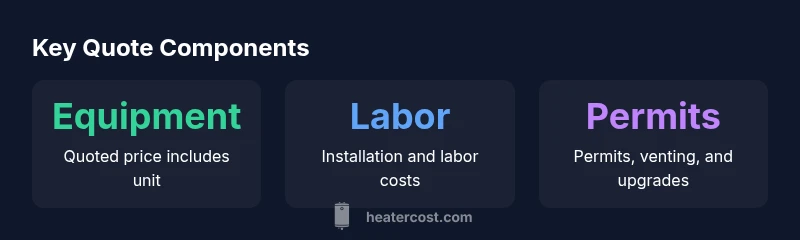
When you request water heater quotes, you’re not just pricing the tank or the instant hot water unit. A quote typically covers equipment, installation labor, permits, venting, and any required connections to your home's plumbing or gas lines. In practice, quotes vary because of four core factors: unit type (storage tank vs tankless), energy source (electric, gas, or propane), capacity and efficiency, and the complexity of installation. For homeowners weighing options, it helps to see quotes broken out by these elements, so you can compare apples to apples. Understanding what is included and what may be added later prevents surprises and clarifies value over time.
Tip: Ask for a line‑item breakdown to identify where costs can be reduced without sacrificing safety or reliability.
Major factors that drive quote amounts
Quote amounts are driven by a mix of technical and logistical considerations. The unit type (tank vs. tankless) determines equipment costs and space needs. Fuel type (electric vs. gas) affects venting requirements and installation complexity. Capacity must align with household demand, and efficiency ratings influence both upfront price and long-term operating costs. Local codes, permit fees, and retrofit work (like electrical upgrades or venting reroutes) can add substantial, sometimes unexpected, costs. Finally, installation complexity—such as relocating the unit, adding expansion tanks, or upgrading piping—shapes the final figure. Understanding these dimensions helps you interpret each quote fairly and avoid overpaying for unnecessary features.
How to compare quotes like a pro
Start with a checklist to ensure you’re comparing apples to apples. Request itemized quotes that break out equipment cost, labor, permits, and any optional add-ons. Verify the energy source and efficiency rating, as these impact ongoing operating costs. Check warranty terms, service requirements, and the installer’s licensing. Don’t forget to ask about venting, necessary electrical upgrades, and whether relocation or additional plumbing work is included. Finally, consider the projected annual energy savings when evaluating long-term value, not just the upfront price.
Price ranges by heater type
Understanding typical ranges helps you set expectations and negotiate effectively. Here are commonly observed installed ranges (subject to local codes and incentives):
- Storage Tank Electric: 700–1,800
- Storage Tank Gas: 1,200–2,900
- Tankless Electric: 1,200–3,500
- Tankless Gas: 2,000–4,600
Note that installation conditions, venting, and electrical capacity can shift these figures. Use these ranges as a starting point for conversations with multiple contractors.
Installation scope and hidden costs to watch
Some quotes look lower but exclude critical costs. Watch for charges related to permits, venting, electrical upgrades, and plumbing modifications. If the home has old piping, corroded connections, or insufficient clearance, costs can spike. Ask installers to include all potential add-ons in writing and request a risk review that highlights any items that might increase the final price after work begins. Planning ahead reduces the chance of surprises.
Financing, warranties, and maintenance
Many homeowners finance a new water heater or rely on manufacturer and installer warranties. Maintenance plans can trim operating costs by preventing efficiency losses and extending lifespan. When evaluating quotes, compare warranty duration, what it covers (parts vs labor), and any required maintenance frequency. If financing is needed, ask about interest rates, payoff timelines, and any early repayment penalties.
Steps to get accurate quotes in 7 days
- Prepare a single, written spec for the installer: storage vs tankless, electric vs gas, capacity, and desired efficiency. 2) Gather at least 3 competing quotes, each itemized. 3) Verify licensing and warranty terms. 4) Request a site visit or photo review to confirm installation scope. 5) Compare total cost of ownership, not just upfront price. 6) Confirm timelines and payment milestones. 7) Decide based on value, not only cost.
How Heater Cost helps homeowners
Heater Cost provides a structured framework for evaluating water heater quotes, emphasizing total ownership cost and maintenance needs. By accounting for equipment, labor, permits, and energy efficiency, homeowners and property managers can make informed decisions. Our team focuses on practical guidance backed by data, helping you avoid common negotiation pitfalls and secure the best long-term value.
Typical installed ranges by heater type
| Quote Type | Typical Range | Notes |
|---|---|---|
| Storage Tank Electric | 700–1800 | Common for apartments |
| Storage Tank Gas | 1200–2900 | Requires venting |
| Tankless Electric | 1200–3500 | Higher upfront, lower space |
| Tankless Gas | 2000–4600 | High efficiency, venting needed |
Got Questions?
What should be included in a water heater quote?
A complete quote should itemize equipment costs, labor, permits, venting, and any required plumbing or electrical work. It should also note warranties and any ongoing maintenance costs.
Look for a line-by-line breakdown of equipment, installation, and permitting with clear warranty terms.
Are tankless water heater quotes more expensive than storage tank quotes?
Tankless systems generally have higher upfront costs due to advanced technology and installation requirements, but they may offer better energy efficiency and space savings over time.
Tankless units often cost more up front but can save space and energy over time.
How many quotes should I get?
Aim for at least three quotes from licensed installers to compare equipment, labor, and total cost of ownership fairly.
Get three quotes to compare value, not just price.
Do quotes include installation permits?
Some quotes include permits; others itemize them separately. Verify whether permit fees are included and who handles the application.
Ask if permits are included and who applies for them.
How long are quotes typically valid?
Most quotes are valid for 30–60 days, but this can vary by contractor and local material costs.
Quotes usually stay valid for about 1–2 months.
Can I finance a water heater purchase?
Yes. Many installers offer financing or partner with lenders. Compare interest rates and terms to understand the long-term cost.
Financing is often available; compare rates and terms.
“Accurate water heater quotes come from breaking down every cost element—equipment, labor, permits, and long-term operating costs. A well-structured quote makes budgeting easier and helps prevent surprises.”
The Essentials
- Get at least 3 quotes to compare total ownership cost
- Ask for a detailed line-item breakdown
- Consider energy efficiency and installation complexity
- Check permits, warranties, and maintenance implications
- Use Heater Cost's framework to evaluate quotes