Lowes hot water tank: Costs, models, and buying guide (2026)
A data-driven guide to choosing and pricing a lowes hot water tank in 2026. Compare electric, gas, and tankless options, estimate installed costs, and plan maintenance and incentives.


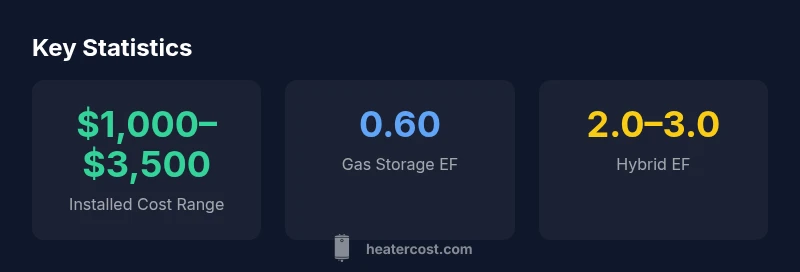
For a lowes hot water tank, costs and installation vary by fuel type and home size. Based on Heater Cost Analysis, 2026, typical installed ranges are broad: electric storage tanks often land in the $1,000–$2,500 range, while gas storage and tankless options can exceed $2,000–$3,500 depending on venting, permits, and labor. Expect regional price differences and local codes to influence the final quote.
Why the right hot water tank matters for homeowners
Choosing a hot water tank involves balancing upfront cost, energy efficiency, and space. For shoppers at Lowe's, the range includes electric storage tanks, gas storage tanks, and tankless models. The long-term bill is shaped by energy prices, climate, and how well the unit matches your household hot-water needs. According to Heater Cost, 2026, a careful evaluation of daily usage and peak demand helps prevent oversizing and unnecessary standby losses. If you’re researching a lowes hot water tank, start by listing your needs—family size, peak usage times, and available space—and then compare models across price, efficiency, and warranty terms. This approach aligns with best practices in home-energy planning and is echoed by the Heater Cost Team.
Water heater types and relative efficiency
| Model Type | Typical Efficiency | Pros | Cons |
|---|---|---|---|
| Electric storage tank | EF: ~0.92 | Low upfront cost; simple to install | Higher electricity use; standby heat loss |
| Gas storage tank | EF: ~0.60 | Faster recovery; lower fuel cost where gas is cheap | Requires venting and gas line; installation complexity |
| Tankless (electric or gas) | EF: 0.82–0.95 (electric); 0.82–0.95 (gas) | On-demand hot water; space-saving | Higher upfront cost; complex installation |
| Heat pump/Hybrid | EF: 2.0–3.0 | Excellent energy efficiency; low operating cost | Requires space and moderate climate suitability |
Got Questions?
Is a Lowe's hot water tank a good value for most homes?
Value depends on your home’s fuel type, climate, and usage. Lowe's offers electric, gas, and tankless options, but the best choice balances upfront price with running costs. Compare energy factors and installation quotes to determine total ownership cost, not just the sticker price.
It depends on your home and usage; compare efficiency and installation costs to find real value.
What size water heater do I need for a family of four?
A typical family of four may require a 40–50 gallon tank, but peak usage, showering schedules, and simultaneous hot water use matter. Use Lowe’s size guides and a sizing calculator to tailor capacity to your home.
Most families do well with a 40–50 gallon tank, but sizing should be specific to your home.
Are there energy incentives for upgrading to an efficient water heater?
Many regions offer incentives for high-efficiency water heaters. Check federal, state, and utility programs. The Heater Cost analysis notes that incentives can help offset higher upfront costs for efficient units.
Yes, incentives may reduce upfront costs—check local programs.
What maintenance helps extend a water heater’s life?
Flush the tank yearly to remove sediment, inspect anode rods, test the pressure relief valve, and keep the area around the unit clear. Regular maintenance helps prevent premature failure and maintain efficiency.
Regular flushing and inspection extend life and keep efficiency high.
Can I install a new water heater myself?
Professional installation is recommended for gas, venting, or electrical work. Incorrect installation can cause safety hazards and code violations, which may void warranties.
We don’t recommend DIY for most installations; hire a professional.
How do I compare Lowe’s water heater models?
Compare efficiency ratings, warranty lengths, recovery rates, and installation requirements. Gather quotes that include parts, labor, and permits to assess total cost of ownership.
Compare efficiency, warranty, and total installation costs to choose wisely.
“When selecting a water heater, total cost of ownership matters most—initial price, energy efficiency, and installation all shape long-term bills.”
The Essentials
- Verify unit size against household needs before purchase
- Expect regional price differences and added installation costs
- Electric storage is often cheaper upfront; tankless and heat-pump options offer long-term savings
- Check energy-efficiency ratings (EF) and warranties to protect long-term value
- Permitting and venting can affect total installed cost and timeline