Home Depot Water Heater Costs: A Practical Guide for 2026
A practical, data-driven guide to Home Depot water heater costs, comparing electric, gas, and tankless options, plus sizing, installation, warranties, and money-saving tips for homeowners.


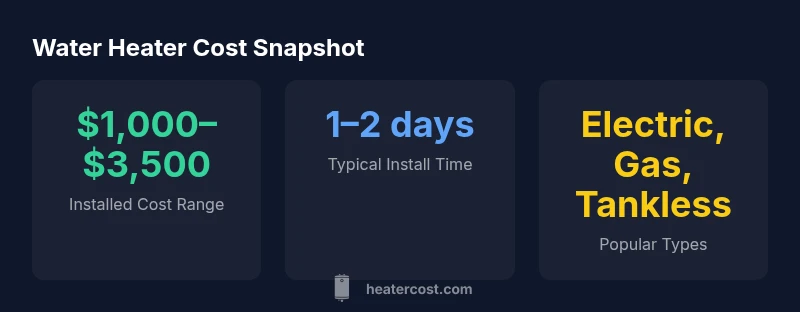
According to Heater Cost, total installed costs for a standard Home Depot water heater typically range from $1,000 to $3,500, depending on model, capacity, and installation complexity. Relative to electric, gas, and tankless options, the final price varies with venting, permits, and local labor. Planning within this range covers most common scenarios for homeowners, renters, and property managers.
Why Home Depot Water Heaters Matter for Budgeting
Planning for a new water heater is a core budget item for any property—whether you’re a homeowner, renter, or property manager. Home Depot offers a broad lineup that spans electric, gas, and tankless technologies, giving buyers the flexibility to balance upfront costs with long-term energy use. According to Heater Cost, most households experience a meaningful difference in total cost when choosing high-efficiency models and when factoring in installation requirements like venting, electrical service, and permits. For multi-unit buildings, economies of scale can also influence per-unit pricing, so it pays to compare options across multiple projects. The key is to map your peak daily hot-water needs to the unit’s capacity and to align the purchase with local labor costs and warranty considerations.
Electric vs Gas vs Tankless: What Home Depot Sells
Home Depot carries a range of electric, gas, and tankless water heaters, each with distinct cost and performance profiles. Electric storage tanks are typically the least expensive upfront and easiest to install where electrical systems can support the load. Gas storage tanks often require venting and gas line work but can deliver faster hot-water recovery in larger homes. Tankless models, whether electric or gas, offer space savings and high efficiency, but they come with higher upfront costs and more complex installation. When evaluating options, consider first-hour rating (FHR) and recovery rate for the size of your household, as well as your home’s fuel availability and utility rates. The Heater Cost team notes that the model mix at retail stores fluctuates with promotions and local inventory.
Sizing and Capacity: How to Choose the Right Tank Size
Choosing the right tank size hinges on your household’s peak hot-water demand rather than simple family size alone. A small apartment may do with 30–40 gallons, while a family of four often needs 40–50 gallons or more. For tankless systems, you won’t worry about tank size, but you must ensure your electrical service or gas supply can handle the continuous load. In all cases, consult the product’s first-hour rating (FHR) and check the thermostat settings to avoid waste. Local climate, simultaneous hot-water use (showers, dishwasher, washing machine), and recovery rate should guide the final decision. Heaters with better insulation reduce standby losses, helping to keep operating costs down.
Installation Considerations: Permits, Professionals, and Timing
Installation quality drives both performance and safety. Home Depot partnerships with licensed installers ensure compliance with local codes and warranty eligibility, and they can help with permits where required. The cost and timeline depend on whether venting or gas line work is needed, the accessibility of the installation site, and any required retrofits to electrical service or venting. If you live in an older home, anticipate possible upgrades (panel capacity, vent routing, seismic strapping). Plan for a window of activity so water shutoff and dry-out don’t disrupt daily routines.
Warranties, Service Plans, and Total Cost of Ownership
Warranties vary by model and by retailer add-ons, but most Home Depot purchases include a manufacturer warranty. Extended protection plans offered at checkout can add value for high-use properties or multi-family units. When calculating total cost of ownership, factor in annual energy consumption, maintenance needs (like annual flushing or anode rod replacement for tanks), and potential replacement intervals. A well-matched unit with proper maintenance often yields lower lifetime costs than a mismatched, cheaper option.
Efficiency, Energy Costs, and Long-Term Savings
Efficiency ratings and energy costs significantly affect long-term expenses. Tankless units typically offer higher efficiency ratings, which can translate to lower energy bills, especially in homes with intermittent hot-water use. Electric models tend to have lower standby losses but may incur higher electricity rates depending on the local grid. Gas models can be economical where natural gas is cheaper than electricity, but fuel price volatility adds risk. The Heater Cost analysis emphasizes balancing upfront investment against projected energy savings over the unit’s life, plus any incentives or tax credits available in your area.
Accessories and Upgrades You Might Need
Certain installations benefit from add-ons that improve reliability and comfort. Consider an expansion tank to reduce pressure fluctuations, a recirculating pump for instant hot-water delivery, and a check valve or anti-scald devices for safety. Seismic strapping can protect against movement in earthquakes, and proper venting is essential for gas units. Budgeting for these items ahead of time prevents scope creep and ensures a smoother installation process.
How to Shop at Home Depot: Tips to Get the Best Value
Timing can influence price and stock. Look for seasonal promotions, bundle deals, or rebates on high-efficiency units. Use Home Depot’s online configurators to compare models side by side, and don’t hesitate to ask for in-store price-match capabilities if you’ve seen a better deal elsewhere. Confirm whether installation is included in the quoted price, and clarify what the installer will handle (removal of the old unit, ductwork, venting, electrical connections). Finally, review the warranty terms and any required annual maintenance to keep coverage intact.
Comparison of common Home Depot water heater configurations
| Model Type | Typical Installed Cost | Capacity | Notes |
|---|---|---|---|
| Electric Tank | $1,000–$2,500 | 20–50 gal | Requires electrical capacity; quiet |
| Gas Tank | $1,200–$3,000 | 30–80 gal | Ventilation required; fuel costs vary |
| Tankless Gas | $2,000–$4,500 | N/A | Compact, higher upfront cost |
| Tankless Electric | $1,500–$3,800 | N/A | Dependent on electrical service |
Got Questions?
What is the typical price range for installing a water heater from Home Depot?
Prices vary by model and installation, but most installs fall in the $1,000–$3,500 range. Factor in type, capacity, and regional labor costs. Always check the installer’s scope and warranty terms.
Prices vary by model and installation, but most installs fall in the $1,000–$3,500 range. Check the installer’s scope and warranty.
Does Home Depot offer installation services or only supplies?
Home Depot typically offers installation through licensed contractors, with pricing and scheduling coordinated at the local store. They provide guidance on permits and venting where required.
Home Depot usually offers installation via licensed contractors and assists with permits and venting where needed.
What maintenance is required for a new water heater?
Routine maintenance includes periodic flushing, checking the anode rod (for tanks), and inspecting connections. Annual checks help extend lifespan and preserve efficiency.
Flush the tank periodically, check the anode rod, and inspect connections yearly.
Is a tankless water heater worth it for a family with high hot-water use?
Tankless models offer space and efficiency benefits but come with higher upfront costs. For high usage, a properly sized unit can be cost-effective over time if installation is economical.
Tankless can be cost-effective long-term for high use, but upfront costs are higher.
What warranties should I expect with a Home Depot water heater?
Most purchases include a manufacturer warranty; optional Home Depot protection plans may extend coverage. Verify coverage length, what it includes, and any required maintenance.
Expect a manufacturer warranty; consider extended plans, and check coverage details.
“Selecting a water heater is about balancing upfront cost, efficiency, and long-term energy use. Proper sizing and professional installation prevent energy waste and costly outages.”
The Essentials
- Budget within $1,000–$3,500 installed for typical Home Depot water heaters
- Compare electric, gas, and tankless by capacity and installation needs
- Size and fuel type affect long-term energy costs
- Plan for permits, venting, and professional installation to protect warranties
- Cue seasonality: watch for promotions and bundle offers