Electric Water Heater Cost: A Practical Guide (2026)
Learn the true cost of electric water heaters, including installed price, annual operating expenses, and key factors that drive your household bill over time.


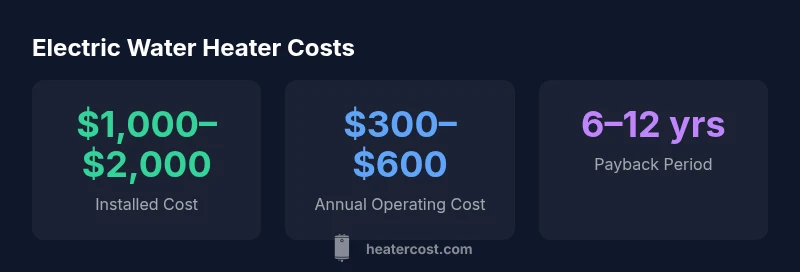
Electric water heater installed cost for a standard 40- to 50-gallon tank typically falls between $1,000 and $2,000, depending on efficiency, warranty, and local labor. Annual operating costs usually range from about $300 to $600, driven by your electricity rate and hot-water usage. These figures come from Heater Cost Analysis, 2026.
Cost Drivers for Electric Water Heaters
Understanding the total cost of ownership for a water heater begins with the upfront installed price and the ongoing operating costs. For a standard electric tank, the upfront price depends on tank size (commonly 40–50 gallons in residential homes), the efficiency of the unit, warranties, and whether any venting or insulation upgrades are needed. Labor charges from local contractors, permit fees, and any required electrical work can add noticeably to the bill. According to Heater Cost, the 2026 regional variation in installation price can significantly affect the final cost, so homeowners should obtain multiple quotes from licensed plumbers and electricians. In addition, consider longer-term energy savings: higher-efficiency models can reduce annual energy use, potentially shortening payback periods if local electricity rates are high. By framing the decision around total cost of ownership—not just upfront price—homeowners can make a more informed choice that aligns with their budget and usage patterns.
Sizing and Efficiency: How Tank Size Impacts Cost and Bills
The size of your electric water heater influences both installed cost and energy consumption. A larger tank (e.g., 50 gallons) costs more upfront but can reduce the risk of running out of hot water during peak demand, which is particularly valuable for households with higher concurrent hot water use. Efficiency is typically measured by the Energy Factor (EF) or newer efficiency metrics. Higher efficiency often means higher initial cost but lower annual operating costs. Indirect costs, such as improved insulation and seasonal energy demand, can also affect the overall bill. When evaluating options, compare not just the purchase price but the long-term savings from improved energy performance and potential rebates.
Electric vs Other Heat Sources: Tanked Water Heaters Compared
Electric tank water heaters are common due to wide availability and straightforward installation, especially in apartments and homes without gas service. However, they can have higher operating costs in regions with expensive electricity compared with gas-fired models. Gas tanks typically have lower energy costs per unit of energy but require a gas line, venting, and potentially higher maintenance. Hybrid electric heat pump water heaters offer the best energy efficiency by using ambient heat; their upfront costs are higher, but utility bills can be substantially lower in the right climate. When choosing, weigh upfront price against long-term energy usage and reliability needs.
Installation and Labor: Hidden Fees That Change the Bottom Line
Installation costs vary with location and home electrical capacity. If your existing electrical panel is undersized or if a dedicated circuit must be added, labor costs climb. Venting, seismic bracing, and pipe modifications add to the bill in some markets. Permitting requirements can also add time and expense. To minimize surprises, request a detailed, written estimate that itemizes equipment, labor, permits, and disposal. Ask about contractor warranties and whether the price includes rollback of any city or utility rebates if applicable. Earlier planning and a clear scope help keep the project on budget.
Operating Costs: Reading Your Electricity Bill and Estimating Usage
Your annual operating cost depends on how much hot water you use and the rate you pay for electricity. A basic calculation is energy use in kilowatt-hours (kWh) per year multiplied by your electricity rate per kWh. An efficient electric water heater reduces standby losses, helping to lower bills over time. Use performance data from the manufacturer and local electricity rates to estimate yearly costs. If you see a spike in your bill after a replacement, it may indicate over-sizing, thermostat settings, or standby losses that warrant adjustment.
Rebates, Incentives, and Financing Options
Many regions offer rebates or tax incentives for upgrading to more energy-efficient water heaters. Financial programs can offset part of the upfront cost, shortening the payback period. Some utilities also provide time-of-use rates that reward off-peak usage, further reducing operating costs. Financing options or manufacturer promotions may be available to ease the initial burden. Check locally for current programs and eligibility criteria and be prepared to document efficiency ratings and installation details when applying.
How to Choose the Right Electric Water Heater for Your Home
Start with your hot water demand profile: number of bathrooms, dishwasher usage, and shower habits. Choose a size that minimizes shortfalls and excessive standby losses. Compare energy factors and warranty terms, and consider space constraints and electrical service. If you’re energy-conscious, a heat pump electric model can offer substantial long-term savings, though it requires more space and potentially additional upfront investment. Always verify compatibility with your home’s electrical system and consult a licensed professional for a precise assessment.
Maintenance and Longevity: Extending the Life and Saving Money
Routine maintenance extends the life of an electric water heater and preserves efficiency. Flushing the tank annually helps remove sediment that reduces efficiency. Inspect the anode rod every 3–5 years to prevent corrosion, and replace it if it’s heavily depleted. Set the thermostat to a safe, moderate temperature (120–140°F) to balance scald risk and energy use. Regularly check fittings and connections for leaks, and replace worn components as needed. Proper maintenance reduces the risk of unexpected failures and costly repairs.
Cost and operating comparison for common water heater types
| Model Type | Typical Installed Cost (range) | Typical Annual Operating Cost | Pros | Cons |
|---|---|---|---|---|
| Electric Tank (40–50 gal) | $1,000–$2,000 | $300–$600 | Simple install; broad availability | Higher operating cost vs. HPWH in many regions |
| Gas Tank (40–50 gal) | $1,200–$2,800 | $200–$500 | Lower energy cost per unit; fast recovery | Requires gas line/venting; safety concerns |
| Electric Heat Pump (HPWH) | $2,000–$3,500 | $150–$350 | Very energy efficient; low operating cost | Higher upfront cost; needs space/neutral climate |
Got Questions?
What affects the cost of an electric water heater?
Upfront price is driven by tank size and efficiency, while installation complexity, labor rates, and permits add to the total. Local electricity prices also shape long-term operating costs. Always compare quotes that break out equipment, labor, and any required electrical work.
Costs depend on tank size, efficiency, and local installation labor. Get multiple quotes that itemize parts and labor.
Is an electric water heater more expensive to operate than a gas unit?
Operating costs depend on energy prices in your area. In many regions, electricity is more expensive per unit energy than natural gas, but electric heat pump models can dramatically reduce consumption. Compare local rates and consider installation costs to determine the best long-term option.
Electric heaters can cost more to run in some areas, but high-efficiency models may offset that with lower usage.
What size water heater do I need?
Most households use 40–50 gallons, but families with high simultaneous hot-water use may need 60 gallons or more. Use peak-hour demand calculations and consult a professional for a precise recommendation based on your habits.
Size depends on your family and usage; a pro can size it accurately.
Are rebates or tax incentives available for electric water heaters?
Yes, many regions offer rebates or incentives for upgrading to energy-efficient units. Availability varies by locale and program. Check local utilities and government programs for current offers and eligibility.
There are often rebates—check local programs to see what's available.
How long does installation take on average?
A typical replacement can take a few hours, while installations with wiring upgrades or venting work may require a full day. Scheduling with a licensed professional helps avoid delays and ensures proper permits are obtained if needed.
Most installs take a few hours; complex setups can take longer.
What maintenance is required to extend life?
Annual tank flushing, checking the anode rod every few years, and inspecting connections help extend life. Keep the thermostat at a safe setting and address leaks promptly to prevent costly repairs.
Do regular flushing and inspections to keep it running well.
“Electric water heaters provide reliable hot water with predictable costs, but total cost depends on efficiency, usage, and local electricity rates.”
The Essentials
- Track total cost of ownership, not just upfront price
- Choose tank size based on peak hot-water demand
- Consider energy efficiency to lower operating costs
- Explore rebates and financing to offset upfront costs
- Match heater type to your climate and electrical capacity