Water Heater Change Cost: A 2026 Guide to Budgeting and Planning
Explore what drives water heater change cost in 2026, including fuel type, installation, permits, and disposal. Learn how to compare bids, plan downtime, and choose energy-efficient options with practical guidance from Heater Cost.


According to Heater Cost Analysis, 2026, the typical water heater change cost ranges from $900 to $2,700, depending on fuel type and installation complexity. Electric tank replacements are often on the lower end, gas tanks higher, and tankless systems at the top. Labor, permits, disposal, and any needed venting or electrical work all influence the final price.
What determines water heater change cost
Understanding the water heater change cost means looking at multiple variables that combine to form the final price. Equipment price is only part of the story; labor, permits, disposal, and site preparation often determine the total cost. The size of the unit, the fuel type, and whether you’re replacing like-for-like or upgrading to a higher efficiency or tankless model all influence the bottom line. Location matters too—installations in tight crawlspaces, vaulted ceilings, or cramped closets usually require more labor and time. The best way to frame your budget is to think of the total as a sum of four buckets: equipment price, labor, permits and disposal, and any required venting or electrical work. According to Heater Cost Analysis, 2026, planning around these buckets helps homeowners avoid surprises and align expectations with actual project scopes.
Fuel type and size: how they impact the price
Fuel type and system size are often the largest levers in the water heater change cost. Electric tanks are typically cheaper to purchase and install because they require less venting and fuel handling, whereas gas-powered systems may incur venting, gas line work, and more complex safety measures. Tankless models, especially gas-powered, bring higher equipment costs and more involved installation, sometimes requiring upgrades to gas lines and dedicated vents. Capacity matters too: undersized units run more cycles and may cost more in energy over time, while oversizing can raise upfront costs. When evaluating options, consider your home’s daily hot water demand, climate, and energy prices in your area.
Installation complexity and labor: what adds cost
Labor costs rise with installation complexity. If the old unit sits in a difficult-to-access location, or if the space requires structural modifications, electrical panel upgrades, new circuits, or upgraded venting, expect higher labor charges. Gas installations may require line pressure testing, gas shutoffs, or seismic straps for code compliance. Electrical upgrades for electric models can range from simple outlet changes to full panel upgrades. Additionally, replacing or relocating a water heater can impact plumbing rerouting, which adds to both time and cost. A straightforward, same-location replacement tends to be the most cost-efficient scenario.
Permits, disposal, and warranties: hidden charges
Permits vary by municipality and can significantly influence total cost. Some jurisdictions bundle permit fees with inspection costs, while others itemize them separately. Disposal fees for the old unit and recycling charges should also be anticipated. Warranties can affect price signals; longer warranties or premium labor coverage add to upfront costs but may reduce long-term risk. When budgeting, request a bid that items line-by-line for equipment, labor, permits, disposal, and warranty terms so you can compare apples to apples.
Rebates, incentives, and energy efficiency payback
Today's replacements offer more energy-efficient options, including ENERGY STAR-rated electric and gas units and tankless configurations. Utilities and local governments often provide rebates or tax incentives that can noticeably cut the first-year cost. While incentives vary by region and model, planners should research available rebates before choosing a unit. In many cases, the energy savings from a more efficient model can shorten payback periods, making a higher upfront investment worthwhile in the long run.
Timing and planning: downtime and scheduling
Replacing a water heater typically requires a downtime window, sometimes a few hours, sometimes longer if additional plumbing or electrical work is needed. Scheduling with a licensed contractor who can coordinate permits, inspection, and any necessary inspections minimizes delays. If you rely on hot water for essential activities, plan a temporary hot water solution (like a portable heater or a short-term rental) while the installation occurs. Clear communication about expectations helps prevent misalignment and extra charges.
Maintenance now to extend life and reduce future costs
Proper maintenance extends the life of your water heater and can prevent unexpected failures that lead to emergency replacements. Flushing the tank, inspecting anode rods, checking the pressure relief valve, and scheduling annual professional checkups are prudent steps. A well-maintained unit not only runs more efficiently but also reduces the likelihood of expensive repairs and early replacement. Budget for occasional maintenance alongside replacement planning to smooth out costs over time.
How to compare bids effectively
When you receive bids, compare them line by line, not just total price. Look for identical scope items: equipment model, installation labor, permits, disposal, venting, electrical work, and warranty coverage. Ask contractors to provide a breakdown and to explain any deviations from standard practice. Request references and verify licensing requirements in your area. A structured comparison helps you choose the best value rather than the lowest upfront price.
Replacement cost by fuel type
| Fuel Type | Typical Cost Range | Major Cost Drivers |
|---|---|---|
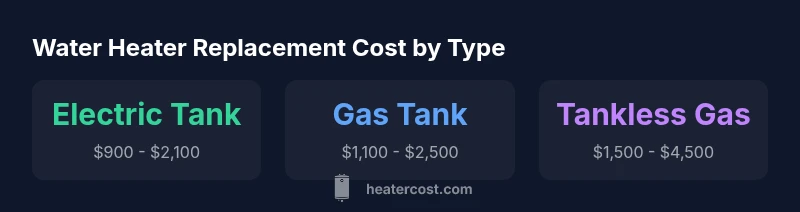
| Electric Tank | $900 - $2,100 | Unit price + labor + permits |
| Gas Tank | $1,100 - $2,500 | Gas line work, venting, electrical upgrades |
| Tankless Gas | $1,500 - $4,500 | High equipment cost, complex install |
| Tankless Electric | $1,700 - $3,500 | High power requirements, cooling considerations |
Got Questions?
What factors most influence water heater replacement costs?
The main cost drivers are unit price, labor, permits, disposal, venting, and any required electrical or gas line work. Fuel type and capacity also affect the price, with tankless models typically costing more up front.
The biggest costs are the unit price, labor, and any required permits or venting. Tankless models usually cost more upfront.
How much does labor add to the total cost?
Labor typically represents a substantial portion of the total, often 30% to 50%, depending on installation complexity and access. Difficult installations can push labor higher.
Labor usually makes up a large chunk, often around one-third to half of the total cost.
Is it cheaper to repair or replace a failing water heater?
If multiple components fail or the unit is older than its expected lifespan, replacement often provides better value and energy efficiency. Repairs may be sensible for newer units with minor issues.
If the heater is old or failing several parts, replacement is often the smarter choice.
Do energy-efficient models qualify for rebates or tax credits?
Many regions offer rebates or incentives for ENERGY STAR-rated models and high-efficiency systems. Availability varies by location and model, so check local programs before purchasing.
Yes, energy-efficient models may qualify for rebates, depending on where you live.
Are permits always required for replacement?
Permit requirements vary by jurisdiction. Some areas require permits and inspections, while others may not. Your contractor can confirm what’s needed in your city.
Permits depend on your location—your installer will know what’s required.
“A proactive replacement plan that compares fuel types and bids can save homeowners hundreds to thousands of dollars over the life of the system.”
The Essentials
- Compare bids line-by-line, not just total price
- Plan for permits, disposal, and venting in your budget
- Consider energy-efficient models to reduce long-term costs
- Account for downtime and scheduling when budgeting
- Maintenance extends life and lowers future replacement risk