How Much Does It Cost to Replace a Water Heater? A 2026 Guide
Learn current replacement costs for water heaters in 2026, including tank styles, fuel types, installation fees, and strategies to save without sacrificing reliability.


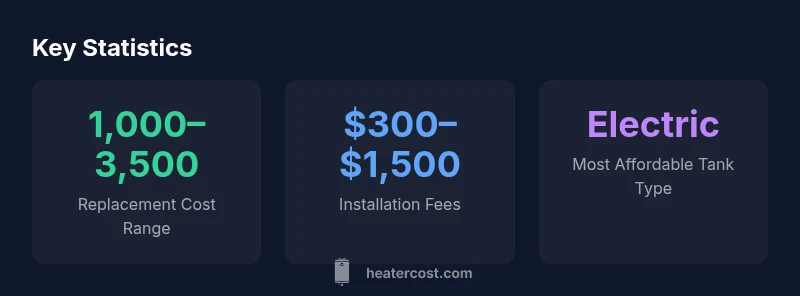
A typical water heater replacement costs between $1,000 and $3,500, depending on tank type, fuel source, and installation complexity. According to Heater Cost Analysis, 2026, electric storage models are usually cheaper, while high-efficiency or tankless systems push prices higher. Be sure to include permit fees and removal of the old unit in your estimate.
What Drives the Cost to Replace a Water Heater
Replacing a water heater is not just swapping one box for another. Costs are driven by four major factors: heater type and size, fuel source, installation complexity (including venting, gas lines, and electrical work), and local labor rates plus permit fees. In many homes, the existing plumbing and venting setup sets the ceiling on how much labor is required. If you need venting upgrades, seismic strapping, or new shutoff valves, those add-ons can push the total upward. The choice between replacing with a similar unit or upgrading to a higher-efficiency or tankless system also dramatically changes the price. According to Heater Cost Analysis, 2026, you should budget for not only the price of the unit but also any modifications to the household gas line or electrical panel, as well as disposal of the old unit. Understanding these drivers helps you compare bids more fairly and avoid sticker shock when the final invoice arrives.
Cost Ranges by Heater Type
Prices vary widely by model, efficiency, and installation needs. A typical range for a standard home setup is as follows: electric storage models often fall in the lower end of the spectrum, gas storage prices are higher due to venting and gas-pipe considerations, and tankless systems—whether electric or gas—command the highest upfront costs but offer potential long-term savings. In 2026, a ballpark guide (before discounts or utility rebates) looks like this: electric storage replacements commonly land between $900 and $1,800; gas storage typically ranges from $1,200 to $2,800; tankless electric around $1,000 to $3,000; tankless gas can run from $2,000 up to $5,000. These figures include the unit and standard installation, but may exclude permits, vent work, and disposal fees. Remember to compare bids using a full breakdown and to check whether labor rates reflect your local market as well as permit requirements.
Hidden Costs to Plan For
Even when you stick to a single heater type, several add-ons can shift the total price. Permit fees vary by jurisdiction but are commonly in the range of modest to moderate costs. Disposal fees for an old unit can add a small but not negligible amount. Venting upgrades, especially for gas units, may require new or upgraded flues. If your home uses natural gas and the line needs upgrading or if electrical work is required for a newer, higher-efficiency model, those costs can be substantial. Other potential costs include new expansion tanks, updated shut-off valves, and possible seismic restraints. To avoid surprises, request a formal line-item bid that separates the unit, labor, permits, disposal, and any required venting or electrical work.
How to Estimate the Total Bid and Compare Quotes
Start by getting several written estimates from licensed contractors. Ask each bidder to itemize: the replacement unit, labor, permits, disposal, venting or gas-line work, electrical upgrades (if any), and any included warranties. Verify that the bid reflects removal and recycling of the old unit. Compare the costs of staying with the same tank type versus upgrading to a higher-efficiency or tankless model, and consider long-term operating costs when evaluating payback. For accuracy, request a site visit to confirm existing plumbing, venting, and electrical capacity before quotes are prepared. Don’t rely on price alone—assess contractor credentials, installation timelines, and post-installation support.
Financing, Incentives, and Long-Term Savings
If upfront cost is a concern, ask about financing options and any available incentives. Many utilities and manufacturers offer rebates or promotions on energy-efficient models, and some regions provide tax credits or subsidies for upgrades that improve home energy efficiency. When evaluating a replacement, focus not only on the sticker price but also on projected energy savings, warranty terms, and maintenance needs. Choosing an efficient model paired with right-sizing and proper maintenance can reduce operating costs over the heater’s lifetime. Always check the latest federal, state, and local programs, and review energy-label information to understand operating costs over time.
Practical Steps to Prepare Before Replacement
Before the installation date, gather details about your current system, including its tank size, fuel type, age, and any known issues. Confirm access for service technicians, clear pathways to the utility room, and any potential obstacles like tight spaces or high ceilings. Create a simple maintenance plan for after the install, including periodic flushing and anode rod inspections if you have a tank-style unit. Finally, set expectations with your contractor for timelines, cleanup, and post-install testing to ensure the new unit operates safely and efficiently.
Typical replacement cost ranges by heater type (costs shown as ranges)
| Category | Estimated Cost Range | Notes |
|---|---|---|
| Tank-style electric water heater replacement | "$900"-"$1,800" | Standard efficiency; common in smaller homes |
| Gas storage water heater replacement | "$1,200"-"$2,800" | Includes venting considerations |
| Tankless electric water heater replacement | "$1,000"-"$3,000" | Higher upfront; potential energy savings |
| Tankless gas water heater replacement | "$2,000"-"$5,000" | Largest upfront cost; best for high demand |
| Labor/installation fees | "$300"-"$1,500" | Depends on permit, contractor, and existing plumbing |
Got Questions?
What factors influence the cost to replace a water heater?
Several factors determine total replacement cost: heater type and size, fuel source, installation complexity (venting, gas lines, electrical work), local labor rates, and permit fees. Existing plumbing and venting can add or subtract from labor time. Comparing bids with a complete breakdown helps you see where costs arise.
Factors include heater type, size, fuel, installation complexity, and local labor.
Does replacement cost include installation and removal of the old unit?
Yes, most bids break out the cost of the new unit, installation labor, and removal/disposal of the old unit. Some contractors may itemize disposal or recycling separately, so confirm what’s included before signing.
Typically, installation and disposal are included, but verify in the bid.
Are permits required for water heater replacement?
Most jurisdictions require a permit for replacing a water heater, especially if venting or gas lines are involved. Your contractor should handle permit pulls, but costs and requirements vary by location.
Permits are usually required and vary by location.
Is it cheaper to replace with another tank or switch to tankless?
Tankless units have higher upfront costs but can reduce energy use and provide endless hot water in busy homes. Tank replacements with traditional storage are cheaper initially but may incur higher operating costs over time.
Tankless costs more upfront but can save on energy; tanks are cheaper to start.
How long does installation typically take?
Most residential replacements take a day or two, depending on whether venting or electrical upgrades are required. Some projects are completed in a single day if the existing setup is straightforward.
Most replacements take 1 day, sometimes 2 if upgrades are needed.
“Replacing a water heater is a significant home upgrade, but a carefully selected model and a clear bid can prevent budget overruns.”
The Essentials
- Budget a broad range to cover unit price and labor
- Tankless options cost more upfront but may save energy
- Get a full bid with unit, labor, permits, and disposal
- Factor in venting, gas lines, and electrical upgrades
- Check for local rebates and incentives to offset costs