Water Heater 40 Gallon: Costs, Specs & Buying Guide
Learn the costs, specs, and maintenance needs for a 40 gallon water heater. Compare electric vs gas, efficiency, and installation considerations to plan your purchase and replacement.


A 40 gallon water heater provides a mid-size storage option for homes with moderate hot-water needs. It typically serves 2–3 bathrooms and balances upfront cost with ongoing operating expenses. Performance varies by fuel type, recovery rate, insulation, and household demand, so choose a model that matches your peak usage. For replacement projects, expect variability based on usage patterns.
What a 40 Gallon Water Heater Is
A 40 gallon storage water heater is a common mid-size option for homes with moderate hot water demand. It stores heated water in an insulated tank and supplies it on demand as faucets draw water. In a typical home, this size is used by households with 2–3 bathrooms and a mix of daily activities like showers, laundry, and dishwashing. The choice between electric and gas fuels affects initial cost, operating cost, and recovery speed after significant water use. According to Heater Cost Team's analysis, the 40 gallon model offers a good balance between upfront price and long-term energy expenses for many households. The exact performance depends on the unit’s insulation, recovery rate, and temperature settings, so homeowners should consider their peak hot-water usage when selecting a model.
Size and Suitability for Households
Hot water needs vary by family size, shower duration, and appliance usage. A 40 gallon tank can typically meet daily needs for households with two to four occupants who take 1–2 showers per day and run occasional dishwashing. If you have high simultaneous demand (two showers and a washing machine at once), you may experience occasional shortages during peak hours, especially if the unit has a lower recovery rate. When shopping, look at the first-hour rating (FHR) rather than capacity alone, and compare 40 gallon electric vs 40 gallon gas units. The Heater Cost team notes that the choice should reflect your region’s climate, water temperature, and energy prices. If you’re replacing an older unit, assess the current usage patterns and consider a model with higher insulation (R-value) to minimize standby losses.
Electric vs Gas: Which Is Better for a 40 Gallon Model
Electric 40 gallon heaters are typically easier to install and have lower upfront costs, but may have higher operating costs in regions with expensive electricity. Gas models usually recover faster, which helps with families that use hot water in bursts, but require venting and a combustion-air supply. Efficiency is measured by the energy factor (EF); newer standards push EF higher, reducing energy waste. In many homes, a gas 40 gallon unit can deliver more hot water per hour, but installation complexity and venting requirements add to the price. The Heater Cost analysis suggests evaluating local gas availability, venting constraints, and long-term utility rates when deciding.
Key Specs to Compare When Buying a 40 Gallon Heater
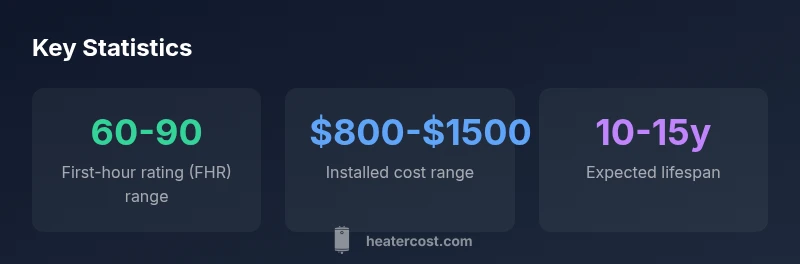
Focus on four core specs: FHR, EF, insulation, and recovery rate. A higher FHR means more hot water in a burst; a higher EF means less energy waste. Insulation thickness (measured by R-value) reduces standby heat loss. Recovery rate tells you how quickly the tank can reheat water after a high-demand period. Look for models with a thick insulation layer, a quality anode rod, and a good warranty. Fuel type matters, but so does the installation space and venting. If you’re replacing an older model, compare the costs of upgrading venting equipment and any required permits.
Installation Space and Venting Considerations for a 40 Gallon Unit
Gas-powered 40 gallon heaters require proper ventilation and a dedicated space with adequate clearance around the unit. Electric units also need clearance for service and, in some installations, a dedicated circuit. Plan for space in a utility closet or garage with enough room for maintenance, drainage, and future service. Check local building codes, as some jurisdictions require seismic strapping and proper venting. The typical footprint is about 2' x 2', but plus venting and combustion air can expand the required space. A professional installation ensures compliance, safe venting, and proper gas lines or electrical connections. We’ll discuss the likely costs and permit requirements in the next section.
Maintenance, Lifespan, and Reliability of a 40 Gallon Heater
Regular maintenance extends life: drain and flush the tank annually, inspect the anode rod, and test the thermostat. Sediment buildup and mineral deposits can reduce efficiency and shorten lifespan. Expect 10–15 years of service with proper maintenance, but some models last longer. Replacing a failed anode rod and keeping the temperature settings moderate helps extend life. Listen for unusual noises, water leaks, or sudden drops in hot water supply as warning signs. When maintenance becomes frequent and costly, consider replacement with a higher-efficiency model.
Replacement Timing and Upgrade Considerations for a 40 Gallon Model
Consider replacement if the unit is over 10–12 years old, shows frequent leaks, or costs more to operate than a newer energy-efficient model. Upgrading to a high-efficiency 40 gallon unit can save energy and reduce standby losses. Evaluate warranty coverage, installation costs, and potential incentives at the time of purchase. In some regions, incentives and tax credits apply to energy-efficient water heaters, which Heater Cost can help you estimate.
How to Compare Models with Real-World Scenarios
Think through common living situations: a family of four in a cold climate with multiple daily hot-water uses, a compact townhouse with modest demand, or a vacation home with intermittent use. Use a side-by-side feature comparison to weigh FHR, EF, warranty, and installation costs. Consider local incentives and service availability in your area. This approach helps you select a model that remains cost-effective over its life, not just at purchase.
Electric vs gas 40 gallon water heater comparison
| Aspect | Electric 40 gal | Gas 40 gal |
|---|---|---|
| First-hour rating (FHR) | 60-80 gallons | 70-90 gallons |
| Recovery rate (gph) | 12-20 | 18-28 |
| Typical installed cost range | $800-$1,400 | $1,000-$1,500 |
| Venting requirements | Requires venting (electric units usually do not vent) | Requires venting and combustion air |
| Space footprint | Approx. 2' x 2' (plus plumbing) | Approx. 2' x 2' + venting space |
Got Questions?
Is a 40 gallon water heater enough for a typical family?
For many families, a 40 gallon unit suffices if daily hot-water use is moderate and showers are staggered. If demand is high (multiple simultaneous uses), you may encounter brief shortages during peak hours. Review your peak usage and consider a higher FHR or a larger unit if needed.
A 40 gallon heater works for many families, especially if you stagger hot-water use. If you have frequent simultaneous demands, you may need a larger unit.
What is the difference between electric and gas 40 gallon models?
Electric models are typically easier to install and cheaper upfront, but may cost more to operate where electricity prices are high. Gas models recover water faster and can be cheaper to run in some regions, yet they require venting and can have higher installation complexity.
Electric units are simpler to install; gas units recover faster but need venting.
How do I determine the right size for my household?
Assess your peak hour hot-water usage: number of bathrooms, typical shower duration, laundry frequency, and dishwasher use. A professional assessment can translate these patterns into an appropriate FHR and EF. If in doubt, consult a licensed plumber or HVAC contractor.
Check your peak usage and sizing guides, and consult a pro if you’re unsure.
What maintenance does a 40 gallon water heater require?
Annual maintenance includes flushing the tank to remove sediment, inspecting the anode rod, and checking the thermostat. Regular maintenance helps sustain efficiency and extends lifespan. Repair or replacement should be considered if maintenance costs rise or performance declines.
Flush annually, check the anode rod, and test the thermostat.
What are common signs that a water heater needs replacement?
Frequent leaks, rumbling noises, decreased hot-water supply, and rising energy bills are common indicators that replacement may be more cost-effective than continued repairs. If the unit is older than 10–12 years, preemptive replacement can improve reliability and efficiency.
Leaks, noises, less hot water, or high energy bills mean consider replacement.
“A 40 gallon model provides a practical balance between upfront cost and ongoing energy use, especially when matched to your peak hot-water needs. Recovery rate and insulation quality are key drivers of daily performance.”
The Essentials
- Choose 40 gallon for moderate hot-water needs.
- Compare FHR and EF to balance supply and efficiency.
- Electric is usually simpler to install; gas often offers faster recovery.
- Plan space, venting, and permits before purchase.