Water Heater 40 Gallon Natural Gas: Costs, Installation, and Maintenance
A comprehensive guide to water heater 40 gallon natural gas systems, covering costs, installation considerations, energy efficiency, maintenance, and lifecycle planning for homeowners, renters, and property managers.


Definition: A water heater 40 gallon natural gas is a mid-sized residential unit that stores hot water and heats it with natural gas. This size suits many homes with moderate hot-water demand, balancing recovery rate, upfront cost, and space. According to Heater Cost, this is a popular mid-range option for typical family households seeking reliable daily hot water.
What is a water heater 40 gallon natural gas and who needs it?
A water heater 40 gallon natural gas is a common residential unit that stores hot water and heats it using natural gas. This size is widely chosen for homes with moderate hot-water demand, typically enabling comfortable showers, dishwashing, and laundry without frequent re-heating. Because it uses natural gas, operating costs can be lower than electric storage heaters in regions where gas is affordable. The 40-gallon capacity offers a practical balance between space, initial cost, and recovery rate. According to Heater Cost, this size remains a popular mid-range option for typical family households seeking reliable daily hot water.
In many homes, a 40 gallon natural gas model provides ample hot water for several simultaneous tasks, such as two showers in the morning plus a load of laundry. Space constraints, venting requirements, and local codes often influence whether this size is ideal. If your household experiences unusually high demand—think large families or frequent spa-like showers—you may want to consider a larger model or a two-unit setup. For most single-family homes, though, a 40-gallon gas unit hits a sweet spot between supply and expense.
When comparing models, look beyond sticker price. Pay attention to recovery rate, energy factor, warranty length, and access to service parts. A well-chosen 40 gallon natural gas water heater can deliver dependable hot water with reasonable operating costs for years to come, especially when paired with good installation practices and regular maintenance.
Sizing and daily hot-water demand
Sizing a 40 gallon unit starts with understanding your daily hot-water demand. Start by listing typical activities: showers, hand washing, dishwashing, laundry, and any hot-water-heavy routines like bathing children or washing pets. A simple rule of thumb is to match the unit’s recovery rate to peak usage and ensure there’s a buffer for simultaneous demands. The First-Hour Rating (FHR) provides a practical proxy for how much hot water the heater can deliver in an hour; for a 40 gallon natural gas model, expect a broad range depending on the burner design and venting efficiency. If your household frequently exhausts hot water at peak times, you may need a higher FHR or consider a two-unit solution. Always consider climate and occupancy; a colder climate or higher usage pattern will push you toward models with faster recovery.
For homes with more than two bathrooms or multiple simultaneous users, assess whether a tankless or larger tank alternative better suits your needs. Tankless options offer endless hot water but can require higher upfront costs and more complex installation. In many cases, a well-mated 40 gallon gas unit remains the economical middle ground, balancing supply, reliability, and ongoing costs.
Efficiency metrics you should care about
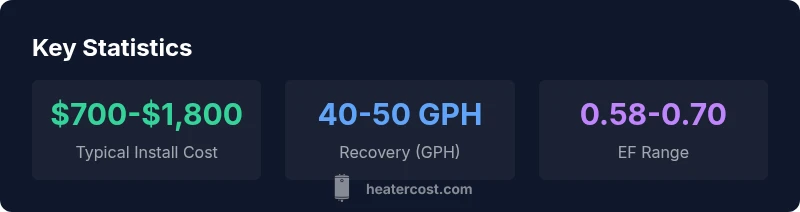
Key efficiency metrics include energy factor (EF) and the newer standards like uniform energy factor (UEF) that reflect how effectively a water heater converts fuel into usable heat. Higher EF/UEF values indicate lower operating costs over the unit’s life, because more of the energy goes into delivering hot water rather than lost as waste. For gas water heaters in the mid-range, EF values commonly fall in the 0.58–0.70 range, with newer models nudging higher as insulation improves and burner technology advances. In contrast, older or budget models may achieve significantly lower efficiencies and eat into monthly energy budgets. The First-Hour Rating (FHR) is another crucial metric; it shows how much hot water the unit can produce in the first hour after a cold start. For a 40 gallon gas heater, the FHR varies widely by design, so compare several models within your price range to ensure you don’t outgrow your daily demand.
Balance EF with FHR to optimize both long-term savings and immediate performance. Remember that installation quality affects real-world efficiency: improper venting, oversized ducts, or heat loss from poorly insulated pipes can erode theoretical gains. When evaluating options, prioritize models with sturdy corrosion protection and accessible service components so maintenance is straightforward over time.
Installation considerations: venting, gas lines, and clearances
Installing a water heater 40 gallon natural gas requires careful attention to venting, combustion air, gas supply, and mechanical clearances. A licensed gas technician should size the gas line appropriately to prevent pressure drops that could hinder burner performance. Proper venting is essential to ensure safe exhaust of combustion byproducts; improper venting can lead to back-drafting and carbon monoxide risks. Clearance around the unit allows for safe inspection and service access, while a drip pan beneath the tank helps manage small leaks. In many jurisdictions, a permit is required for installation or replacement, and inspections may follow to verify venting, vent termination, and gas connections.
If you are replacing an older unit, verify that the existing vent and chimney systems are compatible with a newer, more efficient model. Upgrading venting components may reduce back-pressure and improve overall efficiency. Finally, consider whether the location has enough space for maintenance tasks and if your home’s water and gas lines can accommodate a future upgrade should you want to switch to a larger tank or a tankless system later.
Operating costs and energy efficiency
Operating costs for a gas water heater depend on local gas prices, usage patterns, and the unit’s efficiency. In many markets, natural gas remains cheaper per unit of heat than electricity, which translates into lower annual energy expenditures for households with steady hot-water demand. However, costs can swing with seasonal price shifts and regional supply constraints. When evaluating a 40 gallon natural gas model, compare the EF rating and the burner design to gauge long-term savings. Pair the heater with proper insulation for hot-water pipes and a well-sealed storage area to reduce heat loss. If you use a recirculation loop, consider a model designed to minimize standby losses. On the installation side, labor and venting fees can significantly impact total cost, so obtain multiple bids and ensure that quoted prices include permits and disposal of the old tank.
Maintenance and common issues
Regular maintenance extends the life of a gas water heater and preserves efficiency. Schedule an annual professional inspection to check for gas leaks, venting integrity, and proper burner operation. Drain the tank and flush sediment at least once a year to sustain recovery rates; mineral buildup can insulate the bottom of the tank and degrade performance. Inspect and replace the anode rod every 3–5 years or sooner if it shows heavy corrosion. Watch for signs of common issues: irregular temperature fluctuations, insufficient hot water, strange odors, or gas flame color changes (a healthy burner flame is blue with a steady core). If you notice soot, flickering flames, or a persistent gas smell, shut off the gas and call a professional immediately. Proper maintenance not only extends the life of your unit but also enhances safety and efficiency.
Choosing a model: price, warranty, and features
When selecting a 40 gallon natural gas water heater, balance upfront cost with long-term savings. Compare energy factors and first-hour ratings across models within your budget, and review warranty terms—longer warranties can offset higher purchase prices if they reflect durable construction. Look for robust corrosion protection, an efficient burner assembly, and a reliable anode rod design. Features such as a high-quality thermostat, a easily replaceable drain valve, and compatibility with a recirculation system can improve daily convenience. If space is limited, consider compact footprints or wall-mounted options. Finally, factor in installation costs, which include venting, gas-line work, and permit fees, to arrive at a realistic total cost of ownership.
Replacement timeline and when to upgrade
A well-maintained gas water heater typically lasts 10–15 years, with some models extending that range and others failing earlier due to installation quality or heavy use. Factors such as sediment buildup, corrosion, and frequent ignitions can shorten life expectancy. Consider upgrading when you notice frequent repairs, persistent leaks around the tank, or a significant drop in recovery rate. Upgrading to a newer, more efficient 40 gallon natural gas model can reduce operating costs, especially in climates with high hot-water usage. Planning ahead, obtain multiple quotes for both equipment and installation, and ensure any upgrade aligns with current codes and venting requirements. A strategic upgrade can deliver improved reliability, safety, and energy efficiency over the long term.
Quick-start checklist for homeowners
- Confirm the 40 gallon capacity and natural gas fuel source
- Compare EF and FHR across several models within your budget
- Check venting requirements and schedule professional installation
- Plan for permits and inspections as required by your municipality
- Schedule annual maintenance and riverine checks for safe operation
Comparison: 40 gal gas water heaters vs electric options
| Model Type | Capacity | Fuel | Typical Recovery (GPH) | Avg. Price Range |
|---|---|---|---|---|
| Gas 40 gal | 40 gallons | Natural Gas | 40-50 GPH | $700-$1,800 |
| Electric 40 gal | 40 gallons | Electric | 20-30 GPH | $600-$1,400 |
Got Questions?
What is a 40 gallon natural gas water heater?
A 40 gallon natural gas water heater stores and heats hot water for everyday use, offering a practical balance between capacity and cost for many homes.
A 40-gallon gas water heater stores hot water and heats it with natural gas, a common choice for many homes.
How much does it cost to install a 40 gallon gas water heater?
Installation costs vary by region and labor, but you should expect a range that covers both the equipment and professional installation, often including permits.
Installation costs vary by region and contractor, so get several quotes to compare.
Is a 40-gallon unit enough for a family of four?
For many families of four, a 40-gallon model with a decent recovery rate handles typical daily hot-water needs, but dishwashing and showers during peak times may require careful scheduling or a higher-capacity unit.
In many cases yes, but it depends on your shower habits and appliances.
What maintenance is required for a gas water heater?
Annual professional service, yearly sediment flushing, and periodic inspection of the anode rod and burner ensure safety and efficiency.
Have a pro check it once a year, flush the tank yearly, and inspect components for best performance.
Should I upgrade if my heater is older than 12-15 years?
A heater older than 12-15 years often benefits from replacement due to efficiency losses and rising repair costs, especially in fuel-price-sensitive regions.
If it’s over a decade old, consider upgrading for energy savings and reliability.
What permits are typically required for installation?
Most areas require permits for installation or replacement of a gas water heater, with inspections to verify venting, gas connections, and safety compliance.
Usually you’ll need a permit and an inspection for safe installation.
“A well-sized 40 gallon natural gas water heater can deliver reliable hot water for most families when paired with proper venting and maintenance.”
The Essentials
- Choose a 40 gallon natural gas unit for a balance of upfront cost and long-term savings.
- Prioritize high EF and a strong FHR to meet daily hot-water demand.
- Ensure venting, gas supply, and permits are properly handled during installation.
- Regular maintenance extends tank life and preserves efficiency.