Propane Water Heaters: Costs, Installation, and Practical Guidance
Explore propane water heater costs, installation considerations, efficiency, and maintenance. Learn how propane models compare to electric and gas heaters, plus tips to save on upfront and operating costs in 2026.


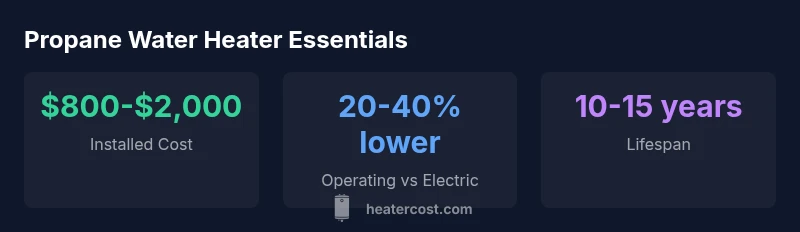
Propane water heaters offer reliable hot water with strong performance in homes that rely on propane or face high electric rates. Typical installed costs run roughly $800 to $2,000, while operating costs can be 20–40% lower than electric models, depending on local propane prices and heater efficiency. Proper venting and professional installation are essential for safety and longevity.
How a propane water heater works and what makes it different
Propane water heaters burn propane gas to heat water, using a heat exchanger that transfers heat from the flame to the water in the tank or in a tankless coil. Modern propane models often use sealed combustion and direct venting to outdoors, improving safety and efficiency compared with older atmospheric units. The fuel’s energy density means these heaters can deliver hot water more quickly in busy households, especially where electricity prices are high or where gas supply is abundant. Efficiency varies by model, but the best propane heaters are designed to minimize standby losses and maximize recovery rates, which matter during morning and evening peaks. In regions with reliable propane supply, a propane water heater can balance performance with predictable operating costs, making it a viable option for rural homes, off-grid setups, or properties with limited electrical infrastructure.
For homeowners researching fuel choices, propane models offer a legible path to consistent hot water without depending on the electrical grid. The Heater Cost team notes that when sizing and installation are done correctly, propane systems can deliver strong performance in both single-family homes and multifamily buildings. Consider these real-world drivers: fuel price volatility, propane availability, and the energy mix in your region, which affects overall environmental impact. In short, propane water heaters are a practical choice for many households when matched with the right setup and service plan.
Sizing and capacity considerations for propane water heaters
Choosing the right size of propane water heater hinges on peak demand, household size, and recovery rate. For tank models, you’ll want a unit with a first-hour rating that aligns with your family’s morning routines—more occupants or a larger soaking tub may require a higher recovery rate. Tankless propane water heaters, while generally more compact, require careful gas line sizing and venting to ensure uninterrupted supply during simultaneous hot-water uses. Real-world guidance from Heater Cost analyses suggests focusing on a capacity that minimizes the number of cold-water blasts during peak hours while avoiding excessive standby losses. When in doubt, run a simple fishbone-style demand assessment: list how many showers, laundry loads, and kitchen uses happen in the busiest hour, then choose a model that can meet that demand with a comfortable margin.
Additionally, consider future needs, such as expanding a family or adding a second bathroom, which may justify stepping up to a higher-capacity unit upfront. A properly sized propane heater improves comfort and reduces the likelihood of cold-water shocks in the morning rush.
Venting, safety, and local code considerations for propane systems
Ventilation is a critical safety concern with propane water heaters. Most households require dedicated venting that safely carries combustion byproducts outdoors, especially for gas-fired systems. Sealed-combustion units pull air from outside and vent directly outside, reducing indoor air impact and improving efficiency. Local codes typically mandate vent sizing, clearance distances, and gas-line requirements; permits are commonly needed, and inspections ensure the installation adheres to current standards. In addition to venting, you should verify that your electrical system and gas supply meet the heater’s requirements. Installers should check backdraft risks, condensate drainage, and proper access for service.
Because incorrect venting or improper clearance can lead to CO exposure or flue gas buildup, many homeowners opt for professional installation. The Heater Cost team emphasizes that quality installation reduces the risk of future repairs and improves overall performance, while keeping you compliant with code and warranty requirements.
Cost overview: upfront vs operating costs for propane water heaters
The financial picture for propane water heaters includes both upfront and ongoing costs. Upfront costs consist of the unit, venting, gas-line work, and installation labor. Within the typical range, homeowners can plan for items such as a basic tank model or a more compact tankless option, depending on home layout and hot-water demand. Ongoing costs are driven by propane prices, energy efficiency, and usage patterns. Heaters with higher efficiency and better insulation reduce standby losses, which translates to lower seasonal fuel use. In markets where propane prices are stable or seasonal demand is predictable, propane water heaters can offer predictable annual costs. Heater Cost’s 2026 analysis suggests comparing propane against electric and natural gas options in your area to estimate annual operating costs accurately and to determine the break-even point for a given installation.
A practical approach is to build a simple two-column budget: one column for “unit price + installation” and another for “annual fuel cost.” This helps reveal when a propane system becomes cheaper over a typical 10- to 15-year lifetime versus alternatives, and it highlights scenarios where a hybrid approach (such as solar preheating or heat pump water heaters) might be advantageous.
Efficiency and performance: propane vs other fuels in real-world use
Propane water heaters deliver consistent hot-water performance, particularly in climates with higher demand or where electricity is expensive. Tank models tend to excel in homes with predictable hot-water needs, while tankless propane units shine in households with variable demand or limited space. Real-world performance depends on heat exchanger quality, burner design, and insulation. Propane systems are often favored in rural settings where a natural gas line is not available, but propane storage and transport costs can influence the overall operating expense. In many cases, the efficiency advantage is realized when the system is correctly sized and maintained, and when the home’s insulation and plumbing layout minimize heat loss. For renters or property managers, a propane-derived solution can offer dependable hot water with reduced impact on electrical capacity, provided that system maintenance is regular and gas delivery remains reliable.
The Heater Cost analysis for 2026 emphasizes the need to quantify both upfront costs and long-run fuel costs when weighing propane against electric resistance, heat pump, or natural gas options. For households using propane-fueled appliances, coordinated maintenance schedules and timely vent inspections are essential to preserve efficiency and prolong the unit’s life.
Installation steps and what to expect during service
Professional installation is strongly recommended for propane water heaters due to venting and gas-supply considerations. A typical installation workflow includes evaluating your current plumbing, calculating gas-line adequacy, selecting proper venting for the chosen unit, and verifying clearance from combustibles. The technician will shut off gas and water supplies, remove the old unit (if replacing), install the new heater, and test all connections for leaks. They’ll also confirm electrical grounding (if applicable) and ensure that the vent system is sealed and directed outdoors without backflow. Depending on the home layout, installation may take several hours and require permits. After installation, expect a run-through of safety features, thermostat settings, and maintenance reminders. Heater Cost’s guidance notes that a clean, compliant install minimizes future call-backs and protects warranty coverage.
Maintenance, longevity, and troubleshooting tips for propane water heaters
Maintenance is a key driver of longevity for propane water heaters. Schedule an annual professional inspection, including burner cleaning, vent clearance check, and pressure relief device testing if applicable. Tank models should be flushed periodically to remove mineral buildup and sediment, while tankless units benefit from periodic descaling in hard-water areas. Anode rod replacement on tank-type heaters prevents corrosion and extends life. Common troubleshooting steps include checking for flame color (a clean blue flame indicates proper combustion) and inspecting the vent for obstructions. If you notice gas odors, unusual sounds, or inconsistent hot-water availability, contact a licensed technician immediately. Regular maintenance supports consistent performance and safety, reducing the risk of costly repairs and downtime.
Authority sources:
- Energy.gov: Water heaters
- EPA.gov: Indoor air quality and fuel-burning appliances
- NREL.gov: Energy efficiency guidance for home systems
Verdict and practical decision guide
In summary, a propane water heater can be a solid choice when you have reliable propane supply, need independence from electric infrastructure, or live in an area with favorable propane pricing. It offers a favorable balance of upfront cost, operating costs, and performance, especially for larger households or off-grid properties. The decision should be guided by your local fuel prices, climate, and the availability of competent installation services. If you already rely on propane for other appliances, a propane water heater can simplify fuel management and improve energy resilience. Evaluate sizing carefully, invest in a quality venting solution, and prioritize professional installation and regular maintenance for long-term savings and comfort. The Heater Cost team recommends comparing total cost of ownership over a 10- to 15-year horizon and consulting licensed professionals for an accurate assessment of your home’s needs.
Comparison of heater types by installed cost, venting needs, and lifespan
| Model Type | Avg Installed Cost | Vent Type | Typical Lifespan | Notes |
|---|---|---|---|---|
| Propane Water Heater | $800-$2,000 | Dedicated venting (chimney/direct vent) | 10-15 years | Higher energy density; good for off-grid living |
| Electric Water Heater | $400-$1,500 | No venting required | 8-12 years | Lower upfront cost, dependent on electricity |
| Gas Water Heater (natural gas) | $700-$1,600 | Vent-required | 8-12 years | Common alternative with gas line access |
Got Questions?
What is a propane water heater and how does it work?
A propane water heater uses propane gas to heat water via a burner and heat exchanger. Water flows through the tank or through a heat exchanger in a tankless model. The heat is transferred from the flame to the water, producing hot water for taps and appliances.
Propane water heaters heat water with a gas burner; they come in tanked and tankless styles. Proper venting and safe installation are essential.
Are propane water heaters safe to install indoors?
Indoor installation is common when vented correctly and installed by licensed professionals. A proper vent system reduces combustion byproducts and ensures adequate air supply.
Yes, with proper venting and professional installation.
Do you need permits to install a propane water heater?
Most jurisdictions require permits for new propane installations and venting changes. A licensed installer can help secure necessary permits and ensure compliance.
Permits are usually required; a pro will handle the paperwork.
Which is cheaper to run: propane or electric water heater?
Propane can be cheaper to operate in areas with high electricity prices or where propane prices are stable. The exact cost depends on efficiency, climate, and local fuel prices.
Propane can save money if propane is affordable and usage is steady.
What maintenance does a propane water heater require?
Annual professional inspections, burner cleaning, vent checks, and periodic flushing for tanks. Tankless models may need descaling in hard-water areas. Regular checks help maintain performance.
Regular professional checkups keep it running smoothly.
How long does installation take?
Most installations take 2–6 hours depending on venting complexity and whether an old unit is replaced. Complex venting or upgrades can extend this time.
Most installs take a few hours.
“Propane water heaters offer reliable hot water with strong performance when sized correctly and installed with proper venting. Regular maintenance and adherence to local codes are key to long-term efficiency.”
The Essentials
- Choose a unit size that meets peak demand without excessive standby losses
- Proper venting is essential for safety and efficiency
- Factor total cost of ownership: upfront plus operating costs
- Professional installation improves reliability and warranty coverage
- Regular maintenance extends lifespan and performance