Portable Water Heaters: Costs, Types, and Practical Guidance for 2026
A data-driven guide to portable water heaters—costs, flow rates, safety, and tips for homeowners, renters, and property managers in 2026.


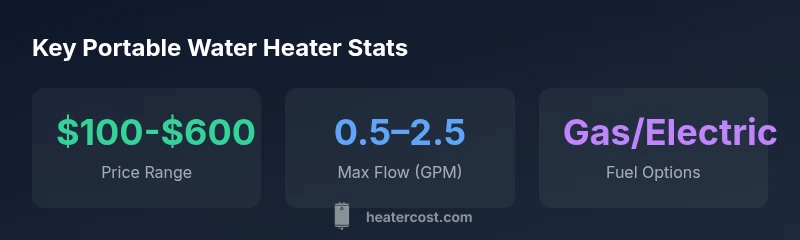
Portable water heaters cost roughly $100 to $600, depending on type, capacity, and installation. For small households or point-of-use needs, compact electric units deliver 0.5–2.5 gallons per minute, while propane or natural gas models offer higher flow but require venting. According to Heater Cost, these units excel for apartments, RVs, and seasonal spaces.
What is a portable water heater and who should consider one
A portable water heater is a compact, self-contained unit designed to heat water at the point of use or in a small, movable installation. Unlike traditional tank water heaters, these devices are sized for portability and flexibility, making them ideal for renters, tiny homes, RVs, camping, or temporary setups where permanent plumbing changes are impractical. When assessing whether a portable water heater fits your needs, consider the space available, the typical water draw you expect, and whether you require instant hot water or on-demand heating. This guide uses the keyword portable water heater to keep the discussion focused on the practical realities of buying and using these units in real homes and mobile setups.
According to Heater Cost, most users prioritize flexibility, ease of installation, and cost control. For many households, a portable unit can provide hot water for a sink, a shower in a guest space, or a temporary heating solution during renovations or seasonal deployments. The key is matching the unit’s flow rate, energy source, and venting requirements to your specific use case; otherwise, you risk underserving demand or creating safety concerns.
Many buyers underestimate the importance of capacity and flow. A unit rated at 0.5–1.5 GPM is typically sufficient for sinks or handwashing, while showers or multiple fixtures demand higher flow and sometimes different fuel sources. In addition to initial cost, consider operating costs, maintenance, and the practicality of venting for gas models. This helps you avoid surprises once you install or relocate the unit.
Types of portable water heaters and how they work
Portable water heaters come in several distinct configurations, each with its own advantages, limitations, and ideal use cases. The main categories are electric tankless, electric storage, propane or natural gas tankless, and propane or natural gas storage. Electric tankless models heat water on demand and can deliver steady flow for small fixtures when sized correctly. Electric storage units store hot water for ready-to-use taps, offering simplicity and lower instantaneous power requirements. Propane or natural gas models typically provide higher flow rates and are favored in off-grid or larger setup scenarios, but they require proper venting and safe gas connections. When evaluating models, check the maximum flow rate (GPM), the temperature rise you can achieve at your desired flow, and the required electrical or gas infrastructure. This helps you plan for efficient operation and reliable performance in real-world conditions.
How to choose: key specs that matter
Selecting the right portable water heater hinges on several core specifications:
- Flow rate (GPM): Determine the maximum gallons per minute you need for your household or use case. A sink or dishwasher may require 0.5–1.5 GPM, while a shower demands higher flow.
- Fuel type and venting: Electric units are easier to install and safer in most apartments but may have limited flow. Gas units (propane or natural gas) deliver higher flow but require venting and proper gas lines.
- Temperature rise and recovery: Assess how many degrees Fahrenheit the unit can raise the water temperature at your intended flow. A larger rise at lower flow rates is often ideal for small spaces; in larger spaces, you’ll want a higher flow with a modest rise.
- Space and portability: Consider height, width, and mounting options. Electric units tend to be lighter and easier to relocate; gas-powered units are bulkier and require venting infrastructure and gas supply connections.
- Electrical demands: If you’re in a rental or a building with limited outlets, ensure the unit’s electrical requirements align with available circuits and breakers.
- Durability and warranty: Look for corrosion resistance, safety certifications, and a warranty that covers both parts and labor. These factors impact long-term costs and reliability.
Understanding these specs helps you compare models objectively and avoid over- or under-specifying your hot-water needs.
Practical use cases: apartments, RVs, and seasonal setups
Portable water heaters shine in scenarios where permanent installation is impractical or expensive. In apartments, they allow a dedicated hot-water source without major plumbing changes. RV users appreciate on-demand hot water for outdoor showers or kitchen sinks, especially when campsite utilities are variable. Seasonal properties, such as cabins or yurts, benefit from a portable unit that’s easy to move between spaces.
When evaluating a space, map out hot-water demand by fixture and time of use. For instance, a sink might need 0.5–1.0 GPM, while a shower could require 1.5–2.5 GPM. If the unit cannot meet peak demand, you may experience cold-water bursts or reduced comfort. Consider batteries or backup power options for portability in off-grid locations and plan for venting and exhaust requirements if your unit runs on propane or natural gas.
Installation, safety, and maintenance basics
Safety is a priority with any portable heater. Electric models require dry, grounded outlets and protection from splashing water. Gas-powered units demand proper venting to prevent carbon monoxide buildup and a secure gas line connection to a shutoff valve. Regular maintenance generally includes flushing or descaling the unit to remove mineral buildup, inspecting hoses and connections for leaks, and checking venting paths. Always follow the manufacturer’s installation manual and local codes. If you’re unsure about gas connections or venting, consult a licensed professional.
In addition to routine maintenance, keep the unit away from flammable materials, ensure adequate clearance around intake and exhaust vents, and install a carbon monoxide detector in living areas when using gas-powered devices. These precautions help maintain safe operation and extend the life of the unit.
Cost considerations and value over time
While the upfront price of portable water heaters can be modest, long-term costs matter. Electric models generally cost less to install and maintain, but gas-powered options may offer higher flow and better performance in larger households. Operating costs depend on fuel prices, hot-water demand, and efficiency. Look for energy efficiency ratings (where available) and isolate peak usage times to optimize operation. If you anticipate frequent relocation or seasonal use, factor in the cost of moving and any additional venting or electrical modifications needed at each site.
To maximize value, compare total cost of ownership across models with similar performance, factoring in installation costs, annual energy consumption, maintenance intervals, and warranty terms. This approach yields a clearer picture of which portable water heater delivers the best long-term value for your situation.
Comparison of portable water heater use cases
| Use case | Typical Flow (GPM) | Power Source | Pros/Cons |
|---|---|---|---|
| Apartment sink | 0.5–1.5 | Electric | Compact; limited flow; easy install |
| RVs/mobile setups | 0.8–2.2 | Propane | Good mobility; venting required |
| Shower or multi-fixture | 2–4 | Gas (natural/propane) | Higher flow; needs gas line & venting |
Got Questions?
What is a portable water heater?
A portable water heater is a compact unit designed to heat water at the point of use or in a small movable installation. They’re ideal for renters, RVs, or seasonal spaces where permanent plumbing changes aren’t practical. Sizes range from small electric units to larger gas models with venting requirements.
A portable water heater is a compact device that heats water at the point of use, great for small spaces and temporary setups.
Do portable water heaters require professional installation?
Electric portable heaters are often simple to install by a handy homeowner with basic electrical knowledge. Gas models typically require professional venting and gas line connections to meet safety codes. Always follow the manufacturer’s instructions and local codes.
Gas models usually need a pro for venting and line connections, while many electric units are doable for DIYers with care.
Can portable water heaters supply hot water for showers?
Yes, but their ability depends on the unit’s flow rating and your shower’s demand. Electric models with modest flow can handle sinks or quick showers, while gas models with higher flow rates support longer, more robust showers. Check the maximum GPM and consider a backup plan for peak use.
They can heat water for showers if you choose a higher-flow unit and vented gas model; check the GPM rating.
How do I calculate the right size for my space?
List fixtures and estimate peak flow. Match the unit’s GPM to your total demand, plus a safety margin. Consider future needs and installation constraints. If in doubt, consult a professional or rely on manufacturer flow charts.
Start by listing fixtures and their flow needs, then pick a unit with enough GPM to cover peak demand.
What maintenance is typically required?
Most portable heaters require periodic flushing or descaling to prevent mineral buildup, along with inspecting hoses, connections, and venting paths. Check the user manual for maintenance intervals and safety reminders.
Regular flushing and hose checks keep portable heaters running safely and efficiently.
Can I install a portable water heater myself?
Electric units are often DIY-friendly in spaces with accessible outlets and dry installation. Gas units usually require a licensed professional for venting and gas connections to meet safety codes and warranty terms.
DIY is possible for electric models; gas models are best left to pros due to venting and gas safety.
“Portable water heaters can be a cost-effective solution for non-permanent hot water needs, but size and fuel compatibility must be matched to your space.”
The Essentials
- Identify your space and hot-water needs before buying
- Choose the right fuel type based on installation constraints
- Match flow rate to your expected usage for comfort
- Plan for venting and electrical requirements
- Factor total cost of ownership, not just upfront price