Tankless Portable Water Heater: A Practical Guide
Explore tankless portable water heaters: how they work, fuel options, use cases, pros/cons, and cost considerations for renters, homeowners, and property managers.


Tankless portable water heaters provide on-demand hot water without a storage tank, delivering heating only as you need it. They’re compact enough for apartments, RVs, camping, or outdoor showers and vary by fuel type (electric or propane). While incredibly space-saving and efficient, performance depends on flow rate, temperature rise, and available power or fuel—read the full guide to compare models.
What is a tankless portable water heater?
According to Heater Cost, tankless portable water heaters provide on-demand hot water without a bulky storage tank. They are compact enough for apartments, RVs, camping, or outdoor showers and come in electric or propane variants. By heating water only as it flows, these devices can improve space usage and energy efficiency compared with traditional portable tanks. In practice, expect a reasonable ability to deliver hot water for sinks, showers, or quick rinse-offs, but be mindful of flow limits and the fuel or power available. For homeowners and renters, this means hot water is available where you need it, without the downside of carrying or storing heavy tanks. The core idea is simple: heat is produced only when there is a demand, which can reduce standby losses and energy waste. For property managers, portable units can bridge gaps during renovations or seasonal occupancy, while staying within budget constraints. As you compare models, think about your typical water draw, whether you’ll be indoors or outdoors, and how you’ll source fuel or electricity on-site.
How they work: heating design, flow, and limits
Tankless portable water heaters operate on the same flow-through principle as larger, stationary units: water heats as it passes through a heat exchanger. The key differences are size, heat exchanger capacity, and input power or fuel delivery. Electric models rely on rated amperage and coil resistance to raise water temperature, while propane units burn fuel to heat water via a compact burner and heat exchanger. The resulting maximum temperature rise and flow rate dictate practical use. Users should expect a trade-off: higher flow rates often mean a lower temperature rise unless you have ample power or fuel. Efficiency hinges on minimizing heat losses in the intake and outlet lines and avoiding excessive standby heating. When evaluating options, check the temperature rise at your target GPM and whether the unit includes throttling or preset safety limits.
Fuel types, efficiency, and run costs
Electric tankless portable water heaters are typically plugged into a standard outlet, but many high-demand models require dedicated circuits or higher amperage to achieve practical flow. Propane variants offer strong performance in outdoor settings or locations without reliable electricity, but they rely on fuel availability and proper storage. Efficiency for portable units depends on the heat exchanger design, insulation of the inlet and outlet plumbing, and the control system’s ability to maintain the desired output with minimal energy loss. Expect operating costs to reflect local fuel prices and electricity rates, and remember that propane performance can decline in extremely cold ambient conditions. For renters or landlords, choosing a model with efficient insulation and a reliable ignition system can help control ongoing costs over time.
Real-world uses: camping, apartments, outdoor showers
For camping or RV use, a propane-powered model can deliver hot water away from traditional utility connections. In apartments or small homes, electric portable models can provide occasional hot water without modifying existing plumbing or heating systems. Outdoor showers benefit most from compact designs and robust weather resistance, while indoor use requires careful attention to ventilation, electrical safety, and proximity to outlets. The best-performing units in these scenarios maximize water temperature with modest flow, so plan for the typical water draw of your application. Remember to factor in portability—weights under 15 pounds plus a compact form factor make handling and storage easier for seasonal users.
Pros and cons vs traditional portable options
Pros:
- No storage tank means less space and reduced standby heat loss.
- On-demand hot water improves efficiency when your hot-water demand is intermittent.
- Lightweight, compact design makes relocation and storage simpler.
Cons:
- Flow rates are limited; hotter water often requires reducing the flow or using higher-capacity units.
- Propane models need ventilation and safe fuel handling; electric models require reliable power sources and circuit capacity.
- Not ideal for high-demand or long-duration hot water needs in a single continuous draw. When choosing between models, balance portability with your planned water usage patterns and available utilities.
Buying guide: features to compare
When selecting a tankless portable heater, start with these features:
- Flow rate at your desired temperature rise (GPM) to ensure it meets your needs.
- Fuel type and its availability at your site (electric vs propane).
- Power requirements and circuit compatibility for electric models.
- Temperature control options and safety features (auto shutoff, overheat protection).
- Weight and dimensions for portability and storage.
- Build quality, including rugged housing and residue protection for outdoor use.
- Maintenance requirements and ease of cleaning the inlet filter to avoid performance loss.
Use these criteria to build a short list of models and cross-check user reviews and warranty terms.
Safety, ventilation, and maintenance basics
Safety is paramount with portable water heaters. Propane models require proper ventilation to avoid carbon monoxide buildup, while electric models demand dry, protected outlets and GFCI protection when used outdoors. Regular maintenance includes:
- Cleaning inlet filters and checking for scale build-up.
- Inspecting hoses and connections for leaks or wear.
- Verifying the ignition system and flame stability on propane models.
- Storing fuel safely away from heat sources and ensuring sufficient clearance around vents.
Before purchasing, confirm that the unit meets applicable safety standards and that you understand local regulations for portable heating devices. A quick safety checklist can prevent common issues and extend the unit’s service life.
Installation tips and practical setup steps
Despite being portable, some setup steps ensure optimal performance. For electric models, ensure a dedicated circuit or adequate outlet capacity and avoid extension cords that can throttle power. For propane units, verify the correct fuel canister size, connect hoses securely, and set up in a ventilated area away from flammable materials. Always test ignition in a well-ventilated space and monitor for gas leaks after initial use. Portable water heaters should be placed on a stable, level surface and shielded from rain or direct spray when used outdoors. By following these steps, you’ll minimize safety risks and maximize efficiency during each hot-water draw.
Cost considerations and budgeting: operating and lifecycle costs
Ongoing costs for tankless portable water heaters depend on fuel prices, electricity tariffs, and the unit’s efficiency. Propane models typically incur ongoing costs tied to fuel usage, while electric units contribute to electricity consumption. Consider lifecycle costs, including initial price, fuel or electricity costs, maintenance, and potential warranty coverage. Compare models not only by upfront price but by the expected annual operating cost given your typical usage patterns. If you anticipate frequent or long-duration hot water use, a propane model with a robust heat exchanger can offer better performance, whereas light, occasional use might favor a compact electric unit. Always estimate total cost of ownership over 3–5 years to guide a sound purchase decision.
Comparison of portable tankless water heater models
| Model Type | Fuel Type | Typical Use | Pros | Cons |
|---|---|---|---|---|
| Propane Portable Tankless | Propane | Camping/RV outdoor | Compact, hot water on demand | Requires fuel canister, venting not for indoor use |
| Electric Portable Tankless | Electric (AC) | Apartment, indoor use | Quiet, easy to plug in | Limited by amperage and outlets |
| Natural Gas Portable Tankless | Natural gas | Outdoor use | High flow, steady supply | Heavier, needs gas line and ventilation |
Got Questions?
What is a tankless portable water heater?
A tankless portable water heater heats water on demand without a storage tank, delivering hot water as needed. They come in electric and propane variants, designed for mobility and external use in places like apartments, RVs, or camping trips.
A tankless portable water heater heats water on demand without storing it, and you can take it wherever you need hot water.
Can I install a tankless portable heater indoors?
Electric models are generally suitable for indoor use where outlets and ventilation meet safety standards. Propane models require proper ventilation and clearance to prevent gas buildup and ensure safe operation.
Some electric models work indoors if you have the right outlets; propane units need good ventilation.
What affects performance the most?
The main factors are flow rate (GPM), temperature rise, fuel availability (propane) or electrical supply, and ambient conditions. Higher water flow or a larger temperature rise reduces the achievable output.
Flow rate and the available power or fuel are the biggest limits on performance.
Are there safety and maintenance requirements?
Yes. Ventilation for gas units, leak checks for fuel lines, regular filter cleaning, and periodic inspections are essential. Follow manufacturer guidelines and local codes for safe operation.
Make sure gas units are vented properly and that you check for leaks and clean filters regularly.
What’s a typical operating cost?
Operating costs depend on fuel prices or electricity rates and the unit’s efficiency. propane may be cheaper per BTU in some areas, but electricity costs vary by locale. Calculate estimated annual use to compare.
Costs depend on your fuel price and how efficiently the unit converts energy into heat.
Do I need permits for portable heaters?
Most portable heaters don’t require permanent permits, but local codes may apply, especially for propane installations or air quality considerations. Check with local authorities before use in rental properties or common areas.
Check local rules to be sure—some places may have permit or safety requirements for gas units.
“Portable tankless water heaters offer flexible hot water on demand without the bulk of a storage tank, making them a practical choice for tight spaces and temporary setups.”
The Essentials
- Choose fuel type based on available power or fuel on-site
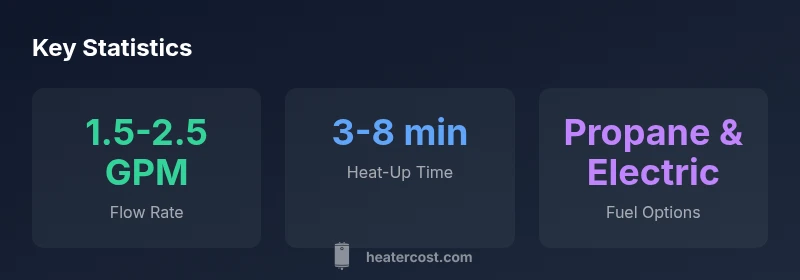
- Expect flow rates of ~1.5–2.5 GPM with a 3–8 min heat-up range
- Portable units save space but require proper safety and ventilation
- Evaluate total cost of ownership (initial price + operating costs)
- Check safety features and maintenance requirements for longevity