Small Hot Water Heater Guide: Costs, Sizing, and Care for 2026
Learn how a small hot water heater fits compact spaces—sizing tips, cost ranges, energy use, and maintenance. Practical guidance from Heater Cost to help homeowners, renters, and property managers compare compact models.


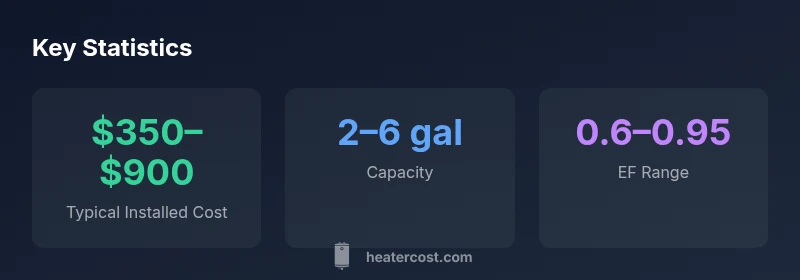
Typical total installed cost for a small hot water heater ranges from $350 to $900, depending on fuel source, capacity, and local labor. For compact homes or apartments, most households pay toward the lower end when using electric units with 2–6 gallons. According to Heater Cost Analysis, compact models can be cheaper to install but may require faster recovery upgrades in busy households.
What is a small hot water heater and who should consider one
A small hot water heater is a compact storage unit designed to deliver hot water without occupying the footprint of a standard 40–50 gallon tank. Typical capacities range from about 2 to 6 gallons, and most models are electric, though there are gas-fired options. These units are especially appealing for apartments, tiny homes, vacation cottages, and retrofit projects where space is at a premium. From a homeowner’s perspective, the appeal is twofold: they save space and can reduce up-front installation costs when compared with traditional tanks. According to Heater Cost, customers who prioritize mobility or modular upgrades often gravitate toward these small units because they can fit into narrow closets, utility cabinets, or even beneath sinks. However, the right choice depends on peak hot-water demand and the number of fixtures that may run simultaneously. If you frequently run multiple taps at once, a larger capacity or a different configuration might be necessary. The goal is to balance space savings against the daily hot-water load, ensuring you don’t compromise comfort for convenience.
Sizing and placement: how to choose the right size
Sizing a small hot water heater begins with estimating daily hot-water usage. Start by tallying each bathroom, kitchen, and laundry demand, then translate that into a gallons-per-day target. For most single-occupant setups or tiny apartments, 2–4 gallons can cover essential needs; for small households with two bathrooms, a 4–6 gallon model is often a better fit. Placement matters: look for a dry, ventilated closet or cabinet with enough clearance for service access and safe venting if you choose a gas model. Consider the first-hour rating (FHR) of the unit and how quickly it can deliver hot water during peak times. Finally, account for future needs—if you anticipate adding occupants or appliances, plan for a slightly larger unit to avoid frequent hot-water runs. By carefully aligning capacity with expected usage, you’ll maximize comfort while minimizing space intrusion.
Fuel types and installation considerations
Electric small hot water heaters dominate in apartment and retrofit projects due to simplicity and flexible placement. Electric units usually require a dedicated circuit, a properly rated breaker, and a simple cold-water inlet with an accessible drain for maintenance. Gas-powered compact heaters offer faster recovery and potentially lower operating costs in some markets, but they demand proper venting, gas supply lines, and professional installation to meet code requirements. If you’re replacing an existing unit, assess whether your current electrical panel can handle the extra load or if an upgrade is necessary. In both cases, professional installation is essential to ensure safety and performance. Local building codes might require permits or inspections, especially for gas connections or venting work. Always verify permitting requirements before purchasing a unit.
Energy efficiency and running costs
Small hot water heaters vary widely in energy efficiency, typically expressed as an energy factor (EF). A broad EF range for compact units is about 0.6 to 0.95, with higher values indicating better efficiency. Because standby losses can be substantial in small tanks that stay hot between uses, efficiency differences matter more than you might think in tight spaces. Over a year, operating costs depend on local electricity or gas prices and usage patterns. In general, electric 2–6 gallon models tend to have lower upfront costs but may incur higher operating costs in households with heavy hot-water use, while gas variants can lower operating costs if fuel prices are favorable and venting is well managed. Heater Cost Analysis, 2026 shows that energy savings can offset a portion of the upfront cost over several years, particularly when the system is properly sized and installed. Don’t forget ancillary savings from insulating hot-water pipes and using faucet aerators to reduce flow demand.
Installation basics and permitting
Before selecting a small hot water heater, check local codes and permitting requirements. Gas-fired compact heaters almost always require professional installation, and many jurisdictions mandate a licensed plumber or gas technician for new gas lines, venting, or fuel connections. Electric models are more forgiving but still benefit from a licensed electrician to verify circuit capacity and breaker protection. In many cases, a straightforward replacement can be completed in a few hours, but a retrofit involving gas lines or venting may take longer and require inspections. When budgeting, include permit fees, potential electrical or venting upgrades, and any labor surcharges for accessing tight spaces. Planning ahead reduces surprises and helps ensure the unit operates safely and efficiently for years to come.
Maintenance, longevity, and troubleshooting
Like any heater, a small hot water heater requires periodic maintenance to maximize lifespan. Schedule annual checks, flush the tank to remove sediment, and inspect the pressure/temperature relief valve to ensure it’s functioning. A basic maintenance habit can extend life by several years and help maintain efficiency. Watch for signs of trouble: inconsistent hot water, unusual noises, or frequent cycling. Small issues caught early—such as a leaking valve or a buildup of mineral deposits—are typically easier and cheaper to fix than major repairs. Keep a simple log of replacement parts and service visits to guide future maintenance and plan for eventual replacement with a similar compact unit if needed.
Practical cost-saving strategies and common mistakes
To optimize value, pair sizing accuracy with smart installation choices. Start by selecting a unit sized to meet peak demand rather than average usage, which reduces the risk of running out of hot water during busy periods. When possible, choose electric units in spaces where gas venting is impractical or expensive. Invest in pipe insulation and a hot-water recirculation option only if you truly need near-instant hot water at distant fixtures. Common mistakes include over-sizing a unit, which wastes energy, under-sizing which leads to disappointing performance, and neglecting regular flushes that shorten lifespan. Finally, compare several quotes from licensed professionals and consider long-term operating costs, not just the upfront price. With careful planning, a small hot water heater can be a smart, space-saving choice that aligns with modern living.
Sizing and performance comparison
| Feature | Small Hot Water Heater (2–6 gal) | Conventional Tank (40–50 gal) |
|---|---|---|
| Capacity | 2–6 gallons | 40–50 gallons |
| Recovery time (est.) | Moderate to fast | Slow to moderate |
| Energy efficiency (EF) | 0.6–0.95 | 0.6–0.85 |
| Space required | Small cabinet or closet | Larger utility area or basement |
| Installation cost range | $350–$900 | $800–$2500+ |
Got Questions?
What size is best for a small apartment?
For most one-bedroom apartments, a 2–4 gallon unit is common; for two bathrooms or higher usage, a 4–6 gallon unit is often appropriate. Always assess peak demand and consider backup options.
For small apartments, start with a 2–4 gallon unit and adjust for peak demand.
Are small hot water heaters energy-efficient?
Energy efficiency varies by model, typically with EF ratings from about 0.6 to 0.95. Higher EF means less energy use over time, but actual savings depend on usage and climate.
Yes, efficiency varies; look for higher EF ratings for better long-term savings.
Can I install one myself?
Electric units are more DIY-friendly, but many jurisdictions require a licensed electrician for safe wiring. Gas models typically require professional installation due to venting and codes.
Electric units are easier to install, but check local codes and safety requirements.
How long do they last?
A well-maintained small hot water heater can last 6–12 years depending on use, water quality, and maintenance frequency. Flushing sediment and timely part replacements extend life.
With good maintenance, expect several years of reliable service.
Do I need a permit to install one?
Permit requirements vary by location and fuel type. Gas installations almost always require permits and inspections; electric installations may also require permits in some areas.
Check with your local building department to confirm permit needs.
“Small hot water heaters deliver space-saving benefits when properly sized and maintained; their true value comes from matching capacity to your household's peak demand.”
The Essentials
- Size to peak demand, not just average use
- Electric units offer simplest installation in tight spaces
- Expect 3–6 year payback in many cases
- Regular flushing and pipe insulation boost longevity
- Check local permitting requirements before buying