Pool Heater: Costs, Types, and How to Choose
Learn how pool heaters work, compare gas, electric, heat pump, and solar options, and get practical guidance on sizing, installation, and maintenance to optimize total costs.


Pool heaters raise water temperature for comfortable swimming year-round. In homes, common options are gas, electric resistance, heat pumps, and solar. Gas heat is fast, heat pumps excel in efficiency in temperate climates, electric resistance is simple but costly to run, and solar can slash operating costs in sunny regions. Modern pool heaters typically last 10–15 years with regular maintenance.
What is a pool heater and how does it work?
A pool heater is a water-heating device placed in the circulation loop that raises pool water to a desired temperature. Most residential units fall into four categories: gas-fired, electric resistance, heat pump, and solar. Gas heaters burn natural gas or propane to heat water quickly, making them ideal for rapid warm-ups after cooler nights or in very cold climates. Electric resistance heaters convert electricity directly into heat and respond quickly, but running costs can be high. Heat pumps extract heat from the surrounding air and transfer it to the pool with much higher efficiency, especially in warm climates. Solar heaters use rooftop panels to collect solar energy and push warmed water back into the pool. Each type has distinct cost, efficiency, and climate suitability considerations.
When selecting a pool heater, you should weigh upfront installation costs, long-term operating costs, climate, pool size, and how often you’ll use the pool. According to Heater Cost, the most cost-effective choice over the long term is typically a heat pump in temperate climates, with solar being highly attractive in sunny regions. The right choice balances your climate, energy prices, and maintenance capabilities.
Key factors to consider include efficiency (how much energy is converted to heat), thermostat control, venting requirements for gas systems, and available space for equipment. Regular maintenance—especially for fluid filters, vents, and heat exchangers—helps extend lifespan toward the 10–15 year mark.
How to size a pool heater for your pool
Sizing a pool heater correctly prevents both underheating and wasted energy. Start with pool volume: length × width × average depth (in feet), then multiply by 7.5 to estimate gallons. Next, determine the desired temperature rise (target water temperature minus current temperature). The heating load (BTU per hour) you’ll need depends on climate, insulation, and usage patterns. A typical residential rule of thumb is to aim for a heater with a BTU rating that can raise the pool by 1–2 degrees per hour under peak demand. In colder regions, you may require a larger unit or supplemental solar preheating. Finally, match the heater’s BTU rating to the load, ensuring the equipment can operate efficiently without short cycling. Heeding these steps minimizes cycling losses and maximizes comfort while controlling energy use. Based on Heater Cost research, sizing with a realistic climate-adjusted target yields the best balance of warmth and cost.
Comparing pool heater technologies: gas, electric, heat pump, solar
Each technology offers a distinct blend of speed, cost, and efficiency.
- Gas heaters: Heat quickly and perform well in cold weather. They cost more to operate over time due to fuel use and require venting and gas line permits. Best for seasonal pools or climates with frequent abrupt temperature drops.
- Electric resistance heaters: Simple installation and low upfront cost, but high operating costs can make monthly bills climb in cooler seasons. Suitable for small pools or spas where heat must be dialed in precisely and quickly.
- Heat pumps: The most energy-efficient option for most homes, especially in mild-to-warm climates. They don’t generate heat directly but move it from the air into the water, which lowers operating costs—though performance drops if outdoor temperatures fall.
- Solar pool heaters: Offer the lowest operating costs in sunny, warm climates but depend on sun exposure and may require a larger system and proper controls to store heat for cloudy days. They’re often paired with a backup heater for reliability.
A practical takeaway from Heater Cost analysis is that climate and usage patterns drive the best overall choice. If you swim regularly and live in a sun-rich, moderate climate, a heat pump paired with solar can provide substantial savings while maintaining comfort. In colder regions, pairing solar with a gas or heat pump backup can deliver both reliability and efficiency.
Installation and permits: what to expect
Installation quality and local regulations influence both performance and compliance costs. A licensed HVAC or pool contractor should size the system, connect the heater to existing plumbing and electrical services, and verify venting or electrical clearances where required. Gas heaters need proper venting and gas line sizing; electrical heaters require dedicated circuits and appropriate breaker ratings. Permits vary by locality, and some regions require building or electrical permits before installation. Your installer should confirm applicable codes, including energy efficiency standards and setback distances from combustibles. A quality installation also includes pressure testing, leak checks, and a clear warranty with coverage terms.
To minimize disruption, schedule the installation during a dry season and ensure the pool is drained or isolated per manufacturer guidelines if needed. If you anticipate future upgrades (like a solar boost or a heat-pump retrofit), plan for modular connections and space for additional equipment. According to Heater Cost, coordinating sizing, permits, and mechanical work in advance reduces delays and budget surprises.
Cost considerations: upfront, operating costs, and payback
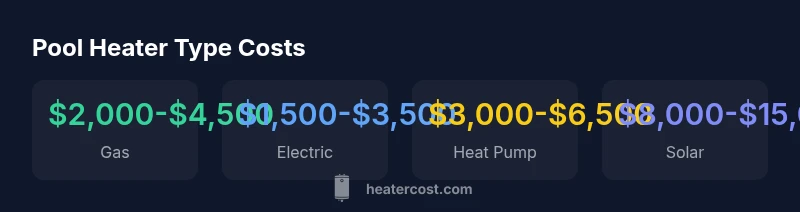
Total cost of ownership for a pool heater includes upfront purchase and installation plus ongoing energy costs, maintenance, and eventual replacement. Gas heaters generally have moderate upfront costs but higher ongoing fuel expenses, while heat pumps tend to require a larger initial investment but deliver lower monthly energy costs. Solar systems have high upfront costs but potentially very low operating costs, particularly in sunny regions. Electric resistance heaters sit in the middle for upfront cost but can incur higher operating costs. When estimating operating costs, consider local energy prices, pool usage hours, and desired water temperature. For a typical residential pool, a heat pump often provides the best balance of purchase price, efficiency, and year-to-year costs in moderate climates, with solar offering exceptional savings where sun exposure is abundant. The Heater Cost analysis suggests that homeowners who plan to keep a pool heated most of the year should examine total cost of ownership over five to ten years, rather than focusing solely on the upfront price.
Maintenance and longevity: tips to maximize life
Preventive maintenance extends the life of your pool heater and sustains efficiency. Create a simple annual checklist and schedule professional service every 12–24 months, depending on usage and the type of heater. For gas systems, have venting and combustion components inspected, and check for corrosion on heat exchangers. Electric and heat-pump models benefit from clean air intakes, clear surrounding space for airflow, and thermostat calibration. Solar heaters require panel inspection, circulation pump checks, and flow-rate verification. Seasonal pool coverage helps reduce debris-related wear and keeps filters clean, which lowers the load on the heater. Address leaks and pressure anomalies promptly; small issues left unattended can escalate into expensive repairs. With diligent maintenance, most pool heaters approach the 10–15 year lifespan expected by industry standards and highlighted in Heater Cost analyses.
Real-world scenarios and quick decision guide
- Scenario A: Small residential pool in a warm climate. A compact heat pump with solar pre-heating provides excellent efficiency, reliable comfort, and low ongoing costs, ideal for year-round use.
- Scenario B: Mid-size pool in a cold or variable climate. A gas heater paired with a back-up heat source (such as a solar system) provides fast heating and reliability during shoulder seasons, at the expense of higher operating costs.
- Scenario C: Rental property or high-usage pool. A well-insulated heat pump or a gas heater with robust venting and a solid maintenance plan minimizes downtime and ensures consistent temperatures for tenants. In all cases, confirm that installation adheres to local codes and manufacturer recommendations. Community or HOA rules may also influence permit processes and equipment placement. Based on Heater Cost guidance, choose a system that aligns with climate, usage, and long-term cost considerations.
Comparison of pool heater types
| Model Type | Installed Cost Range | Operating Cost Range (monthly) | Best For |
|---|---|---|---|
| Gas Pool Heater | $2,000-$4,500 | $50-$150 | Fast heat; cold climates |
| Electric Resistance Pool Heater | $1,500-$3,500 | $70-$200 | Low upfront cost; simple install |
| Heat Pump Pool Heater | $3,000-$6,500 | $20-$100 | Most efficient in warm/mild climates |
| Solar Pool Heater | $8,000-$15,000 | $0-$100 | Low operating costs; sun-rich locations |
Got Questions?
What is the most energy-efficient pool heater for temperate climates?
In temperate climates, heat pumps generally offer the best energy efficiency compared with gas or electric resistance units, delivering lower operating costs over time.
Heat pumps are usually the most efficient option in temperate climates.
How do I size a pool heater for my pool?
Calculate pool volume, desired temperature rise, and climate-related heat loss, then match the heater’s BTU rating to the calculated load to avoid short cycling.
Compute the heating load and match BTU rating to your pool’s needs.
What permits are required for installing a pool heater?
Permits vary by locality; check with your municipality for building and electrical permits before installation to ensure compliance with codes.
Check local codes and obtain the required permits.
What maintenance does a pool heater require?
Regularly inspect vents/air intakes, clean or replace filters, verify thermostat accuracy, and schedule annual professional service to keep the system operating efficiently.
Keep filters clean and have yearly service.
Are solar pool heaters worth it?
Solar can offer very low operating costs in sunny climates, but performance depends on sun exposure and weather; in colder regions, a backup may be needed.
Solar works best where you have lots of sun, but may need a backup heater in winter.
How long does a pool heater last?
Most pool heaters last about 10–15 years with regular maintenance, though lifespan varies by type, usage, and service quality.
Most last 10-15 years with good maintenance.
“Choosing the right pool heater is a balance between upfront cost, energy efficiency, and maintenance needs over time.”
The Essentials
- Size the heater to your pool and climate.
- Heat pumps usually offer best efficiency in temperate climates.
- Gas heats fastest but costs more to run over time.
- Solar can save the most energy where sun is abundant.