How Much Does a New Water Heater Cost in 2026
Estimate the installed cost of a new water heater in 2026, including tank vs tankless options, labor, permits, energy costs, and potential tax credits. Practical guidance for homeowners, renters, and property managers.


For a new water heater, installed cost typically ranges from $1,000 to $3,500, depending on type (tank vs tankless), size, and installation complexity. This includes the unit, labor, venting, and basic plumbing. Upgrades like seismic straps, expansion tanks, or required permits can push costs higher. Prices vary by region and contractor, so use a 2–3 bid approach to compare.
What Drives the Cost of a New Water Heater
According to Heater Cost, the total installed price for a new water heater is driven by the unit type (tank vs tankless), storage capacity, energy source (gas or electric), venting and piping needs, and local labor rates. In 2026, homeowners often see a broad price band because of divergent installation scenarios. Key cost drivers include whether a permit is required, the need for upgrading electrical panels or gas lines, and whether upgrades such as expansion tanks or seismic restraints are installed. When planning, start by estimating a baseline based on your household hot-water demand, then add typical add-ons to avoid surprises later. The goal is to understand not just the sticker price, but the total installed cost over the system’s life.
Tank vs Tankless: Upfront Costs and Long-Term Value
Tank-style units generally have lower upfront costs, but can incur higher energy use over time. Tankless systems offer energy efficiency and endless hot water, yet come with higher installation complexity and potential electrical or venting upgrades. In 2026, the price delta between gas and electric tankless variants can be substantial, and the decision should factor in your home's fuel source, peak hot-water needs, and maintenance expectations. Heater Cost recommends weighing the payback period against comfort gains and reliability.
Size and Capacity: Choosing the Right Unit
Choosing the right size is essential to avoid overspending or under-supplying hot water. A too-small tank might run constantly, increasing energy use, while an oversized unit wastes storage capacity and money. When evaluating capacity, consider peak daily hot-water needs, family size, simultaneous uses (showering, laundry, dishwasher), and recovery rate. In 2026 pricing, larger tanks add upfront cost, but may reduce long-term cycling losses in busy households. A professional assessment helps translate demand into an appropriate gallon size.
Installation Factors That Impact the Price
Installation cost is often the largest unknown. Labor rates vary by region, and existing plumbing, venting, or electrical configurations can require more work. If gas lines or venting must be upgraded, expect higher labor and material costs. If existing hardware is compatible, installation can be quicker and cheaper. Don’t overlook small add-ons that improve reliability, such as dielectric unions, shut-off valves, or new expansion tanks. In short, installation feasibility determines much of the final price.
Permits, Codes, and Local Labor Variability
Many jurisdictions require permits for replacing a water heater, especially when venting or gas lines are involved. Permit fees, inspections, and code-compliance upgrades can add to the total cost. Local labor markets also influence hourly rates and scheduling. It’s prudent to obtain estimates that itemize permit, inspection, and potential inspection re-checks. Heater Cost’s guidance emphasizes verifying permit requirements before committing to a contractor, to avoid surprises at the end of the project.
Efficiency, Energy Costs, and Operating Savings
Higher efficiency models typically come with a higher upfront price but can yield operating cost savings over time. When evaluating efficiency, look at the Energy Factor (EF) or Uniform Energy Factor (UEF) and how it translates to annual energy consumption. Consider the price of fuel in your area and the expected lifetime energy savings. The total cost of ownership often favors efficient models, especially in homes with high hot-water demand or rising energy prices.
Maintenance Costs and Prolonging Lifespan
Regular maintenance reduces the likelihood of unexpected breakdowns and extends the life of your water heater. Tank units benefit from annual flushing to remove sediment, while tankless units require periodic descaling in hard-water regions. Maintenance costs are typically modest compared with replacement, and preventive care can push replacement timing further into the future. Planning for maintenance in your budget helps smooth out financial shocks.
Financing, Rebates, and Tax Incentives
Financing options, rebates, and tax incentives can influence the final price. Some utilities and manufacturers offer rebates for high-efficiency models or energy upgrades. Local incentives vary by region and program eligibility; be sure to verify before purchase. Heater Cost recommends checking with your utility and reviewing federal, state, and local programs to maximize savings. Even modest rebates can improve payback periods.
Quick Cost Planning Checklist for Your Home
Create a simple checklist: determine hot-water needs, choose tank vs tankless, obtain at least two bids, verify permits, confirm electrical/gas readiness, and account for potential upgrades. Add a contingency for unexpected issues. This approach helps ensure you’re comparing apples to apples and budgeting for the full installed cost rather than just the sticker price.
Cost scenarios for common water heater installations
| Scenario | Typical cost range | Notes |
|---|---|---|
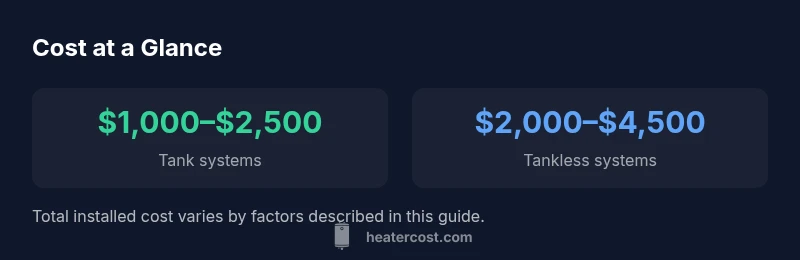
| New standard tank heater (40–50 gal) | "$1,000–$2,500" | Includes unit + basic installation |
| New tankless heater (gas) | "$2,000–$4,500" | Venting and gas line work often required |
| New tankless heater (electric) | "$1,500–$3,500" | Electrical upgrades may be needed |
| Upgrades (expansion tank, seismic straps) | "$100–$400" | Optional safety features |
Got Questions?
What factors influence the price of a new water heater?
Price is driven by unit type, size, fuel source, venting, electrical upgrades, labor rates, and permits. Regional codes can add complexity, so obtain multiple bids.
Prices depend on the unit, size, fuel, venting, and local labor—get several bids.
Is tankless always more expensive than a standard tank?
In most cases tankless units cost more upfront due to installation complexity, but can save energy and space over time.
Tankless usually costs more up front, but may save energy and space.
Do permits affect the overall cost?
Permits and inspections add time and fees; some locales require them for new installations or significant changes.
Permits can add time and money; check local rules.
What is the typical lifespan of a new water heater?
Tank water heaters typically last 8–12 years; tankless units can exceed 20 years with proper maintenance.
Tanks last about 8–12 years; tankless can last 20 years with good care.
Are rebates or tax incentives available?
Rebates or tax credits vary by region and utility. Check eligibility before purchase.
Look for local rebates or tax credits before buying.
How long does installation typically take?
Most installations take a few hours to a full day, depending on system type and existing plumbing.
Most installs take a few hours to a day, depending on setup.
“Price is only part of the decision. The total installed cost plus long-term energy use determines value.”
The Essentials
- Estimate total cost, not just the unit price
- Tankless units cost more upfront but can save energy
- Labor, permits, and venting can swing total cost
- Get 2–3 bids to avoid overcharging
- Check for rebates or tax incentives before purchasing