Heat Pump Water Heater Price Guide for 2026
Explore heat pump water heater price ranges, installation costs, rebates, and payback periods. Learn how to estimate total installed costs and compare quotes with Heater Cost for smarter decisions.


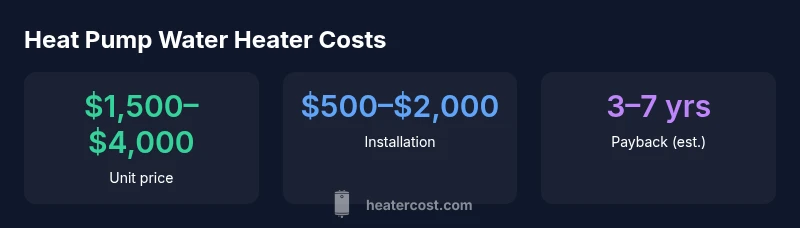
Heat pump water heater price typically ranges from $1,500 to $4,000 for the unit, with installation bringing total installed cost to about $2,000 to $6,000 depending on climate and labor. Price varies by size and efficiency, so homeowners should compare quotes from licensed installers to find the best value and maximize rebates.
Understanding the price landscape for heat pump water heaters
When evaluating heat pump water heater price, homeowners should consider the combined cost of the unit, installation, and any needed upgrades to electrical service or space. The price is influenced by the sized chosen, the energy factor (EF) rating, and the efficiency rating. In many regions, higher-efficiency models command premium upfront but offer larger long-term operating-cost savings. Homeowners should also account for potential rebates and incentives that reduce the net price. According to Heater Cost analysis, the overall price picture becomes clearer when you separate the price of the unit from installation and ancillary costs. This helps homeowners compare apples-to-apples when requesting quotes from contractors. The result is a more accurate projection of total value and payback, especially in high electricity-rate regions.
Upfront costs: equipment, efficiency tiers, and installation
The upfront heat pump water heater price consists of three main components: the heat pump unit, the storage tank, and installation labor. The unit price varies by size and efficiency—larger, high-efficiency models cost more but deliver greater energy savings. Installation costs depend on existing plumbing, electrical wiring, and whether any upgrades are needed (such as a larger electrical panel or dedicated circuit). In some homes, refrigeration lines or venting work can add to the bill. Planning for permit costs and potential retrofits helps homeowners avoid surprises on the invoice.
Operating costs and energy savings in context
Heat pump water heaters deliver energy savings by moving heat rather than generating it, which can lower operating costs versus traditional electric-resistance heaters. Savings depend on climate, electricity rates, and usage patterns. In milder climates with moderate electricity costs, annual savings can be substantial, often offsetting part of the upfront investment over several years. However, payback is not guaranteed and varies with local rates and usage. Consider total lifecycle costs, not just the purchase price, when evaluating value.
Factors that drive price: size, efficiency, and climate
The main price drivers are storage capacity, the energy factor (EF) rating, and climate. Larger tanks and higher EF ratings carry higher upfront costs but reduce operating costs over time. In colder climates, some heat pumps operate less efficiently and may require supplemental heating, which can affect both price and performance. Equipment warranties, brand reputation, and after-sales service also shape the final price tag. When comparing models, request the EF or COP (coefficient of performance) data to estimate true energy savings.
Installation considerations: permits, space needs, and professional labor
Installation cost is a significant portion of total price and varies by region. A licensed technician ensures proper electrical connections, drainage, venting, and refrigerant handling, reducing risk and improving efficiency. Depending on the home, you may need electrical panel upgrades, new wiring, or a dedicated circuit. Permits may be required, and some locales offer rebates only with proof of compliant installation. Factor in scheduling time and potential disruption to water heating during the swap.
Rebates, incentives, and long-term financial benefits
Rebates and incentives can substantially lower the heat pump water heater price. Many utilities and state programs offer credits, rebates, or performance-based incentives that reduce up-front costs. Online tools and official utility sites help identify eligible programs and required documentation. When calculating value, consider not only the upfront price but the long-term energy savings and potential tax credits. Heater Cost recommends checking local and national programs before purchasing.
How to compare quotes and estimate your payback period
To compare quotes effectively, request itemized bids that separate unit price, installation, permits, and any upgrades. Verify model specifications, EF ratings, and expected annual energy use. Use a simple payback calculation: divide net installed cost by annual energy savings. Be sure to include potential rebates and utility incentives. A longer payback period can still make sense if the unit offers superior reliability or if electricity costs are expected to rise.
Common myths and realistic expectations
There is a common belief that heat pump water heaters perform poorly in cold weather or require constant maintenance. In reality, most models operate efficiently across a wide range of temperatures, with payback improving whenever electricity prices are high. Proper sizing, professional installation, and a suitable climate are the keys to maximizing both price efficiency and energy savings.
Heat pump water heater price ranges and installation costs
| Category | Typical price range | Notes |
|---|---|---|
| Unit price | $1,500–$4,000 | Price varies by size and efficiency |
| Installation | $500–$2,000 | Labor, wiring, permits |
| Total installed cost | $2,000–$6,000 | Unit + installation |
| Payback period | 3–7 years | Depends on electricity rates |
Got Questions?
What is the typical price range for a heat pump water heater?
The upfront unit price typically ranges from $1,500 to $4,000, with installation bringing total costs higher depending on labor and upgrades.
The unit usually costs between fifteen hundred and four thousand dollars, with installation adding to the total.
Do heat pump water heaters qualify for rebates?
Yes, many utilities and state programs offer rebates or incentives. Availability varies by location and program requirements.
Yes, many rebates exist; check your local utility programs.
Is a heat pump water heater worth it in a cold climate?
Performance can drop in very cold climates, and some setups may require supplemental heating. In milder climates, savings are more favorable.
In very cold climates, you might need supplemental heating, but in milder areas the savings are generally better.
How long is the payback period?
Payback typically ranges from a few years up to around seven, depending on energy prices and usage patterns.
Usually several years, depending on your electricity rate and usage.
What affects installation costs?
Labor, electrical upgrades, permits, and any needed space or venting work influence total costs.
Labor, wiring, permits, and space changes can drive up costs.
“Heat pump water heaters can offer meaningful energy savings when sited and sized correctly; the upfront price is balanced by long-term efficiency.”
The Essentials
- Compare total installed cost, not just unit price
- Factor climate and electricity rates into payback
- Check rebates and incentives before purchasing
- Plan for professional installation and permits
- Expect a multi-year payback depending on usage