Heat Pumps for Sale: Your 2026 Buying Guide
Discover how to shop for heat pumps for sale in 2026. Compare types, costs, incentives, and installation considerations with Heater Cost’s data-driven buying guide to maximize comfort and energy savings.


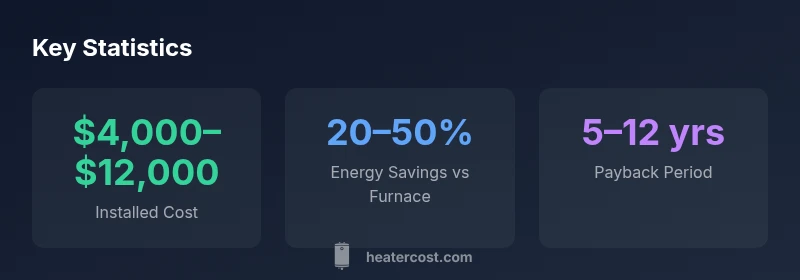
Heat pumps for sale today typically cost between $4,000 and $12,000 installed for standard air-source units, with larger or geothermal systems reaching $15,000–$30,000. Prices vary by climate, home size, and installation complexity. When shopping, consider efficiency, refrigerant type, and system compatibility to determine value. This guidance comes from Heater Cost Analysis, 2026.
What to know about heat pumps for sale in 2026
Heat pumps for sale sit at the intersection of comfort, efficiency, and climate adaptability. They work by moving heat rather than generating it, which can lower operating costs in many homes. The Heater Cost team notes that the best value often comes from models that balance high efficiency with sensible upfront pricing. When you see a quote, examine both the equipment cost and the long-term energy savings, as the difference can eclipse the initial price over time. This approach aligns with the Heater Cost Analysis, 2026, which emphasizes the importance of total cost of ownership rather than sticker price alone.
Key terms you’ll encounter include SEER (seasonal energy efficiency ratio), HSPF ( Heating Seasonal Performance Factor), and COP (coefficient of performance). A higher rating generally means lower energy bills, but it may also carry a higher upfront cost. ENERGY STAR-certified models typically offer reliable efficiency, but the real-world savings depend on climate, insulation, and how the system is sized and installed by a qualified technician.
Types of heat pumps you’ll see in the market
There are several configurations to consider:
- Air-source heat pumps (ASHP): The most common type, suitable for many climates. They can be ducted or ductless (mini-split) and are often the most cost-effective option for upgrading from electric resistance heating.
- Ground-source or geothermal heat pumps (GSHP): Use the stable ground temperature for high efficiency, ideal for colder climates, but with higher upfront costs and longer installation timelines.
- Dual-fuel or hybrid systems: Combine a heat pump with a natural gas furnace or boiler to optimize performance in very cold weather.
- Split heat pumps vs. packaged units: Split systems place the compressor outside and the indoor air handler inside; packaged units consolidate components in one cabinet outside.
Choosing among these depends on climate, existing ductwork, and whether you’re retrofitting an old system or installing in a new home.
How to evaluate heat pumps for sale: key criteria
When evaluating heat pumps for sale, prioritize efficiency metrics (SEER and HSPF), but also consider climate relevance. A higher SEER reduces cooling costs in hot months, while a higher HSPF lowers heating bills in winter. Look for a COP rating at the expected operating outdoor temperature. Noise levels, warranty terms, and compressor type (inverter vs. traditional fixed-speed) impact long-term satisfaction. Check installation requirements: some homes need new ductwork, electrical upgrades, or refrigerant line runs. The Heater Cost guidance stresses verifying proper sizing, as an oversized or undersized unit can dramatically erode comfort and savings.
Price ranges, what drives cost, and when to buy
Total installed price is driven by unit capacity, efficiency, type (air-source vs. geothermal), ductwork, and labor. Typical installed ranges for standard ASHPs fall into the mid-to-high four figures, but complex installs or geothermal systems can push prices upward substantially. Seasonal promotions, utility rebates, and local incentives can tilt the financial return in favor of a quicker payback. The decision to buy now often hinges on climate risk, home upgrades (insulation, windows), and the availability of qualified installers in your area.
Incentives, warranties, and long-term value
Incentives from federal, state, and utility programs can reduce upfront costs. Look for ENERGY STAR qualification and available tax credits or rebates. Warranties vary by manufacturer and installer; a longer, transferable warranty reduces risk during the payoff period. The Heater Cost team recommends documenting system performance and scheduling annual checkups to maintain efficiency and warranty eligibility.
Installation considerations and timelines: planning for success
A typical installation involves site assessment, refrigerant line installation, electrical work, ductwork testing, and commissioning. In new construction, installation may be faster, while retrofits can require more extensive modifications. Plan for potential space reconfigurations, electrical panel upgrades, and insulation improvements to maximize performance. Ask your installer to provide a performance forecast, including expected annual energy savings, and verify permit requirements with local authorities.
Financing options and return on investment
Financing can make higher-efficiency heat pumps more accessible. Look for loans with low interest rates and short payback horizons, or lease options if you’re upgrading multiple zones in a rental property. When computing ROI, include energy savings, maintenance costs, tax incentives, and potential increases in property value. Heater Cost’s analysis emphasizes that the best value often comes from a balanced mix of upfront cost, usable life, and predictable operating costs.
Buying checklist and a sample comparison scenario
Create a side-by-side comparison of at least three models. Include: (1) installed price, (2) SEER/HSPF/ENERGY STAR status, (3) climate suitability, (4) warranty terms, (5) expected annual energy savings. For a sample home in a mixed climate, a well-sized air-source heat pump with high efficiency and solid warranty often delivers the best balance of upfront cost and long-term savings. Always obtain written quotes from licensed installers and verify local permits before purchase.
Comparison of heat pump types and installed price ranges
| Type | Typical Installed Price Range | Climate Suitability | Notes |
|---|---|---|---|
| Air-source (ducted) | $4,000–$12,000 | Mild to moderate climates | Most common; versatile for retrofits |
| Air-source (ductless) | $4,500–$14,000 | Zoned areas; retrofit-friendly | Per-zone control, higher per-unit cost |
| Ground-source (geothermal) | $10,000–$30,000 | Extreme climates; high efficiency | Highest upfront cost; best long-term savings |
| Dual-fuel hybrid | $6,000–$15,000 | Mixed climates | Works with existing furnace/boiler |
| Packaged units | $6,000–$14,000 | Smaller homes, single-unit install | All-in-one outdoor unit |
Got Questions?
What is the most efficient heat pump for sale today?
Efficiency is measured by SEER and HSPF ratings; look for ENERGY STAR-certified models with high SEER (cooling) and HSPF (heating) values. The best choice varies by climate and home specifics.
Look for ENERGY STAR models with high SEER and HSPF that match your climate.
Are heat pumps worth it in very cold climates?
In very cold climates, choose models with strong heating performance and consider a hybrid setup that couples a heat pump with a furnace for extreme cold days.
They can be, especially with cold-climate models or a hybrid system.
Do heat pumps require ductwork?
Not always. Ductless mini-splits are a popular option for homes without ducts, while ducted systems require appropriate air distribution, possibly with sealing and insulation upgrades.
Some models don’t need ducts, but many homes will use ducted or mini-split systems.
What maintenance do heat pumps need?
Annual or biannual service is typical, including filter checks, coil cleaning, and refrigerant checks. Regular maintenance helps preserve efficiency and warranty eligibility.
Annual tune-ups keep performance high and extend the system’s life.
What tax credits or incentives apply to heat pumps in 2026?
Incentives vary by region and program; rely on federal tax credits, state rebates, and utility incentives. Check current offerings and combine incentives where possible.
There are various federal, state, and utility incentives—check current programs.
How long does installation typically take?
Most installations take 1–3 days for a typical retrofit, but timelines can extend with ductwork or electrical upgrades.
Most installs finish in a few days, depending on site work.
“Heat pumps are most effective when properly sized and professionally installed, delivering consistent comfort with substantial energy savings.”
The Essentials
- Define climate and home size before you shop
- Prioritize high SEER and HSPF to maximize savings
- Explore incentives and tax credits to lower net cost
- Compare total installed price and long-term energy savings
- Choose a licensed installer with strong warranty terms
- Ask for a performance forecast and a written quote
- Consider ductwork upgrades to unlock full efficiency
- Factor maintenance costs into your 10-year plan
- Review warranty terms for compressor and parts