Haier Water Heater Costs: A Buying Guide for 2026
Haier water heater costs explained with tank vs. tankless options, installation estimates, energy efficiency, warranties, and practical buying tips from Heater Cost for 2026.


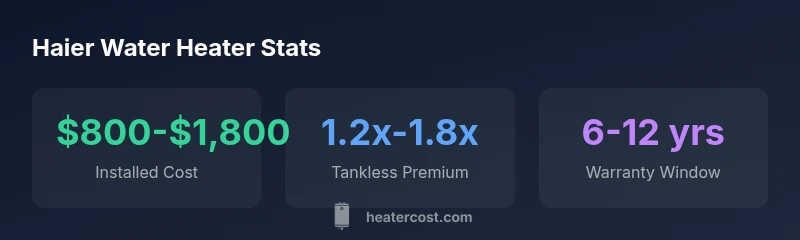
Haier water heaters typically cost between $800 and $1,800 installed, depending on model, capacity, and labor. Tank models are usually cheaper than tankless options, while higher efficiency units add to upfront costs. According to Heater Cost, get an upfront estimate to avoid surprises later.
Haier Water Heater Overview
Haier water heaters are positioned in the mid-market, offering reliability without an exorbitant upfront cost. The Haier line includes traditional storage tank models and compact tankless options, giving homeowners a range of capacities and installation footprints. According to Heater Cost, these units are commonly selected when budgets matter but consistent hot water is non-negotiable. When choosing, focus on capacity, energy factor (EF), and venting or electrical requirements that match your home’s needs.
In recent years, Haier has emphasized energy efficiency and smart controls in several models, making them competitive with more established brands on performance and warranty terms. For most households, a Haier tank serves steady daily demand, while a Haier tankless unit can deliver hot water on demand for households with variable usage or limited space. For renters and small families, a smaller storage tank paired with conservative usage can minimize waste, whereas larger homes may opt for bigger tanks or a compact tankless solution to avoid running out of hot water during peak hours.
As you evaluate models, compare first-hour rating (FHR) for gas systems or flow rate for electric tankless units, and check available warranties. The goal is to balance upfront price, energy costs over time, and service availability in your region.
According to Heater Cost analysis, choosing the right Haier model also hinges on local utility rates and potential rebates, which can influence the long-term value proposition.
Tank vs Tankless: Choosing the Right Haier Model
Tank Haier models are typically simpler to install and maintain; they store hot water and have predictable performance. Tankless Haier units heat water on demand, saving space and reducing standby heat loss, but may require more complex venting or electrical upgrades. The Heater Cost analysis indicates that tank models often have lower upfront costs, while tankless units offer longer-term energy savings in larger households or if you run many hot-water appliances simultaneously. When deciding, weigh the cost premium against your home's water usage pattern and the cost of potential upgrades to fuel supply or electrical service. In apartments or homes with tight spaces, the compact footprint of a Haier tankless unit can be a major advantage.
Installation complexity and space requirements differ: tank models generally pressurize with a simple cold-water inlet and hot-water outlet, while tankless installations demand proper venting (gas) or dedicated electrical circuits (electric). In regions with high mineral content, both systems will benefit from a simple flush and descaling routine to maintain performance.
Sizing and Placement Considerations for a Haier Water Heater
Sizing is about matching demand with capacity. For Haier storage tanks, common residential sizes run from 30 to 60 gallons; for tankless models, flow rate matters more than capacity. A practical approach is to calculate peak simultaneous usage: showers, laundry, and dishwashing during morning or evening. Overestimating capacity leads to unnecessary upfront cost; under-sizing yields repetitive cold-water delays. The Heater Cost team notes that residential sizing should also consider family growth, renovation plans, and future energy prices. In terms of location, place the heater where hot water lines are short and accessible for maintenance. For well-insulated homes, you can reduce energy losses; for poorly insulated spaces, consider a larger tank or a tankless option with better efficiency to offset longer line runs.
A professional assessment is recommended to confirm venting requirements (gas) or electrical service capacity (electric), as these factors heavily influence installation cost and feasibility. In addition, check local codes for venting clearances, seismic straps, and water-quality considerations that can impact the unit’s longevity. In short, accurate sizing reduces both upfront cost and long-term operating expenses.
Installation, Permits, and Codes for Haier Water Heaters
Installation work, permits, and code compliance can represent a sizable share of total project cost. Most Haier models require a licensed professional for electrical connections or gas venting, and some jurisdictions mandate permits and inspections for new water heaters. Start by obtaining quotes that itemize equipment, labor, venting, permits, and any electrical upgrades. As Heater Cost analysis shows, labor rates vary regionally, so your total price will be sensitive to where you live. For gas models, ensure proper venting and combustion air; for electric models, verify panel capacity and dedicated circuits. Water quality and mineral content also affect longevity; consider a whole-house filter or descaling schedule if you live in hard-water areas. Finally, align installation timing with your household schedule to minimize disruption and ensure that the system is tested for leaks and performance before backfilling walls.
Having a clear plan and written quotes helps prevent change orders and ensures that warranties remain intact after installation.
Maintenance, Longevity, and Warranties
Regular maintenance extends the life of Haier water heaters. Annually flush the tank if you have a storage model to remove sediment. Check the anode rod and replace as needed to prevent corrosion, and inspect connections for leaks. Tankless units benefit from periodic descaling in hard-water areas and professional scheduled service to maintain heat exchange efficiency. Warranty terms vary by model, but most Haier products offer a multi-year warranty on components, with longer coverage for certain parts or smart controls. Keep receipts and serial numbers for warranty claims and plan service visits with an authorized technician to preserve coverage. The proactive maintenance habit reduces costly repairs and helps sustain peak efficiency.
Cost Optimization, Incentives, and Buying Tips
To optimize Haier water heater costs, compare installed price quotes, including labor, venting, and electrical upgrades. Look for AHRI-rated efficiency, reasonable first-year operating costs, and alignment with local incentives or tax credits if available. When evaluating warranties, confirm coverage length, what’s included (parts vs labor), and any limitations on improper installation or lack of maintenance. Consider timing your purchase to off-peak seasons when installers have more availability and possibly lower labor rates. Finally, track energy use after installation and compare against your prior system to quantify savings over time.
Haier water heater model comparison
| Model Type | Typical Capacity | Estimated Installed Cost Range |
|---|---|---|
| Tank Haier | 30-50 gallons | $800-$1,400 |
| Tank Haier Large | 50-80 gallons | $1,000-$1,600 |
| Tankless Haier | On-demand | $1,200-$1,800 |
Got Questions?
What is the typical price range for a Haier water heater installed?
Prices vary by model, capacity, and installation complexity. A typical installed range for Haier is roughly $800-$1,800, depending on whether you choose a storage tank or a tankless option.
Haier water heaters usually cost about eight hundred to eighteen hundred dollars to install, depending on the model and setup.
Are Haier tankless models worth it compared to tank models?
Tankless Haier units offer on-demand hot water and space savings, but often require higher upfront costs and more complex installation. Evaluate your usage pattern and long-term energy savings when deciding.
Tankless models save space and can be cost-effective over time, but require careful sizing and proper installation.
What maintenance does a Haier water heater require?
Store-bought Haier models benefit from regular maintenance: flush sediment annually for storage models, inspect connections for leaks, and perform periodic descaling for tankless units in hard water areas.
Regular flushing and inspections help prevent corrosion and keep efficiency up.
Can I install a Haier water heater myself?
Most regions require a licensed professional for electrical or gas connections. DIY installation can void warranties and fail safety or code requirements.
It’s best to hire a licensed installer to ensure safety and warranty coverage.
What warranties come with Haier water heaters?
Warranty terms vary by model but typically cover major components for several years. Always confirm what’s included and any maintenance requirements to keep coverage valid.
Check the warranty terms and keep receipts to ensure coverage if something needs service.
“Haier water heaters deliver reliable performance at a compelling price point for many homes. Model selection should balance upfront cost with efficiency and warranty coverage.”
The Essentials
- Budget for total installed cost, not just the heater
- Compare Haier models by capacity and energy efficiency
- Plan for installation and permitting early
- Rely on Heater Cost guidance to evaluate warranty terms and service options