Gas Hot Water Heater: Costs, Performance, and Maintenance
A data-driven guide to gas hot water heater costs, covering upfront installation ranges, annual operating expenses, efficiency options, and practical maintenance tips for homeowners, renters, and property managers.


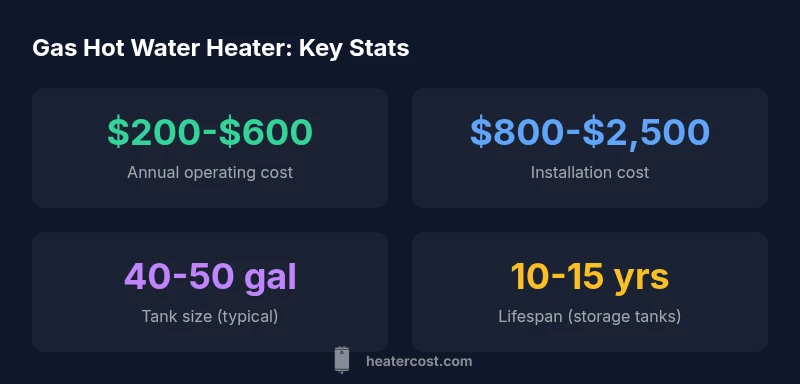
Typically, a gas hot water heater costs about $200 to $600 per year to operate, depending on usage and local gas prices. Installation costs usually range from $800 to $2,500, plus permits. Newer, high-efficiency models can reduce operating costs over time. This makes choosing a high-efficiency, properly sized model worth considering for long-term savings.
What qualifies as a gas hot water heater?
A gas hot water heater is any model that uses natural gas or propane to heat water for household use. Most homes rely on storage-tank units in the 40- to 50-gallon range, but tank sizes vary based on family size and peak hot-water demands. Gas heaters come in standard storage formats and in more efficient condensing designs. A venting system is essential because combustion exhaust must exit the home, typically via a dedicated chimney or metal vent. Safety features include flame failure devices, anti-scald protections, and a temperature and pressure (T&P) relief valve. When installed correctly, a gas hot water heater can provide rapid replenishment of hot water, even after several simultaneous uses. The key differences from electric units are the energy source, fuel costs, and the need for proper venting. In colder climates, well‑insulated tanks and better insulation on pipes help minimize heat loss. Always ensure CO alarms are placed in living spaces and near bedrooms to address CO risks associated with combustion appliances.
How gas hot water heaters work
Gas hot water heaters heat water by burning natural gas or propane in a burner located at the bottom of the tank (or within a compact, on-demand unit). The heat produced is transferred to the water in the tank through a heat exchanger. A thermostat controls the flame and water temperature, while a venting system carries combustion byproducts outside the home. Modern units may be direct-vent or power-vent to improve efficiency and permit flexible installation. Regular vent inspection is critical, as blocked or leaky vents can lead to dangerous carbon monoxide buildup. The vent system must be properly sealed and sized for the heater’s output. In most homes, cold makeup water feeds the tank, and an expansion tank helps manage pressure changes as water is heated.
Sizing and demand: choosing capacity
Sizing a gas hot water heater depends on how many people live in the home, peak concurrent hot-water usage, and the desired recovery rate after the tank empties. A typical 40- to 50-gallon storage unit suits most households, but larger families or households with high shower and laundry demand may need 60 gallons or more. Tankless (on-demand) gas heaters are an alternative that can provide endless hot water without standby losses, but they require careful sizing and may have higher upfront costs. When sizing, consider simultaneous uses (shower, laundry, dishwasher) and the desired temperature rise. A professional can perform a load calculation to determine the right size, balancing comfort, efficiency, and installation constraints.
Efficiency, costs, and savings: what to expect
Energy efficiency for gas hot water heaters is typically expressed as an energy factor (EF) or uniform energy factor (UEF). Modern storage tanks with condensing technology can achieve higher efficiency than older models, reducing heat loss and fuel use. Expect operating costs to reflect local gas prices and household hot-water needs; even small improvements in efficiency can add up over the life of the unit. When comparing models, look for higher EF/UEF ratings, good insulation on the tank and pipes, and features like automatic shutoff and advanced temperature controls. Over time, investing in a more efficient unit can offset a larger upfront cost through lower monthly bills and fewer heat losses.
Installation considerations: venting, permits, and clearances
Gas water heaters require proper venting to exhaust combustion byproducts safely. Vent options include natural draft, direct vent, and power-vent configurations, each with different installation requirements. Vent pipes must be appropriately sized and sloped; improper venting can lead to backdrafting and CO risks. Clearances around the unit and access for servicing are important, as is complying with local building codes. Permits are commonly required for installation or replacement, and inspections ensure fuel connections, venting, and gas lines meet safety standards. A licensed professional should perform the installation to ensure all connections are sealed and all safety devices function correctly.
Maintenance and safety: routine care and CO risks
Regular maintenance helps extend the life of a gas hot water heater and keeps fuel costs in check. Annual flushing helps remove sediment that reduces efficiency and heat transfer. Inspect the pressure relief valve and test it periodically to ensure it operates correctly. Replace anodes as recommended to prevent tank corrosion and monitor the thermostat to prevent scalding. Since combustion appliances produce carbon monoxide, install CO detectors in living spaces and near sleeping areas, and ensure the house is ventilated properly. If you smell gas or suspect a leak, evacuate and call your gas utility provider or a licensed technician immediately.
Pros, cons, and alternatives: gas vs electric vs tankless
Gas hot water heaters deliver fast recovery and favorable operating costs in many regions, especially where natural gas is affordable. Cons include the need for venting, CO safety considerations, and potential installation complexity. Electric tanks avoid combustion byproducts and venting but may have higher electricity costs in some markets. Tankless gas heaters save space and can reduce energy use, but installation and sizing must be precise to meet demand. Tankless options may be ideal for homes with limited storage space, whereas traditional storage tanks remain a straightforward and reliable choice for many households.
Choosing a contractor and planning your upgrade
When upgrading or replacing a gas hot water heater, gather multiple bids from licensed plumbers or HVAC professionals. Verify credentials, insurance, and past installation experience with gas-fired water heaters. Ask for a clear breakdown of equipment costs, venting, gas-line work, permits, and expected lead times. Request a load calculation and a written comparison of options (tank vs. tankless, 40-50 gallon vs larger sizes). Check references and confirm that CO detectors and proper venting will be part of the installation plan.
Life-cycle costs and replacement decision
A gas hot water heater represents a long-term investment. Consider total life-cycle costs, including upfront purchase and installation, ongoing fuel costs, maintenance, and eventual replacement. In many cases, upgrading to a higher-efficiency model or a tankless system can lower long-term costs, but the payback period depends on local fuel prices, usage patterns, and the initial price premium. Planning ahead helps homeowners and property managers balance comfort, safety, and budget.
Gas hot water heater cost and lifespan factors
| Factor | Range | Notes |
|---|---|---|
| Installation cost | 800-2500 | Typical range incl. permits and venting |
| Annual operating cost | 200-600 | Depends on usage and gas prices |
| Tank lifespan | 10-15 years | Standard range for storage tanks |
Got Questions?
How long does a gas hot water heater typically last?
Most gas storage heaters last 10-15 years with proper maintenance and timely replacement of parts like anodes and valves.
Most gas storage water heaters last about a decade to 15 years with good maintenance.
Is it safer to choose a gas water heater over electric?
Gas systems require venting and CO detectors; electric heaters have no combustion byproducts, but gas can be safe with proper installation.
Gas is safe when vented and installed correctly, but you need CO detectors.
Do I need a permit to install or replace a gas water heater?
Most jurisdictions require a permit and inspection for gas appliance installation or replacement; check with local building department.
Yes, permits are usually required.
Can I install a gas water heater myself?
Installation should be performed by a licensed plumber or professional; mistakes can cause gas leaks, CO exposure, or venting problems.
It's best to hire a pro.
What maintenance does a gas hot water heater require?
Flush the tank annually, inspect the T&P valve, check the anode rod, and test the CO detector; schedule professional service if needed.
Do annual flush and valve checks.
What is the difference between a standard gas storage heater and a tankless gas heater?
Tankless heats on demand, saving space and potentially energy, but may have higher upfront costs and different reliability; storage tanks provide readily available hot water but with standby losses.
Tankless saves space and may save energy; tanks are simpler.
“A well-sized gas hot water heater paired with regular maintenance offers reliable hot water at reasonable operating costs; neglecting venting and safety checks can undermine both safety and efficiency.”
The Essentials
- Calculate total cost: upfront plus operating expenses.
- Size the tank to match peak daily demand.
- Consider high-efficiency models to lower ongoing costs.
- Plan for proper venting and required permits.
- Schedule regular maintenance to maximize safety and lifespan.