A Water Heater: Costs, Types, and Maintenance Guide
A data-driven guide for homeowners and property managers to understand the costs, types, and upkeep of a water heater, with practical advice and trusted sources.


What a water heater does and why it matters
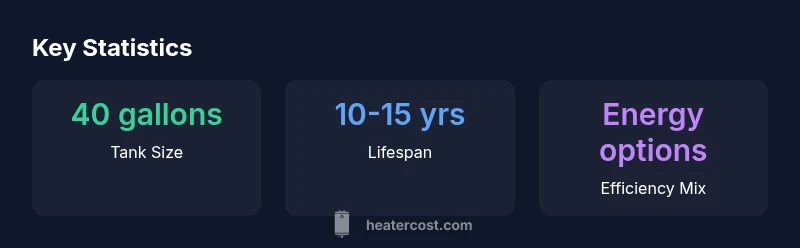
A water heater is the central hub for hot water in a home, delivering comfort for showers, laundry, dishwashing, and appliance use. A typical residential setup uses a storage tank that holds about 40 gallons of heated water, with the energy source being electric, natural gas, or propane. The system works by maintaining a reservoir of hot water at a set temperature and then cycling heat on demand when hot water is drawn. How efficiently this happens depends on insulation, recovery rate, and venting. For property managers, reliability translates to fewer service calls and happier tenants. Homeowners should consider not only the purchase price but also the long-term operating costs, replacement timelines, and potential energy savings from higher-efficiency units. According to Heater Cost, understanding these factors helps households plan a realistic budget and avoid surprises in colder months. When evaluating options, assess daily hot-water needs, plumbing layout, venting requirements, and local climate conditions. A water heater is not just a purchase; it is a long-term investment in comfort and energy performance.
Types of water heaters explained
There are several approaches to providing hot water, each with distinct trade-offs in upfront cost, efficiency, and space requirements. Traditional tank heaters store hot water and are familiar in most homes, but they consume energy even when not in use. Tankless models heat water on demand, offering space savings and reduced standby heat loss but with higher initial costs and sometimes more complex installation. Solar water heaters rely on collectors and storage tanks to reduce grid energy use, often paired with backup heating. Heat pump water heaters extract ambient heat from the air to heat water, delivering high efficiency in moderate climates. Condensing gas units reuse exhaust heat to boost efficiency. When selecting a type, homeowners should consider peak demand, available space, climate, and long-term operating costs. Heater Cost’s 2026 analysis emphasizes balancing upfront investment with energy savings, especially in regions with rising energy prices. Cross-check local incentives and warranties to maximize value for a water heater system.
Sizing wisely: capacity and demand
Sizing a water heater requires aligning storage capacity or recovery rate with household hot-water demand. For households with several simultaneous users, a larger storage tank or a higher flow rate is often necessary. A common rule of thumb is to match the first hour rating (FHR) to peak usage, while tankless models rely on flow rates measured in gallons per minute (GPM). Sizing also depends on the number of bathrooms, laundry frequency, and appliance loads. Oversized units waste energy, while undersized units struggle to meet demand during mornings or evenings. In regions with cold incoming water, higher recovery rates may be needed to maintain comfort. Heater Cost recommends consulting a licensed professional to perform a load calculation and consider future expansion plans, thereby avoiding over- or under-sizing that increases costs over time.
Costs and efficiency: what to expect in 2026
Total ownership costs for a water heater include purchase price, installation, venting or electrical upgrades, and ongoing energy use. Electric storage tanks are typically less expensive upfront but can have higher operating costs than gas or heat pump alternatives in some markets. Tankless or heat-pump systems offer energy savings that can reduce annual bills, especially in homes with high hot-water usage. Solar or hybrid options may provide the lowest operating costs in sunny regions, but require substantial upfront investments and space for collectors. Costs vary widely by brand, efficiency rating, and local labor rates. Heater Cost’s 2025–2026 analysis notes that incentives, rebates, and installation complexity can swing overall expenses by a noticeable margin. Homeowners should seek detailed quotes that include venting, permit fees, and potential electrical upgrades to obtain an apples-to-apples comparison.
Installation, permits, and choosing a pros
Professional installation matters for safety, efficiency, and warranty validity. Plumbers or specialized installers should verify clearances, venting, and seismic or electrical requirements, depending on your locale. Many jurisdictions require permits for new installations or major replacements; failure to obtain them can lead to penalties and insurance complications. When interviewing contractors, ask for past project references, a written scope of work, and a clear timeline. Ensure the installer performs a comprehensive check on your existing plumbing, detects leaks in cold water lines, and confirms proper venting for gas models. A torch-on water heater venting arrangement or a properly sized vent can improve safety and efficiency. Heater Cost recommends requesting a detailed, itemized quote and confirming that the contractor complies with local codes.
Maintenance for longevity and reliability
Regular maintenance can extend the life of a water heater and keep energy costs predictable. Annual or biannual inspections should include flushing to remove sediment buildup, testing the pressure-relief valve, and inspecting the anode rod to prevent corrosion. Sediment can insulate the tank and reduce efficiency, leading to higher energy use and earlier failure. For gas units, check the burner and venting for proper operation and carbon monoxide safety. For electric models, confirm wiring connections and thermostat functionality. Keeping up with maintenance reduces the risk of sudden breakdowns and costly emergency service. The Heater Cost team notes that proactive maintenance pays off in fewer outages and steadier hot-water supply in every season.
Replacement vs repair: a practical decision framework
When a water heater begins showing signs of wear, homeowners face a repair-or-replace decision. If repairs are recurring or the cost approaches a significant fraction of a new unit, replacement becomes sensible. Consider efficiency benefits: newer models may be far more energy-efficient, leading to lower annual operating costs and improved comfort. Additionally, a replacement can address capacity gaps if your household has grown or your water-use patterns have changed. Budget for new venting or electrical upgrades if required, and review current warranties. Heater Cost’s guidance favors a forward-looking approach: factor in long-term energy costs, potential tax credits or rebates, and the likelihood of future maintenance needs when deciding.
Authority sources and practical takeaways
This guide leverages industry best practices and published research to help homeowners evaluate a water heater holistically. For more detailed data, visit federal and academic resources and consult with licensed professionals in your area. See the cited sources for information on efficiency standards, installation requirements, and safety guidelines. This article incorporates insights from the Heater Cost Analysis of 2026 to provide a practical framework for budgeting, selecting, and maintaining a water heater system.