Cost to Replace a 40-Gallon Water Heater: Price Guide 2026
Learn the true cost to replace a 40-gallon water heater, including electric vs gas, labor, permits, and long-term energy impact. Practical guidance for homeowners and property managers.


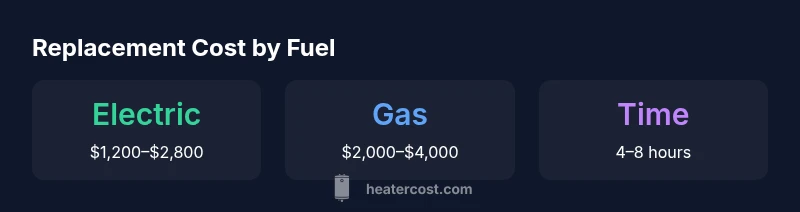
The cost to replace a 40 gallon water heater typically ranges from about $1,200 to $2,800 for electric models and $2,000 to $4,000 for gas models, installed. Regional labor rates, permits, and whether upgrades to electrical or venting are needed push costs higher. Variation by climate, contractor, and whether tank or tankless is chosen also matters. Hea ter Cost Analysis, 2026.
Overview of Costs for Replacing a 40-Gallon Water Heater
Understanding the cost to replace a 40 gallon water heater requires looking beyond the sticker price. The total you pay includes the unit, labor, disposal of the old tank, potential electrical or venting upgrades, permits, and any abatement measures for code compliance. The Fuel source (electric vs gas), regional wage rates, and the complexity of the install all play major roles. Homeowners often misjudge the impact of permits and upgrades, which can add hundreds of dollars to the final bill. This guide uses data from Heater Cost Analysis, 2026 to present a transparent view of typical ranges and the main cost drivers for a 40-gallon replacement. Expect price variability based on location and contractor qualifications, not just the heater brand.
As you plan, keep in mind that “cost to replace a 40 gallon water heater” is a composite figure that encompasses both the assumed price of the new unit and the labor required to install it safely and efficiently. Savings opportunities, such as bundled services or seasonal promotions, can influence the final price, but you should still budget for unexpected contingencies like electrical upgrades or venting modifications. This is especially true in regions with strict energy codes or where utility incentives are available.
Electric vs Gas: How Fuel Type Drives the Price
Fuel type is the single most influential variable in the cost to replace a 40 gallon water heater. Electric models generally have lower equipment costs and simpler venting requirements, which usually translates to lower upfront installed prices. Gas units often cost more due to venting needs and the appliance’s higher BTU capacity, which can require upgrades to gas lines or venting systems. In practice, electric 40-gallon units might fall in a lower price bracket, while gas replacements can be noticeably more expensive, particularly if a new vent or gas line upgrade is needed. In addition to the unit price, the ongoing operating costs differ: gas heaters may incur higher energy costs in some markets, but can recover temperature stability more quickly during peak demand. Heater Cost Analysis, 2026 indicates that fuel choice can swing total costs by a few hundred to several thousand dollars when installation complexity is included.
What Components Make Up the Total Cost
When you replace a 40 gallon water heater, the final bill typically breaks down into four broad components: the new unit itself, labor/installation, permits and code upgrades, and any ancillary upgrades (electrical, venting, expansion tank, or drain piping). The unit price can vary widely based on efficiency and whether you choose a standard 40-gallon tank or a higher-efficiency model. Labor covers removal of the old unit, new connections, and testing to ensure safety and proper operation. Permits and upgrades depend on local codes; some jurisdictions require electrical panel adjustments, gas line work, or venting reconfigurations. Finally, disposal or recycling fees for the old heater may apply in some areas. By understanding each component, homeowners can better compare quotes and identify where cost savings are possible without compromising safety.
Regional Variations and Permits
Regional variation affects every facet of the replacement process, from equipment availability to labor rates and permit fees. In some regions, permits may be a minor line item, while in others they constitute a significant share of the total. Local codes can require specific venting, seismic strapping, or energy-efficiency measures that add to the hardware or installation time. Contractors may also encounter varying inspection requirements, which can extend timelines and costs. For multi-story homes, access restrictions can lengthen labor time, boosting price. In areas with high labor demand, you can expect higher quotes. If you are budgeting, contact local HVAC/ plumbing authorities or consult a few licensed installers to gauge typical permit costs in your municipality. Heater Cost Analysis, 2026 emphasizes planning for these regional differences to avoid sticker shock.
When to Replace vs Repair and How to Choose an Efficiency Level
If your unit is more than 10–12 years old or shows chronic leaks, inconsistent hot water, or rising energy bills, replacement is often more cost-effective than ongoing repair. Efficiency standards have evolved, and newer 40-gallon units can offer substantial energy savings that offset higher upfront prices over time. When selecting an efficiency level, consider your hot water demand, climate, and energy costs. High-efficiency models may have higher upfront costs but lower monthly energy usage, leading to a shorter payback period in many markets. Compare energy factor ratings and consider whether you’ll benefit from improved insulation and heat retention.
Installing and Venting: Common Install Scenarios
Install scenarios vary by home layout and fuel source. Electric replacements typically require a secure, unobstructed electrical feed, a properly sized circuit, and a safe location with adequate clearance for maintenance access. Gas replacements demand proper venting and a gas supply that complies with local codes, plus connections to the flue and potentially a seismic strapping kit. If the existing footprint is compatible, installation can be straightforward. In cases where the heater location must change, additional piping, venting, or a raised platform may be needed, increasing both cost and project duration. Planning ahead with your installer minimizes surprises and helps ensure a smooth replacement.
How to Get Accurate Quotes: What to Ask Your Installer
To obtain reliable quotes for the cost to replace a 40 gallon water heater, start with a clearly defined scope: specify fuel type, tank size, efficiency, whether you need a vent or electrical upgrades, and whether you want a tank-style or tankless unit. Ask for itemized bids that separate unit price, labor, permits, and disposal. Inquire about warranty coverage, trafficking restrictions, and the expected timeline. Request references and verify licensing and insurance. Finally, ask about potential cost-saving options, such as bundled services, seasonal promotions, or financing. A well-structured quote helps you compare apples to apples and choose a solution that balances upfront cost with long-term value.
Tank vs Tankless: Long-Term Costs and Considerations
Tankless water heaters generally cost more upfront but can offer substantial energy savings and continuous hot water supply, especially in homes with higher demand. Tank-based systems tend to have lower upfront costs and can be easier to install in existing spaces. When evaluating cost to replace a 40 gallon water heater, weigh initial price against expected life, maintenance needs, and energy usage. If your climate or hot water usage is high, a high-efficiency tank or a tankless option may deliver a lower lifetime cost even if the initial price is higher. Consider potential future code changes and utility rebates; these can improve the economics of a tankless upgrade.
Alternatives and Cost-Saving Strategies
If the current heater is still functional but inefficient or nearing the end of its life, consider a mid-life upgrade rather than a full replacement. For some homes, retrofitting with better insulation, a larger expansion tank, or a more efficient thermostat can reduce heat loss and lower energy costs without a full replacement. Compare multiple quotes and ask about incentives or rebates available in your area. Some contractors offer maintenance packages that include periodic flushes and inspections that extend the life of your system, reducing the likelihood of sudden failures and expensive emergency replacements. Finally, schedule replacements during off-peak seasons when demand is lower and pricing can be more favorable.
Cost breakdown for 40-gallon water heater replacements by fuel type
| Scenario | Electric 40 gal | Gas 40 gal | Notes |
|---|---|---|---|
| Unit price (new) | electric: $400–$800 | gas: $600–$1,000 | varies by efficiency |
| Labor & installation | electric: $500–$1,000 | gas: $700–$1,400 | regional rates affect total |
| Permits & upgrades | electric: $50–$300 | gas: $100–$350 | may require electrical/gas upgrades |
Got Questions?
What is the typical cost to replace a 40 gallon water heater?
Costs vary by fuel type, region, and installation complexity. Electric replacements tend to be cheaper upfront than gas, but permits and upgrades can shift the total. Expect a multi-hundred to several-thousand-dollar range depending on your locale and needs.
Costs vary by fuel type, region, and complexity. Electric is usually cheaper upfront, but permits and upgrades can raise the total.
Do I need a permit to replace a water heater?
Most jurisdictions require a permit for water heater replacement, especially if electrical or gas line work is involved. Permit costs vary by city and state. Your installer can pull permits and coordinate inspections.
Usually yes, permits are needed, especially for electrical or gas work. Your installer handles this.
What factors influence the cost to replace a 40 gallon water heater?
Fuel type, unit efficiency, installation complexity, venting needs, electrical upgrades, and regional labor rates all influence the final price. Location and permits can add to the cost, sometimes substantially.
Fuel type, efficiency, installation complexity, and permits drive the price.
Is it cheaper to repair or replace a failing water heater?
If the unit is old or showing multiple failures, replacement is often more cost-effective in the long run. Frequent repairs add up, and newer models offer better efficiency and reliability.
If it's aging or failing often, replacing usually saves money over repairs.
What are the advantages of upgrading to a tankless model?
Tankless systems provide endless hot water and higher energy efficiency, but upfront costs are higher and installation is more complex. Consider long-term energy savings against initial investment.
Tankless can save energy and deliver endless hot water, but costs and installation are bigger.
“Replacing a 40-gallon water heater is not just about the upfront price. You should evaluate fuel type, efficiency, and install complexity to understand long-term operating costs.”
The Essentials
- Plan for multiple cost components beyond the unit price.
- Electric models are typically cheaper to install than gas.
- Permits and code upgrades can significantly affect total cost.
- Ask for itemized quotes to compare apples-to-apples.
- Tankless options may offer long-term savings despite higher upfront costs.