Hot Water Tank Costs, Sizing, and Maintenance
A comprehensive, data-driven guide for homeowners and property managers on hot water tank costs, sizing, installation, efficiency, and maintenance. Learn how to choose, install, and care for storage tanks to balance comfort and energy bills in 2026.


A hot water tank is a storage appliance that heats water and keeps it ready for domestic use, typically powered by electricity or gas. It provides reliable hot water on demand and comes in sizes to fit different households. Key choices include tank size, energy source, and insulation quality. Understanding these factors helps homeowners plan budgets and avoid waste.
What is a hot water tank?
A hot water tank, also known as a storage water heater, is a insulated steel cylinder that heats and stores hot water for domestic use. Most homes rely on either electric resistance elements or gas burners to heat the water, which is then kept at a set temperature by a thermostat. A properly sized tank provides a steady supply for daily activities—showering, laundry, dishwashing—without long outages. Modern tanks emphasize insulation to minimize standby heat loss, reducing energy waste. Heater Cost analyses show that the efficiency of a tank depends not only on insulation but also on how well the system is matched to household demand and how well the tank is maintained over time.
In practice, you’ll encounter electric storage tanks, gas storage tanks, and, less commonly, solar-assisted storage options. Each type has different installation requirements, venting needs, and operating costs. Electric tanks are common for retrofit projects and apartments, while gas tanks can offer faster recovery times in larger households. Solar-assisted models can reduce operating costs but require upfront investment and roof access. The key is to understand your home’s hot water consumption patterns and to choose a tank size that minimizes shortfalls while avoiding excessive standby energy loss. According to Heater Cost, efficiency gains come most from insulation quality, appropriate recovery capacity, and minimizing heat loss through well-sealed, properly insulated piping.
Tanked vs tankless: what homeowners should know
Tanked storage systems and tankless (on-demand) heaters each have strengths and trade-offs. A storage tank provides a large reserve of hot water, addressing simultaneous-use scenarios—such as multiple showers or high-demand meals—without needing to wait. Tankless units heat water as it’s drawn, which can save space and reduce standby heat loss. However, tankless systems typically have higher upfront costs and may require upgrades to gas lines or electrical service for larger homes. In smaller homes or apartments with modest hot-water use, a well-sized tank can be the most cost-efficient option over the life of the system. When comparing, consider flow rates (gallons per minute), peak-hour demands, and whether your climate or household patterns justify the extra investment of a tankless model. Heater Cost analyses emphasize that the best choice hinges on usage patterns, local energy prices, and installation constraints.
Sizing, capacity, and how to choose
Sizing a hot water tank correctly is the single most important factor for comfort and efficiency. Start by estimating your household’s peak demand (the maximum simultaneous hot-water use). A typical family may need a 40–60 gallon tank, while larger households or farms with frequent high-demand activities may require 75 gallons or more. For tankless systems, sizing relies on flow rate—how many gallons per minute you’ll need during peak use. In general, if you have frequent simultaneous activities (two showers plus laundry), a storage tank of 50–80 gallons often balances performance and cost. To optimize efficiency, select a tank with good insulation (low standby heat loss) and confirm that the heater’s recovery rate matches your most demanding period. Heater Cost recommends pairing a tank with a thermostat set around 120°F for safety and minimal energy waste.
Energy efficiency, insulation, and operating costs
Energy efficiency for hot water tanks is influenced by insulation R-values, tank wrap, and the efficiency of the heating element or burner. A well-insulated tank reduces standby heat loss, which can be the largest contributor to wasted energy in older systems. Insulation upgrades are often more cost-effective than replacing the entire unit. When evaluating operating costs, consider fuel type (electric vs gas), local energy prices, and your climate. In general, electric tanks are simpler to install but may cost more to operate in regions with high electricity prices, while gas tanks can shave energy costs in areas with favorable gas rates. Solar-assisted hybrids can push operating costs down further but require favorable solar exposure and higher upfront investment. Heater Cost analysis stresses the importance of a correct match between tank size, insulation quality, and household usage to minimize annual energy costs.
Installation, permits, warranties, and safety considerations
Installation quality directly affects performance, safety, and longevity. Gas tanks require proper venting, gas line sizing, and adherence to local codes. Electric tanks must be wired for the correct amperage and often need a dedicated circuit. Permits may be required for replacement, relocation, or significant upgrades. A good install also includes a pressure-relief valve inspection, anode rod replacement union, and secure mounting to prevent movement. Warranties vary by brand and model, often covering the tank and components for certain periods. Regular professional maintenance checks help ensure that safety features—such as the thermostatic control and pressure relief valve—are functioning properly. The Heater Cost team recommends documenting installation details and registering warranties to protect your investment.
Maintenance, troubleshooting, and when to replace
Regular maintenance extends the life of a hot water tank and helps prevent leaks or unexpected failures. Flush the tank annually to remove sediment buildup, inspect the anode rod every 3–5 years, and check the T&P relief valve for operation and signs of corrosion. If you notice rust-colored water, constant leaks, or a drop in hot-water performance, it may be time to replace or upgrade. Energy-efficient upgrades, like better insulation or a higher-efficiency burner, can reduce operating costs without a full replacement. When a tank approaches the end of its life, consider cost of replacement versus potential repair costs and the expected energy savings from new technology. The Heater Cost analysis indicates that replacing an aging tank with a more efficient model can deliver meaningful long-term savings even if the upfront cost is higher.
Comparison of common hot water tank types and typical lifespans/cost ranges
| Tank Type | Avg Lifespan | Typical Cost Range | Fuel Type | Notes |
|---|---|---|---|---|
| Electric storage tank | 10-15 years | Low–Mid range | Electric | Common in retrofit projects; quiet operation |
| Gas storage tank | 10-15 years | Mid–High range | Gas | Faster recovery; check venting requirements |
| Tankless (gas or electric) | 20+ years | High upfront cost | Gas/Electric | On-demand heating; compact; higher installation complexity |
| Solar-assisted storage tank | 20+ years | High upfront cost | Electric/solar mix | Lowest operating costs with adequate sunlight |
Got Questions?
What is the difference between a hot water tank and a tankless water heater?
A hot water tank stores heated water for later use, offering a ready supply but with standby heat loss. A tankless heater warms water on demand, saving space and potentially energy, but may have higher upfront costs and limited flow during peak use.
Tanked storage holds hot water for when you need it; tankless heats it as you go, which can save space but may limit flow at peak times.
How long does a hot water tank typically last?
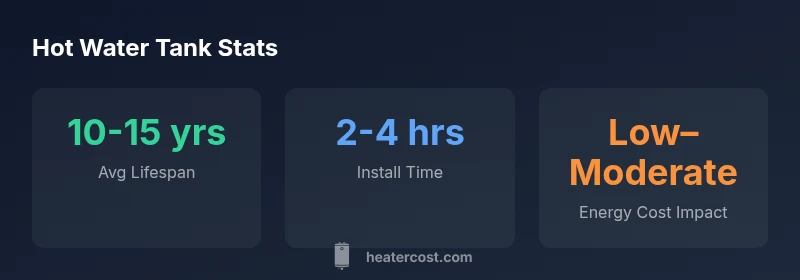
Most storage tanks last about 10 to 15 years with regular maintenance. Performance can vary based on water quality, installation, and how often the unit is used. Replacement sooner may be needed if corrosion or leakage occurs.
Typically 10 to 15 years with good upkeep.
What factors influence the cost to replace a hot water tank?
Costs vary with fuel type, tank size, local codes, labor rates, and any needed venting or electrical upgrades. The best approach is to get multiple quotes and verify that the replacement matches your peak-demand needs.
Fuel type, size, and labor drive replacement costs.
What maintenance helps extend a hot water tank’s life?
Annual or biannual sediment flushing, inspecting and/or replacing the anode rod, testing the pressure relief valve, and checking thermostat settings all help extend life and maintain safety.
Flush regularly, check valves, and monitor the thermostat.
Is upgrading to a tankless system worth it for a small household?
For small households with modest hot-water use, a tankless system can offer energy savings and space benefits but may require higher upfront costs and a larger electrical panel. A cost-benefit analysis over 5–15 years usually helps decide.
Tankless can save space and energy, but weigh upfront costs.
Are there safety concerns with hot water tanks?
Look for leaks, faulty valves, and scalding risks if water is too hot. Set thermostats to a safe, recommended temperature (about 120°F). Regular inspections reduce the risk of injury and water damage.
Watch for leaks and high temperatures; set the thermostat to 120°F.
“Choosing the right hot water tank isn’t just about upfront price. It’s about balancing comfort, energy use, and long-term maintenance. A properly sized and insulated system reduces standby losses and lowers operating costs over time.”
The Essentials
- Define your hot water needs before selecting a tank type.
- Match size to peak household demand to avoid waste and shortfalls.
- Prioritize insulation and a proper installation to minimize energy costs.
- Regular maintenance prevents leaks and extends lifespan.
- Tankless systems offer space savings and efficiency, not always best for every home.