Why Does My Heater Smell Burnt? A Practical Troubleshooting Guide
Learn why your heater emits a burnt odor, immediate safety steps, and how to troubleshoot common causes. This Heater Cost guide covers DIY checks and when to call a pro for a safe, effective resolution.


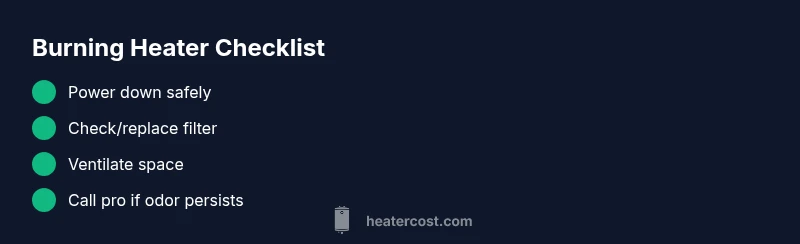
A burnt heater smell is usually dust burning off or overheating components. For safety, turn off the unit and unplug if possible, ventilate the space, and perform basic checks. If the odor persists or you notice smoke, stop using the heater and call a professional.
Why the burnt odor matters
If you are asking why does my heater smell burnt, you're right to be concerned. A burnt odor can mean dust is burning off on heat exchanger or burner, or an overheating component is failing. In some cases the scent signals a more serious issue with electrical wiring or a gas ignition system. Early diagnosis can prevent costly repairs and safety hazards. According to Heater Cost, addressing the odor promptly lowers risk and keeps your home safer in 2026. This guide from Heater Cost will walk you through safe steps, common causes, and practical fixes to restore comfort without compromising safety.
Common sources of a burnt smell in heaters
- Dust or debris burning off on heat exchanger or burner during startup or after idle periods.
- Overheating electrical components such as wiring, capacitors, or control boards.
- Clogged air filters restricting airflow and causing the system to overheat.
- Burnt insulation, dust, or plastic near the heater’s housing or vent openings.
- Gas combustion issues (for gas furnaces) including a gas ignition problem or improper venting. When you ask, why does my heater smell burnt, these sources cover the most frequent culprits. Regular maintenance lowers these risks, as noted by Heater Cost analyses in 2026.
Immediate safety steps you should take
- If you detect a gas odor or see smoke, evacuate immediately and call emergency services.
- If safe, switch off power at the thermostat and unplug the unit. Do not bypass safety switches.
- Open windows to ventilate the space and avoid using other gas appliances until inspected.
- Do not attempt disassembly of electrical or gas components; leave risky checks to a licensed professional.
- After ensuring safety, document what you observed (odor type, duration, any symptoms) to share with a technician.
How to inspect safely (non-invasive checks)
- Check the air filter and replace if dirty or clogged; a clean filter improves airflow and reduces overheating risk.
- Clear dust from accessible exterior surfaces and vents using a dry cloth or soft brush.
- Look for scorch marks, melted plastic, frayed wires, or signs of overheating around the cabinet; do not touch hot parts.
- Ensure intake and exhaust vents are unobstructed; move combustibles and clutter away from the unit.
- If you must power off, ensure the circuit is de-energized before touching any internal parts; never bypass fuses or safety covers.
Diagnosing specific components
- Dust on coils or burner can create a transient burnt odor that clears after a thorough cleaning.
- Faulty blower motor or belt may overheat and emit a burning scent; this usually requires replacement by a pro.
- Worn electrical parts (resistors, capacitors) can overheat and produce odor; these components should be tested by a licensed technician.
- Ignition system issues in gas heaters are potentially dangerous; if you suspect ignition problems or gas odors, stop using the unit and call a professional immediately.
- Throughout diagnosis, keep in mind that any lingering odor could indicate a repair beyond cleaning, so err on the side of safety and seek expert help if you’re unsure.
When to call a professional
- Odor persists after cleaning and basic checks, or you notice ongoing sizzling, smoke, or scorch marks.
- You detect gas odor, feel lightheaded, or CO detector alarms occur in your home.
- The heater cycles abnormally, trips breakers, or refuses to stay on.
- You are unsure about electrical connections or combustion issues; professional service is required to prevent a potential hazard.
- Regular maintenance hasn’t resolved the odor, and you want a comprehensive safety inspection.
Maintenance to prevent future smells
- Schedule annual professional inspections to catch issues before they become hazards.
- Change filters on schedule (typically every 1-3 months depending on use and filter type).
- Keep the area around the heater clean and free of dust, lint, and combustibles.
- Clean dust from accessible components during off-season using manufacturer-approved methods.
- Install and regularly test a CO detector on every level for ongoing safety and early warning.
Quick DIY fixes vs professional repairs
- DIY fixes: replace dirty filters, clean exterior housings, ensure vents are clear, and check for obvious loose wires or damaged insulation after power is off.
- When to hire a pro: persistent odor after cleaning, signs of electrical overheating, abnormal cycling, or any gas-related concerns require licensed service.
- Do not attempt electrical work beyond basic cleaning or filter changes; miswiring can create a serious risk.
- Keeping a maintenance calendar and recording findings helps you decide when a pro is truly needed.
Home safety essentials and verification
- Always have functional carbon monoxide detectors on every level and test them monthly.
- Maintain clearances around the heater as recommended by the manufacturer to prevent accidental ignition.
- Verify venting is intact and unobstructed, especially for gas furnaces or boilers.
- If in doubt about odor origin, err on the side of caution and contact a licensed technician for a diagnostic visit.
Steps
Estimated time: 60-90 minutes
- 1
Power off and ensure safety
Turn off the thermostat and switch off the unit at the breaker if safe. Wait for components to cool before handling. If you suspect a gas issue, leave the area immediately.
Tip: Never bypass safety switches or electrical disconnects. - 2
Inspect and replace the air filter
Remove and inspect the air filter; replace if dirty or clogged. A clean filter improves airflow and reduces overheating risk during operation.
Tip: Use the right filter type and check manufacturer guidance. - 3
Clear dust from accessible areas
Wipe down exterior panels and vents with a dry cloth. Ensure fans and intake openings are free of dust buildup.
Tip: Avoid using liquids that could reach electrical components. - 4
Check for obvious hazards
Look for scorch marks, melted insulation, frayed wires, or signs of overheating on the cabinet.
Tip: Do not touch hot surfaces; if you see damage, stop and call a technician. - 5
Test ventilation and air flow
Ensure intake and exhaust vents are clear and not blocked by furniture, dust, or debris.
Tip: Blocked vents can drastically elevate temperatures and odors. - 6
Power back up and observe
After cleaning, restore power and run a short cycle to observe odor and performance. Stop if any abnormal smells reappear.
Tip: Keep a log of odors and timings for the technician. - 7
Call a professional if odor persists
Persistent odor after DIY steps could indicate electrical or gas issues requiring licensed service.
Tip: Do not attempt complex repairs yourself.
Diagnosis: Heater emits a burnt odor during operation
Possible Causes
- highDust and debris burning off on heat exchanger or burner
- mediumOverheating electrical components (wiring, capacitors)
- mediumClogged air filter causing restricted airflow and overheating
- lowBurnt insulation, plastic near the heater housing
- lowGas combustion issues or ignition problems (gas heaters)
Fixes
- easyPower down the unit, unplug if safe, and inspect for obvious debris or hot spots
- easyReplace the air filter and clean accessible surfaces to restore airflow
- easyGently remove dust from coils and burners using approved tools; avoid disassembly of critical parts
- mediumIf odor persists after cleaning, schedule a professional inspection promptly
- easyIf you smell gas or see smoke, evacuate and call emergency services immediately
Got Questions?
Is a burnt smell from a heater dangerous?
Yes. A burnt odor can indicate overheating, burning dust, or a gas-related issue. If you smell gas or see smoke, evacuate and call emergency services. For non-urgent smells, shut down the unit and arrange a professional inspection.
A burnt heater smell can be dangerous, especially if it’s a gas heater. Evacuate if you smell gas and call for help. For non-urgent smells, turn the heater off and book a professional inspection.
What should I do first if I smell burnt plastic near my heater?
Turn off power at the thermostat and unplug if safe. Ventilate the space and avoid touching hot surfaces. If you see smoke or suspect electrical damage, contact a professional immediately.
Turn off the heater and unplug it if safe, then ventilate. If you see smoke or danger, call for help right away.
Can dust cause a burnt smell?
Yes. Dust burning off on coils or burners during startup is a common cause. Cleaning and replacing a dirty filter usually resolves this, but monitor for recurring odors.
Dust burning off is a common cause. Cleaning or replacing the filter often fixes it, but keep an eye on it.
When should I replace the air filter?
Replace filters according to the manufacturer’s schedule and usage. A clogged filter restricts airflow and can cause overheating and smells.
Change the filter as recommended; a dirty filter can cause smells and overheating.
Is it safe to troubleshoot a heater myself?
You can perform basic checks such as cleaning exterior surfaces and replacing a filter, but avoid disassembling electrical or gas components. If unsure, call a pro.
Basic checks are okay, but don’t tamper with electrical or gas parts. When in doubt, call a professional.
Will a burnt smell always require replacement?
Not always. Some smells come from dust or temporary overheating. If the odor persists after basic maintenance, a professional assessment may reveal worn parts needing replacement.
Odor doesn’t always mean replacement, but if it sticks around, get a professional check.
The Essentials
- Stop using the heater if you smell burning or suspect a gas issue.
- Replace dirty filters and clear vents to restore safe airflow.
- If odor continues, contact a licensed technician promptly.
- Maintain safety devices like CO detectors for ongoing protection.