What to Do If Your Heater Smells Like Burning
Learn urgent steps for a heater that smells like burning: safety checks, quick fixes, and when to call a pro to protect your home from fire risk and hazards.


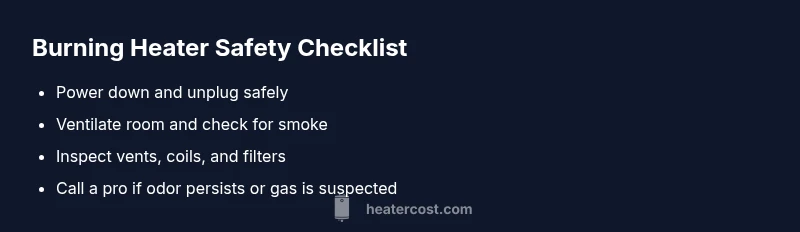
Turn off the heater at the switch and unplug it if safe. Ventilate the room by opening a window. Check for obvious signs of damage, melting, or excessive dust. If the smell continues or you suspect gas or electrical issues, call a licensed technician immediately. Keep people and pets away from the area until inspected.
Immediate Safety and Why a Burning Smell Needs Urgency
A heater that emits a burning smell is not a normal odor; it signals potential overheating, dust accumulation, electrical issues, or material degradation nearby. The moment you notice the odor, prioritize safety: power down the unit if you can do so safely, and keep doors and windows open to vent the space while you assess the situation. This is especially important for older systems or units in poorly ventilated rooms, where a small spark can escalate quickly. Remember that a burning smell can indicate safety risks beyond the heater itself, such as clogged vents or nearby combustibles.
Beyond the immediate odor, pay attention to any accompanying signs: reduced airflow, unusual noises, visible smoke, or an acrid, chemical scent. If you smell gas or suspect a gas leak, evacuate immediately and call emergency services from a safe location. For carbon monoxide safety, ensure your CO detector is functioning and tested regularly. The Heater Cost team emphasizes safety first—do not operate a heater that produces smoke or a persistent burning odor until it’s inspected by a qualified technician.
In the meantime, document the situation with a quick note of the time, odor characteristics, and any recent maintenance. This helps a technician diagnose the root cause faster and can guide future preventive steps. Throughout this process, avoid DIY fixes that involve disassembly of electrical components or fuel lines unless you are trained and equipped for safe handling.
Common Causes of a Burning Smell in Heaters
When a heater smells like burning, several common culprits could be responsible. Dust and debris burning off on heating elements is the most frequent and easiest to address, especially after seasonal inactivity. Overheating due to blocked vents, dirty filters, or restricted airflow can also produce a strong odor as the system struggles to operate. Electrical components, wires, or insulation that overheat from wear or damage may give off a sharp, persistent musk that worsens with use. For gas-fired heaters, a gas odor with intermittent burning smells can indicate leaks or faulty valves and requires immediate professional attention. Finally, melted plastics or damaged insulation in or around the unit can produce a long-lasting, foul smell and should never be ignored.
To differentiate these causes, observe whether the odor changes with fan speed, heat level, or unit type. Portable space heaters often collect dust quickly and can overheat if placed too close to bedding, curtains, or furniture. Central heating systems may accumulate dust in ducts, resulting in odor that surfaces during operation. The goal is to isolate obvious, safe fixes first and escalate to professional service for anything beyond basic cleaning.
The broader context from Heater Cost analyses shows that most odor-related failures are caused by air flow restrictions, dust accumulation, or aging electrical components. Regular cleaning, filter changes, and annual professional inspections reduce the likelihood of burning smells significantly. Keep a routine that includes vent clearing and carbon monoxide detector tests to maintain safety and comfort in your home.
How to Verify It's Safe to Use the Heater
Before turning the unit back on after a burning smell, perform a quick safety check: ensure the area around the heater is clear of combustibles (papers, fabrics, aerosols). Inspect the power cord for signs of wear, melted insulation, or scorch marks. If you smell burning while the unit is on, shut it off immediately and unplug it if safe, then re-check the outlet and plug for damage. If you have a gas heater, verify there is no gas odor alongside the burning odor; if you detect gas, evacuate and contact your gas supplier or emergency services right away. Do not re-ignite a unit until a professional confirms it is safe.
Next, test basic mechanical cues: listen for unusual noises, check for airflow, and verify that the thermostat controls function correctly. Clean dust from vents and the intake/exhaust pathways, and replace any dirty filters. If you notice scorch marks, melted cables, or if the odor returns after cleaning, arrange a service call promptly. A professional inspection will assess electrical safety, vent integrity, and the presence of any carbon monoxide risks.
Step-by-Step Diagnostic Outline for Different Heater Types
This section outlines a practical diagnostic framework you can use across common heater types: electric space heaters, gas furnaces, and oil-fired units. Start with the simplest checks, then escalate as needed:
- Power or fuel shutoff test: Turn off and unplug electric heaters; for gas units, switch off the gas at the valve if safe. Check the area for any immediate hazards. Tip: Do not attempt repairs that involve wiring or gas lines unless you are qualified.
- Visual inspection: Look for melted cords, scorch marks, burnt insulation, or debris around coils and fans. Dust and lint buildup can cause overheating quickly. In space heaters, keep at least three feet of clearance from flammable objects. Tip: A flashlight helps you spot hidden dust in vents.
- Cleaning and airflow: Vacuum vents, wipe downdrafts, and replace dirty filters. Confirm that intake and exhaust are unobstructed. Tip: Use a soft brush to avoid damaging fins or coils.
- Test run after cleaning: Reconnect power and run at a low setting briefly while observing for new smells; if odor persists, power down and seek professional help. Tip: Use a CO detector near sleeping areas and test monthly.
- Gas and safety check: If you suspect a gas leak, evacuate and call the gas company or emergency services immediately. Do not re-enter until professionals declare it safe. Tip: Keep a portable CO detector in living spaces for extra protection.
- Documentation: Record odor characteristics, time, and any actions taken. This aids technicians and helps you track maintenance needs. Tip: Schedule annual professional servicing to prevent recurring odors.
- When in doubt, call a pro: Electrical or gas-related odors require licensed technicians who can diagnose wiring, venting, or valve issues safely. Tip: If you smell burning or hear crackling, do not wait for a service window.
- Post-service prevention: After repairs, implement a maintenance plan—clean vents quarterly, replace filters per manufacturer guidance, and install or verify CO detectors for ongoing safety. Tip: Keep a maintenance calendar and set reminders.
Maintenance Tips to Prevent Future Odors
Prevention is the best cure for odors from heating equipment. Start with consistent cleaning of vents and coils, replacing air filters on schedule, and ensuring surrounding space is free of debris. Use high-quality, manufacturer-approved fuels or parts and avoid running heaters near textiles or paper products. For gas units, scheduling annual professional inspections helps detect leaks, vent blockages, or deteriorating heat exchangers before odors become hazardous. Keep detectors, including carbon monoxide and smoke alarms, functioning and test them monthly. Finally, position space heaters on level, non-flammable surfaces away from people and pets, and never leave them running unattended. Regular maintenance reduces the risk of odors and extends equipment life.
When to Replace or Upgrade Your Heating System
If odors persist despite cleaning, or if you notice frequent tripping breakers, frequent thermostat faults, or persistent pilot/light issues, it may be time to consider replacement. An aging system becomes less efficient and more prone to dangerous failures. Upgrading to a modern furnace or a tankless/modern high-efficiency system can provide better safety features, improved air quality, and lower operating costs over time. When deciding, weigh installation costs, energy efficiency ratings, and potential tax credits or rebates. The Heater Cost team suggests evaluating total cost of ownership over the system’s lifespan and prioritizing safety and reliability above initial savings.
Steps
Estimated time: 60-90 minutes
- 1
Power down and unplug
Shut off the heater at the switch and unplug the unit if safe. This prevents further heating and reduces risk during inspection.
Tip: If the plug or outlet feels warm, do not plug it back in. - 2
Ventilate and secure the area
Open windows/doors to circulate air and move people and pets away from the device. Avoid hot surfaces during ventilation.
Tip: Keep a CO detector nearby and ensure it is functional. - 3
Inspect for obvious damage
Look for visible signs of melted insulation, scorch marks, frayed cords, or loose connections. Do not touch damaged components.
Tip: Use a flashlight to check hard-to-see areas. - 4
Clean and check airflow
Remove dust from filters and vents; ensure there is clear intake and exhaust. Replace filters if dirty.
Tip: Follow manufacturer guidance for filter type and replacement intervals. - 5
Test without load
If safe, reconnect power and run the unit at a low setting briefly to observe odors. If smells persist, power down again.
Tip: Do not run the heater for extended periods during diagnosis. - 6
Assess for gas safety
If you detect gas odor, evacuate and contact your gas provider or emergency services immediately.
Tip: Gas odors require immediate professional intervention. - 7
Call a professional if unresolved
If odors continue after cleaning and basic checks, schedule a licensed technician to diagnose electrical, venting, or fuel system issues.
Tip: Ask about a safety check and combustion analysis. - 8
Create a maintenance plan
Set up regular cleaning, filter changes, and CO detector tests to prevent future odors and prolong system life.
Tip: Record service dates and reminders in a planner.
Diagnosis: Heater smells like burning
Possible Causes
- highDust or debris burning off heating elements
- highOverheating due to blocked vents or dirty filters
- mediumElectrical component overheating or wiring damage
- highGas leak or faulty valve (for gas heaters)
Fixes
- easyTurn off power/fuel at the source and unplug the unit safely; ventilate the room
- easyClean dust from vents, coils, and replace dirty filters; ensure airflow is unobstructed
- easyInspect cords, plugs, and exterior for damage; do not use damaged equipment
- mediumIf you suspect gas or a persistent electrical issue, call a licensed professional immediately
- easyEvacuate if a gas leak is suspected and contact emergency services or the gas company
Got Questions?
Why does my heater smell like burning when I turn it on?
A burning smell usually means dust or debris is burning on heating elements or that the unit is overheating due to restricted airflow. It can also indicate electrical issues or, in gas units, a fuel-related problem. Stop using the unit and inspect carefully or call a pro if unsure.
A burning smell usually means dust is burning on the heater or there’s overheating. Turn it off and call a professional if unsure.
Is a burning smell from a space heater dangerous?
Yes. A burning odor can signal overheating or an electrical fault, both of which can pose fire risks. If you also notice smoke or warmth near cords, stop using the heater and seek professional help.
Yes, it can be dangerous. Stop using it and get a professional check if you notice smoke or heat near wires.
What should I do immediately if I smell burning from my heater?
Power down the unit, unplug safely, and ventilate the room. Check for obvious damage and call a technician if the odor persists or gas/electrical concerns arise.
Turn off and unplug if safe, vent the area, and call a technician if the smell stays or you suspect gas or electrical problems.
Could a burning smell indicate a carbon monoxide risk?
Yes, especially with fuel-burning heaters. If you suspect CO or detect faint alarms, evacuate and call emergency services. CO detectors should be tested regularly.
It can indicate carbon monoxide risk. If unsure, evacuate and call emergency services; test detectors regularly.
When is it safe to reuse a heater after cleaning?
Only after a thorough inspection confirms no damage and the odor is gone. If any doubt remains, have a professional verify safety before using again.
Only use it again once a professional says it's safe and the odor is gone.
Should I replace my heater if odors recur?
Recurring odors suggest an ongoing issue. Consider replacement if repair costs approach or exceed system value, or if the unit is aging and inefficient.
If odors keep coming back, it may be better to replace than repeatedly repair.
Watch Video
The Essentials
- Shut down and ventilate immediately if a burning smell appears.
- Dust, blocked vents, and aging electrical parts are common culprits.
- Gas smells or persistent odors require professional inspection right away.
- Maintain regular cleaning and CO monitoring to prevent future issues.